
We earn a commission if you buy through these links. Learn more
Suite française
Guide by the Books of the Day editors · Updated · How we write our guides
Némirovsky wrote this novel of ordinary lives under German occupation in 1942, and it reads as a sharp, humane record of a country under strain, even in its unfinished form.
What Creators Say About Suite française
2 creators reviewed Suite française on YouTube between 2019 and 2020, with 1.5K views between them. Their opinions are their own; we picked these reviews, we didn't write them.
What It's About
Suite française is a novel about France in the summer and autumn of 1940, when the German army moved into the country and millions of people fled, lived under occupation, and tried to keep their dignity and their households intact. Irène Némirovsky planned it as five connected parts, but she completed only two before she was deported and killed in 1942. Her manuscript was kept in a suitcase for decades before it was published in 2004, and the unfinished shape is part of what the book is.
The first part follows a range of Parisians on the road and in the chaos of the exodus, moving quickly from one household to another. The second is narrower and slower, set in a rural village where a German officer is billeted in a French family's home. Némirovsky writes in a clean, observant style, shifting between characters and sometimes between judgement and sympathy. The effect is closer to a set of linked portraits than a single plot, and the tension comes from watching people make small, believable compromises.
Reading it is a steady, absorbing experience rather than a page-turner. The sentences are precise, the satire is dry, and the moral attention is unusually even. You will feel the book is incomplete, and that absence is hard to forget.
Read this if you…
- want a literary novel about the fall of France told from many angles
- are interested in how ordinary people behave under occupation and moral strain
- like precise, ironic prose and do not need a tidy resolution
Skip it if you…
- want a complete, self-contained story with a clear arc and ending
- are looking for heroic resistance narratives or straightforward wartime adventure
Key Ideas
- 1
Ordinary people under pressure, not heroes or villains
Némirovsky resists sorting her characters into neat categories. Her Parisians are selfish, frightened, generous, and vain by turns, and the occupation mostly exposes what was already there. Readers looking for clear moral lessons may find the ambiguity unsettling, but it is the source of the novel's honesty.
- 2
Class and wealth shaping who suffers
Money and social position determine how each family survives the flight and the occupation. Némirovsky is alert to the way comfort insulates some people and exposes others, and she writes about privilege with a cool, often unforgiving eye that gives the book much of its bite.
- 3
The intimacy of living beside an enemy
The second part examines what happens when an occupier and an occupied household share a house. Némirovsky is interested in the daily texture of this closeness: politeness, resentment, boredom, and the slow, uncomfortable recognition of shared humanity. It is more complicated and less sentimental than many readers will expect.
- 4
A novel shaped by its unfinished state
Because only two of the planned five parts exist, the book has the feel of a work in progress with gaps in its architecture. Some readers find this frustrating, while others value it as a rare glimpse into a writer's method and as a document of a moment she could not finish living through.
Limitations
The book is unfinished, so it cannot deliver the full design Némirovsky intended, and its structure can feel abrupt or lopsided between the two parts. Some readers find the narrative voice cool and the characters hard to warm to, particularly the more unsympathetic figures. The portrayal of the occupation is shaped by the vantage points of the middle and upper classes, so it does not cover the experience of many other groups. Readers should also know the text comes from a manuscript that was not revised for publication.
Questions Readers Ask
- Do I need to know French history to read Suite française?
- It helps, but it is not essential. The novel gives you the basic situation of 1940 through the characters' experiences. A short overview of the German invasion and the armistice will add depth, but a general adult reader can follow the story and its concerns without extra study.
- Is Suite française worth reading if it is unfinished?
- Yes, for most readers who go in knowing it is incomplete. The two parts are strong on their own, and the gaps add to the sense of history cut short. Readers who need a complete, closed story may prefer a different novel about the same period.
- How does it compare to other novels about occupied France?
- It is less melodramatic than many popular wartime novels and more focused on social observation than on heroism or espionage. Readers who enjoy Némirovsky's wider work, with its sharp social eye, will likely find this one rewarding.
- Published
- 2004
- ISBN
- 9785751605896
- Difficulty
- intermediate
- Category
- Fiction
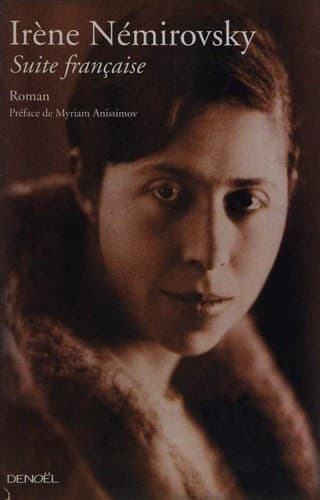
Book details and cover from Google Books.
Ready to read Suite française?
Get your copy on Amazon, or listen to it on Audible. We earn a commission if you buy through these links.