
We earn a commission if you buy through these links. Learn more
Stuart Little
by E. B. White
On screen: Stuart Little (film, 1999)
Guide by the Books of the Day editors · Updated · How we write our guides
A deceptively simple 1945 comedy about a mouse who joins a human family, rewarding for readers who enjoy dry wit, quiet courage, and sentences that do what they need to.
What Creators Say About Stuart Little
2 creators reviewed Stuart Little on YouTube between 2015 and 2024, with 4.6K views between them. Their opinions are their own; we picked these reviews, we didn't write them.
What It's About
Stuart Little, first published in 1945, follows a mouse born into a New York family. His parents, the Littles, accept him without fuss, and the book's charm comes from how calmly White treats the premise. Nobody faints or delivers a lecture about it. The household simply adjusts, and the small daily problems of being too small for a chair, a bed, or a serious conversation become the material for the story.
The book is episodic rather than tightly plotted. Stuart takes on a series of errands and small adventures, including a sailboat race in Central Park, a search for a missing bird, and a string of encounters with the bigger creatures and machines of city life. The prose is dry, precise, and funny, and White gives minor events the gravity of major ones. Much of the pleasure lies in the sentences themselves.
The reading experience is gentle, witty, and a little melancholy. It is short enough to finish in an afternoon, and it reads well aloud. Children tend to enjoy the comedy and the animal-scale adventure, while adults often notice the undertone about a small creature trying to make a large world make room for him.
Read this if you…
- enjoy dry, understated humor that rewards careful reading
- want a short classic to read aloud with a child
- are curious about how a simple premise can carry quiet emotional weight
Skip it if you…
- need a fast-moving plot with a strong throughline and a clear climax
- expect a fantasy adventure with magic, battles, or a richly built secret world
Key Ideas
- 1
Smallness as a lens on ordinary life
Stuart's size turns familiar objects into obstacles, tools, and opportunities. A chair becomes a climb and a sailboat becomes a serious contest. White uses this scale shift to make the reader see everyday things freshly, and the comedy comes from taking the small world as seriously as any adult would.
- 2
Character matters more than stature
Stuart is judged by his courtesy, nerve, and willingness to try, not by his height. The book quietly argues that dignity is a matter of conduct. Much of its warmth comes from the way other characters respond to him once they see how he behaves.
- 3
Ambition in a world not built for you
Stuart wants to prove himself and find a place of his own, and the book treats that wish seriously. Each adventure tests how far determination can carry someone who is physically outmatched. The result is a small-scale story about striving that never becomes grand or sentimental.
- 4
Restraint as a comic style
White's deadpan narration never winks at the reader. He reports strange events in calm, exact language, which makes them funnier and more affecting. Readers who admire clean, economical prose will find this a model of how to say a lot with very little.
- 5
Loss, loyalty, and the search for someone
The bird Margalo's absence gives the book a quiet emotional thread about attachment and the pain of missing someone. Stuart's search carries more feeling than the episodic structure might suggest, and it gives the book a steady undertow beneath its humor.
Limitations
The book is episodic, so readers who want a tight, cumulative plot may find it loose. Its ending is open and bittersweet, which some readers find unsatisfying. The 1945 setting shows in its manners, gender assumptions, and mid-century city life, which can feel dated. Stuart's quest also depends on a sense of nostalgia that not every modern reader will share. Adults expecting a deep allegory may find the book lighter than they hoped.
Questions Readers Ask
- Is Stuart Little suitable for young children?
- Yes, it is often read aloud to children from around five or six, and it can be read independently by older children. The humor works on several levels, and the short chapters suit bedtime reading. Parents should know the ending is open and a little wistful, which some young readers find sad.
- How does Stuart Little compare with Charlotte's Web?
- Both are gentle, animal-centred classics by the same author's publishing circle, but they feel different. Charlotte's Web has a clearer emotional arc and a more concentrated plot. Stuart Little is looser and more episodic, with sharper comedy and a cooler, more observant tone. Readers who loved one often find the other rewarding in a different way.
- Published
- 1945
- ISBN
- 9780848826024
- Difficulty
- beginner
- Category
- Children's Books
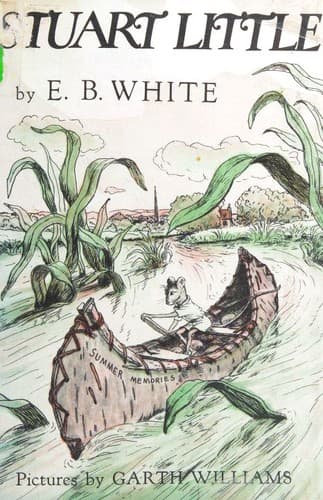
Book details and cover from Google Books.
Ready to read Stuart Little?
Get your copy on Amazon, or listen to it on Audible. We earn a commission if you buy through these links.