
We earn a commission if you buy through these links. Learn more
Storm of Steel
A German infantry officer's unsparing, almost clinical account of the Western Front, prized for its sensory immediacy and dreaded for its refusal to mourn.
What It's About
Storm of Steel is Ernst Jünger's account of his years as an infantry officer in the German army during the First World War. First published in 1920 and drawn from the diaries he kept at the front, it follows a young volunteer through trench fighting, raids, assaults, and rotations on the Western Front, where he was wounded several times and decorated for courage.
The style is the main draw. Jünger writes in dated entries and vivid vignettes rather than one sustained story, so reading it feels like sitting beside a man who is recording what he saw that day. His descriptions of shellfire, gas, mud, and the mechanical scale of the fighting are precise and often strangely beautiful, and he rarely stops to tell you how to feel about them. Long stretches of bombardment and waiting can feel repetitive, which is part of the point.
Reading it is also unsettling. Jünger's enthusiasm for combat, his admiration for courage and comradeship, and his lack of sentimentality about death make many readers uneasy. He revised the text in later editions. It is not a protest novel against war in the manner of later works; it is closer to a record of what a committed soldier found meaningful inside the violence, and that tension is what keeps it alive.
Read this if you…
- want a firsthand picture of trench warfare rather than a general history
- are curious how a former combatant made meaning from industrialized violence
- can handle a flat, unemotional narrator and a book that resists easy moral conclusions
Skip it if you…
- want an antiwar book that condemns the fighting as clearly as it describes it
- came looking for technology history; the machines here serve the war memoir rather than being the subject
Key Ideas
- 1
War as a test of character
Jünger treats combat as a proving ground where courage, discipline, and self-control are revealed. For him the front is not only a place of suffering but a space where a person can measure who they are. Readers will notice how often he frames danger as something to be mastered inwardly rather than endured passively, which shapes the emotional tone of nearly every episode.
- 2
Beauty and horror in the same frame
Many passages describe shelling, bodies, and destroyed landscapes with an attentive, almost aesthetic eye. Jünger does not separate the grotesque from the striking. This refusal to moralize in the moment is the book's most disturbing feature and the reason it remains discussed a century later, since the reader must supply the judgment the author withholds.
- 3
Comradeship in the front line
Small groups of men who share danger, cold, and hunger form the book's human center. Jünger writes about loyalty and fellowship with real warmth, and these relationships give the reader faces to care about amid the carnage. The bonds he describes are presented as among the few genuine goods the war produced, which sharpens the book's contradictions.
- 4
The industrial face of modern war
Storm of Steel is as much about machines and logistics as about men. Artillery, gas, wire, and mass bombardment appear as impersonal systems that reshape ordinary life. Readers interested in how technology changed warfare will find concrete, firsthand evidence of how mechanized violence felt to those who lived inside it.
Limitations
The book's admiration for combat and its jingoistic energy trouble many readers, and the author's later political associations have made it a contested text. It offers one officer's perspective and says little about civilian life, the home front, or the wider strategic picture. Its episodic structure can feel repetitive, and it does not provide the context a modern reader might want about the war's causes or outcomes. Translations and editions differ in tone and length, so the version you pick matters.
Questions Readers Ask
- Is Storm of Steel suitable for readers new to World War I?
- Yes, though it helps to know the broad outline of the war first. Jünger assumes you know the basic structure of the front and rarely explains military context. The book works best as an experience of daily combat, so a short general history beforehand will make the place names and command decisions easier to follow.
- How does it compare with Remarque's All Quiet on the Western Front?
- Remarque's novel is openly critical of war and built around sympathetic characters with a clear emotional arc. Storm of Steel is a memoir with a far more detached, sometimes admiring voice. Readers who want moral clarity often prefer Remarque, while those seeking a raw, unsentimental record of a committed soldier tend to find Jünger more striking.
- Published
- 2004
- ISBN
- 9780141186917
- Difficulty
- intermediate
- Category
- Tech
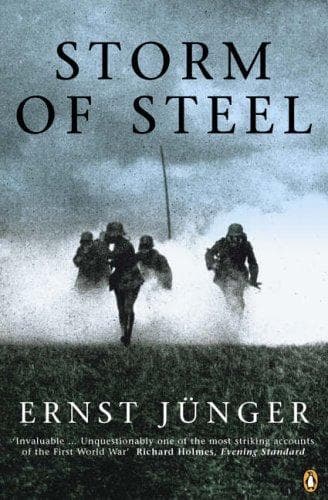
Book details and cover from Google Books.
Ready to read Storm of Steel?
Get your copy on Amazon, or listen to it on Audible. We earn a commission if you buy through these links.