
We earn a commission if you buy through these links. Learn more
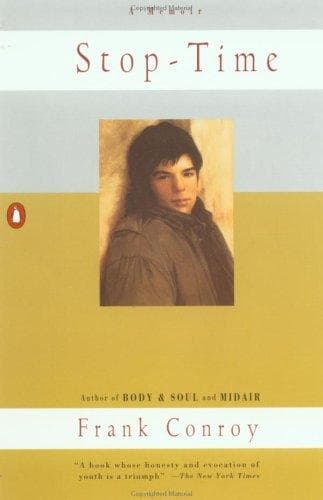
Stop-time
by Frank Conroy
A quietly intense memoir of a lonely, restless boyhood, worth reading for its precise, sensory prose and its honest look at how childhood time actually feels.
What It's About
Stop-Time is Frank Conroy's memoir of his boyhood and early adolescence, written from the inside rather than as a tidy life story. It is less a chronology than a set of vivid scenes: rooms, streets, schools, moods, and the long stretches of waiting that make up growing up. The book asks readers to slow down and notice what a child notices.
The writing is the main draw. Conroy is precise and sensory, pausing on small objects, sounds, and physical sensations, and he cares more about how time felt than about building momentum toward events. Reading it is immersive and unhurried, and it rewards patience. The passages about music and the solitary pleasures of learning and reading give the book much of its emotional texture.
Underneath the scenes runs a steady current of isolation and the search for a place to belong. The author moves through unsettled homes and schools, and the gap between family disorder and a rich private inner life shapes nearly every section. What results is a portrait of a sensitive, restless kid working out who he is, and that is why the book tends to stay with readers after they finish it.
Read this if you…
- want a literary memoir where the style matters as much as the story
- are interested in what childhood loneliness and restlessness feel like from the inside
- enjoy slow, observant prose and don't need a clear plot to stay engaged
Skip it if you…
- want a straightforward, chronological life story with clear milestones
- prefer fast-moving narratives or practical takeaways from a memoir
Key Ideas
- 1
Childhood time feels different from adult time
Conroy's central project is to render how slowly and intensely a child experiences days, waiting, and boredom. The book treats these stretches not as filler but as the substance of growing up, and it asks readers to recall their own early sense of time with more precision than memory usually allows.
- 2
Loneliness as a formative condition
Much of the memoir is about being separated from others, sometimes by circumstance and sometimes by temperament. Conroy shows how solitude can sharpen perception and imagination while also deepening a sense of being out of step with the people around him, and he resists easy conclusions about whether that isolation was damaging or useful.
- 3
Art and reading as refuge and apprenticeship
Music and books offer the young narrator a private world with its own rules and rewards. The memoir traces how these pursuits become a way of making sense of experience and a first step toward the writer and musician he would become, without turning the story into a simple success narrative.
- 4
Precision of sensory memory
The book's distinctive quality lies in its attention to concrete detail: textures, light, sounds, and the body's reactions. This style makes the past feel present and shows how much a writer can recover from childhood when he pays close attention to physical experience rather than summarizing it.
Limitations
The memoir is impressionistic and can feel episodic, so readers expecting a linear account of the author's life may find it hard to follow. It covers only the early years and does not tell the full story of his adult career. Some readers find the mood heavy and the narrator's perspective passive for long stretches. Because the book rests entirely on memory and personal interpretation, its portrait of family and circumstances is one person's account, not a balanced record.
Questions Readers Ask
- Is Stop-Time a good first memoir to read?
- It can be, if you enjoy careful prose and don't mind a book without a strong plot. It is short and rewarding, but its impressionistic structure can frustrate readers who want a clear sequence of events. If you prefer a more straightforward life story, a conventional chronological memoir may suit you better as a starting point.
- Is the book still relevant today?
- Yes, mainly for its close observation of childhood loneliness, the texture of ordinary days, and the drive to become an artist. Its specific mid-century setting may feel distant to some readers, but the emotional experiences it describes are not tied to a single era.
- Published
- 1967
- ISBN
- 9780670003396
- Difficulty
- intermediate
- Category
- Biographies
Book details and cover from Google Books.
Ready to read Stop-time?
Get your copy on Amazon, or listen to it on Audible. We earn a commission if you buy through these links.