
We earn a commission if you buy through these links. Learn more
Startide Rising
by David Brin
A Hugo-winning hard science fiction novel where a damaged starship crew of dolphins and humans must solve problems under siege, set in Brin's richly built uplift universe.
What It's About
Startide Rising is a science fiction novel by David Brin, the second book in his Uplift series. It follows a crew that includes uplifted dolphins, human specialists, and other intelligent species aboard a crippled starship that has been forced down onto an unfamiliar water world. The story is driven as much by a chase and a siege as by a mystery about what the ship's crew has discovered, and it keeps the stakes personal for the characters who have to make hard choices in the middle of a galactic conflict.
The book's approach is ambitious. Brin builds a galaxy where many species became intelligent through genetic 'uplift' by patron races, which creates debts, loyalties, and rivalries that shape every scene. He is most interested in how minds with different senses, biologies, and cultures solve problems together, so the science is practical and the arguments are about evidence and method as much as about spaceships. Plot threads move quickly between perspectives, and the sheer number of factions can take patience.
Reading it feels like joining a busy expedition with a crew that argues constantly and sometimes gets things wrong. It rewards readers who enjoy puzzles, politics, and big ideas about intelligence, and it works well as a standalone adventure even though the series background adds depth.
Read this if you…
- enjoy hard science fiction where technical problems drive the plot
- want big ideas about intelligence, obligation, and how different species might cooperate
- like ensemble casts and fast-moving, multi-perspective storytelling
Skip it if you…
- want a tightly focused story with one or two main characters
- prefer slow character drama over a plot full of factions, chases, and technical detail
Key Ideas
- 1
Uplift as a source of obligation
Brin treats intelligence as something that can be given to a species by a patron, and he explores what that gift costs. Former clients owe their patrons service for generations, which turns the dramatic conflicts into questions of loyalty, debt, and whether a species can ever be fully free.
- 2
Cooperation across radically different minds
The crew is a mix of dolphins, humans, and other beings whose senses and instincts differ sharply. The book shows how teams like this must build trust and translate their assumptions, and it treats communication failures as a real source of danger rather than a background detail.
- 3
Problem solving under pressure
Much of the tension comes from crew members improvising with damaged equipment and incomplete information. The reader sees hypotheses formed, tested, and discarded, which gives the story a practical, engineering-minded rhythm.
- 4
Ecology and the ethics of contact
Brin's alien water world is more than a backdrop. The novel asks how outsiders should behave around a living environment and a native culture they do not understand, and it raises uncomfortable questions about what visitors owe the places they arrive in.
- 5
Sprawling, multi-faction galactic politics
Several species, governments, and rival agendas compete throughout the book. The politics are a strength for readers who enjoy intrigue, but they also mean the narrative juggles many viewpoints at once.
Limitations
Many readers find the book's cast and factions hard to track, especially without prior exposure to the Uplift series. Its prose and pacing reflect early 1980s conventions, and some characterization is thinner than modern readers expect, with some figures functioning more as perspectives than as fully developed people. The gender and ethnic representation, along with some dated attitudes, can feel uneven today. The book also leans heavily on plot mechanics, so readers seeking lyrical language or emotional intimacy may find it less satisfying.
Questions Readers Ask
- Do I need to read Sundiver before Startide Rising?
- It is not strictly required, since Startide Rising is written to stand on its own. However, Sundiver introduces many of the series' ideas and characters, and readers who start there will have an easier time with the politics and background. Reading in publication order is the most common approach.
- Is Startide Rising still worth reading today?
- Yes, especially for readers interested in intelligence, ethics, and science fiction with a strong problem-solving focus. Some period attitudes and dated prose show their age, but its central ideas about uplift and cooperation remain provocative and still feel relevant.
- How does it compare to other big-idea science fiction?
- It is more plot-driven and technical than many classic space operas, and more concerned with species and ecology than with individual heroes. Readers who enjoy Iain M. Banks's Culture novels may appreciate its sweep and political texture, though Brin's tone is less playful.
- Published
- 1972
- ISBN
- 9780450012495
- Difficulty
- intermediate
- Category
- Science Fiction
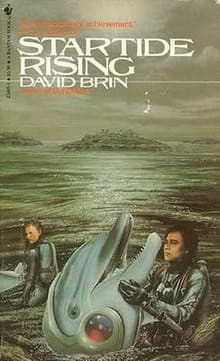
Book details and cover from Google Books.
Ready to read Startide Rising?
Get your copy on Amazon, or listen to it on Audible. We earn a commission if you buy through these links.