
We earn a commission if you buy through these links. Learn more
Stardust
by Neil Gaiman
On screen: Stardust (film, 2007)
Guide by the Books of the Day editors · Updated · How we write our guides
A witty, old-fashioned fairy tale about a young man who crosses into a hidden land to fetch a fallen star, and discovers she has opinions of her own.
What Creators Say About Stardust
2 creators reviewed Stardust on YouTube between 2015 and 2021, with 12K views between them. Their opinions are their own; we picked these reviews, we didn't write them.
What It's About
Stardust is a short, inventive fairy tale that reads like a story told aloud by the fire and then written down with care. Tristran Thorn lives in the English village of Wall, which takes its name from a stone barrier at its edge that separates ordinary country from Faerie. When he makes a rash promise to a girl he is infatuated with, he sets out through the gap to bring back a star that has fallen on the other side. The journey is the spine of the book, but Gaiman keeps shifting focus among a cast that includes a dying king's squabbling heirs, a trio of witches with designs on the star, and the travelers Tristran meets along the way.
The prose is deliberately plain and brisk, with a dry, teasing narrator who seems to enjoy the conventions of folklore while poking at them. Gaiman writes in the manner of older fairy tales, where cruelty and wonder sit side by side and characters are often less admirable than they first appear. Reading it feels like being led through a familiar country by a guide who knows its shortcuts and is not above teasing you about them.
It is a quick read, and the pleasure lies in its tone and its sly reversals of expectation rather than in dense plotting or heavy symbolism. The original was first published in illustrated form with art by Charles Vess, and that picture-book sensibility still shows in the vivid, scene-based storytelling.
Read this if you…
- enjoy fairy tales that treat wonder and cruelty as equal partners
- want a short, witty adventure you can finish over a weekend
- liked the blend of humor and folklore in The Princess Bride
Skip it if you…
- want a fantasy with detailed world-building, maps, and a long, intricate series
- prefer your heroes earnest and your stakes gently softened
Key Ideas
- 1
Fairy tale logic with a modern wit
The book follows the rules of folklore: quests, bargains, tests of character, and wishes that come with a price. But the narrator is knowing and ironic, often stopping to undercut heroic gestures. The result feels both traditional and playful, which is why it appeals to adults as well as younger readers.
- 2
A quest that is really about growing up
Tristran's journey is a coming-of-age story. He begins as a naive, somewhat self-absorbed young man whose idea of romance is a grand gesture. Over the course of the trip he learns what he values and what he is willing to give up for it. The goal of the quest matters less than what the travel reveals about him.
- 3
Faerie as a place that is not kind
Gaiman's Faerie is not a gentle, pastoral realm. It is strange, dangerous, and indifferent to human feelings, with markets, courts, and creatures who do not care about fairness. Its wonder is real but carries an edge that keeps the stakes feeling genuine.
- 4
Many threads woven into one road
The story cuts between Tristran, the star, the competing princes, and the witches, letting the reader see several threads at once. This gives the novel the feel of a busy world rather than a single road, and it lets secondary figures become memorable in just a few pages.
Limitations
Some readers find the narrator's knowing asides and the abrupt shifts between characters distracting, and the lightness can make the danger feel less immediate than it should. The characters are deliberately sketched rather than deeply drawn, so anyone wanting rich interiority may find them thin. The book is also short and self-contained, so it offers little of the sprawling world-building that longer epic fantasy readers often expect. Its folkloric tone may feel slight to readers who want a grounded or realistic story.
Questions Readers Ask
- Is Stardust suitable for young readers?
- Yes, with a note. It is often shelved as a crossover between children's and adult fiction. It contains some violence, a few grim deaths, and frank scenes of cruelty and mature humor, so it suits teenagers and up more than younger children. Parents of younger readers may want to read it first.
- How does it compare to The Princess Bride?
- Both mix adventure with a wry narrator and fairy tale conventions. Stardust is more melancholy and folkloric, with darker stakes and less overt comedy. If you loved the jokes in The Princess Bride, you may find Stardust quieter; if you loved its warmth, you may find Stardust sharper.
- Do I need to read anything else first?
- No. Stardust is a standalone novel and does not require familiarity with Gaiman's other books. It is a good entry point to his work, though readers who enjoy it might look at his other fairy-tale-inflected fiction next.
- Published
- 1997
- ISBN
- 9781845764661
- Difficulty
- beginner
- Category
- Fiction
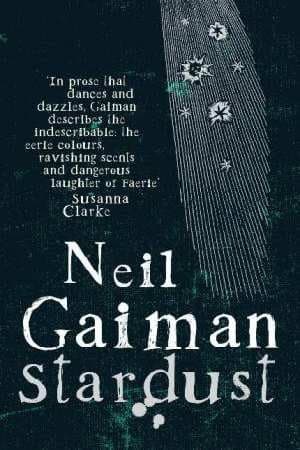
Book details and cover from Google Books.
Ready to read Stardust?
Get your copy on Amazon, or listen to it on Audible. We earn a commission if you buy through these links.