
We earn a commission if you buy through these links. Learn more
Stamped from the Beginning
Guide by the Books of the Day editors · Updated · How we write our guides
A sweeping, argumentative history of how racist ideas were built and rebuilt in America, useful for anyone who wants to understand where modern racial arguments came from.
What Creators Say About Stamped from the Beginning
2 creators reviewed Stamped from the Beginning on YouTube between 2018 and 2025, with 3.5K views between them. Their opinions are their own; we picked these reviews, we didn't write them.
What It's About
Stamped from the Beginning is a long history of racist ideas in America, beginning with the earliest European justifications for enslaving Africans and running into the present. Kendi organizes the story around the people and arguments that shaped how Americans understood race, sorting them into three camps: segregationists, assimilationists, and antiracists. The result reads less like a narrative of events than a history of arguments.
The reading experience is dense and deliberate. Kendi moves roughly in chronological order and keeps returning to two questions: where did a given idea come from, and whom did it serve? He pays close attention to how claims of racial inferiority were repeatedly reshaped to justify whatever policy was already in place, and he spends considerable time on the centuries between the colonial era and the mid-twentieth century. Expect extended portraits of thinkers, many quoted passages, and a steady pace of moral judgment.
The book is written for a general audience and avoids specialist jargon, but it has a clear position rather than a neutral survey of scholarly debate. It asks you to follow a long argument across many generations and many texts, and it rewards patient reading more than skimming.
Read this if you…
- want a single, argued narrative of how racial ideas developed in America
- are willing to read a long, dense book with a clear point of view
- are trying to trace where current arguments about race and inequality came from
Skip it if you…
- want a neutral survey that presents several scholarly interpretations side by side
- are looking for a quick read or a practical guide to personal change
Key Ideas
- 1
Racist ideas often follow from policy, not the reverse
Kendi's central claim is that many racist ideas were produced to justify discrimination that already existed, such as slavery or segregation, rather than arising first and then shaping policy. Reading the book, you watch the same pattern recur across centuries, which changes how you think about what came first. The argument asks you to treat racist beliefs as tools with a job to do.
- 2
Three ideologies that structure the whole history
The book frames American racial thought as a contest among segregationist, assimilationist, and antiracist positions. Segregationists hold that groups are inherently unequal, assimilationists argue that marginalized groups must change to be accepted, and antiracists insist that the problem lies in policies and power. This framework gives the book its structure and is the lens you will use to evaluate each thinker.
- 3
Why assimilationist ideas are treated as a form of racism
Kendi argues that well-meaning arguments that Black Americans simply need to adopt white norms can still rest on the assumption that Black culture is deficient. He sees this as a quieter form of the same hierarchy rather than a separate, milder position. Readers who think of themselves as moderate on race may find this the most uncomfortable chapter of argument to sit with.
- 4
Antiracism as an active position, not a personal identity
Antiracism in the book is defined by what a person does and argues for, not by good intentions or the absence of prejudice. Kendi insists that a person who is not actively opposing racist policies is effectively supporting them. This is a demanding standard, and it shapes how the book judges historical figures who were sympathetic but inconsistent.
Limitations
Critics argue that the book's focus on ideas can understate economic interests, legal systems, and political institutions as drivers of racial inequality. Some readers find the three-part framework too tidy for the messy history it describes, and the sharp moral categories leave less room for historical context than some academic historians would like. The book is also long and repetitive in places, and its sweeping chronology means individual episodes receive relatively brief treatment.
Questions Readers Ask
- Is Stamped from the Beginning still relevant today?
- Yes. Its central questions about how racial ideas are formed and defended remain active in current debates over policy and education. Because it was published in 2016, it does not cover more recent events in depth, so pair it with newer sources if you want the latest developments.
- How does it compare to How to Be an Antiracist?
- Stamped from the Beginning is a broad historical survey, while How to Be an Antiracist is shorter and more personal, focused on what individuals can do. If you want the history behind the ideas, start with Stamped. If you want a practical framework for everyday action, the later book is more direct.
- Published
- 2016
- ISBN
- 9781473549470
- Difficulty
- intermediate
- Category
- History
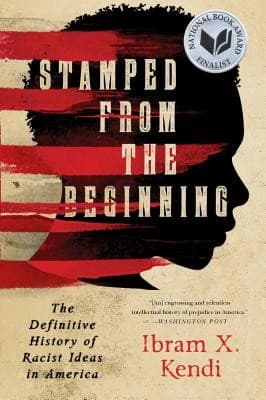
Book details and cover from Google Books.
Ready to read Stamped from the Beginning?
Get your copy on Amazon, or listen to it on Audible. We earn a commission if you buy through these links.