
We earn a commission if you buy through these links. Learn more
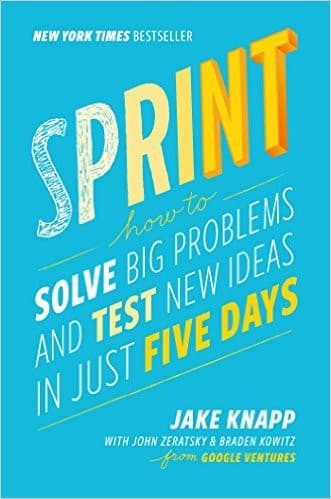
Sprint
Guide by the Books of the Day editors · Updated · How we write our guides
A practical, step-by-step playbook for running a five-day team sprint that goes from a fuzzy problem to a tested prototype and real customer reactions, without building the full product first.
What Creators Say About Sprint
2 creators reviewed Sprint on YouTube in 2016, with 266K views between them. Their opinions are their own; we picked these reviews, we didn't write them.
What It's About
Sprint is a how-to book for teams that need to make a decision about a product, feature, or service and want an answer quickly. Jake Knapp, John Zeratsky, and Braden Kowitz developed the method while working with startups at Google Ventures, and the book lays it out as a five-day schedule with defined roles, rules, and exercises for each day. The aim is to move from a vague problem to a realistic prototype and a round of user tests in one week.
The style is brisk and instructional rather than theoretical. Much of the book reads like a field manual, with checklists, worked examples from real companies, and advice on handling skeptical executives or a team that resists giving up a full week. The authors are candid that the method is a set of tools to adapt, not a ritual to follow exactly, and that tone makes it easy to borrow pieces without committing to the whole process.
The experience is closer to preparation than inspiration. You finish with a clear picture of what you would need to gather, who should be in the room, and how to keep a week from dissolving into meetings. It is most valuable if you plan to act on it soon. As a standalone book of big ideas, it can feel thin, but as a working guide it is hard to beat.
Read this if you…
- are leading a product, design, or startup team that needs to test an idea quickly
- want a concrete schedule and checklist rather than abstract advice on innovation
- have a specific question about a feature, service, or customer problem you can bring to a week of work
Skip it if you…
- work alone or mainly on long-term research, since the method assumes a small group and a full week of shared time
- are looking for a deep theory of creativity or a book that explores the psychology of innovation in depth
Key Ideas
- 1
Anchor the week to a clear goal
The sprint begins by agreeing on a long-term target, the risks that could derail it, and the specific questions the week must answer. This framing matters because it turns a loose brainstorm into a bounded test. Teams that skip it tend to argue about what the problem even is, and the book treats that early alignment as the work that makes the later days productive.
- 2
Fixed roles prevent endless debate
The method assigns a decider with final authority, a facilitator who keeps the schedule, and experts who contribute knowledge. Giving one person the final call is meant to end circular discussion without requiring consensus. The idea is less about hierarchy than about making accountability explicit, so the group can move through the week without relitigating every choice.
- 3
Sketch many options before judging any
Rather than debating a single idea, participants sketch solutions individually and quickly, then compare them. Exercises such as rapid eight-panel sketching push people to generate varied options before critique begins. The underlying point is that good ideas are easier to see once you have several on the table, and that individual work first prevents the loudest voice from setting the direction.
- 4
Test a realistic fake before building
The sprint ends with a prototype that looks convincing enough for people to react to, often assembled from simple tools and staged behavior rather than working code. Five target users are interviewed one at a time while the team watches and takes notes. The method values learning what people do over asking what they think, and it treats a cheap, believable test as a way to avoid months of building the wrong thing.
- 5
Vote on ideas, then let the decider choose
After reviewing the sketches, the group marks favorites with dot-style voting, which surfaces where interest clusters. The decider then makes the final call on what to prototype. This blend of group input and single ownership is one of the book's most reusable techniques, because it keeps the discussion honest without letting it stall.
Limitations
The method is designed for small teams with a cleared calendar and a senior person willing to decide, and many organizations cannot offer any of those things. Critics note that the five-day format is rigid and can feel forced for problems that need months of research. The prototypes are intentionally rough, so results from five interviews are better at revealing obvious problems than at measuring demand. The book also says less about what happens after the sprint, such as building the product or measuring results over time.
Questions Readers Ask
- Who is Sprint for?
- It suits product managers, designers, founders, and team leads who need to make a fast decision about something customer-facing. Readers with no product background can follow it because the steps are explicit. It is less useful for people whose work is mostly analysis or long-form research, since the book's value lies in running a structured group process rather than in deep methodology.
- Is the design sprint method still relevant?
- Yes, the core ideas of framing a question, sketching options, and testing with real users remain widely used in product teams. Some details, such as specific tools and examples, reflect the time the book was written, so readers should treat the schedule as a starting template. The principles hold up better than the particular exercises.
- Published
- 2001
- ISBN
- 9781501121777
- Difficulty
- beginner
- Category
- Business
Book details and cover from Google Books.
Ready to read Sprint?
Get your copy on Amazon, or listen to it on Audible. We earn a commission if you buy through these links.