
We earn a commission if you buy through these links. Learn more
Solitude
Guide by the Books of the Day editors · Updated · How we write our guides
Michael Harris makes a thoughtful case that being alone is valuable, separating solitude from loneliness in a world that rarely leaves room for either.
What Creators Say About Solitude
2 creators reviewed Solitude on YouTube between 2017 and 2025, with 103 views between them. Their opinions are their own; we picked these reviews, we didn't write them.
What It's About
Solitude is Michael Harris's attempt to reclaim a condition that modern life has largely crowded out. Harris, a Canadian writer who earlier examined what constant connectivity costs us in The End of Absence, turns here to the quieter experience of being alone with yourself, and to why that experience has become hard to find and harder to value. The book blends cultural history, reporting, and personal reflection rather than advancing a single argument in one straight line.
Harris moves across centuries and traditions, looking at how earlier thinkers, religious communities, and writers have treated time apart from others. He keeps returning to a distinction that anchors the book: being alone is a circumstance, while loneliness is a painful feeling about that circumstance. The prose is discursive and thoughtful, with an essayist's habit of following a thread wherever it leads, so reading it feels closer to a long, wandering conversation than to a self-help manual.
Expect a book that asks you to slow down and consider your own habits. It rewards patience and a willingness to sit with ideas that do not resolve neatly, and it works best read in pieces, with pauses to think about your own days.
Read this if you…
- are tired of constant notifications and want a clearer case for unplugging
- are curious about the difference between being alone and feeling lonely
- enjoy essayistic nonfiction that moves between history, reporting, and memoir
Skip it if you…
- want a practical guide with step-by-step routines for building a quieter life
- need a rigorous, citation-heavy academic study of psychology
Key Ideas
- 1
Solitude is not the same as loneliness
Harris separates the state of being alone, which can be chosen and restorative, from the distress of feeling disconnected. Much of the book's value lies in refusing to treat all time by oneself as a problem to fix. This distinction gives readers a vocabulary for judging their own experience, helping them notice when being alone is nourishing and when it has turned sour.
- 2
Why modern life crowds out being alone
Harris argues that constant connectivity, always-on work, and the expectation of quick replies have made unbroken time with one's own thoughts rare. Because he frames the pressure as structural rather than a personal failing, recovering solitude becomes partly a cultural question. Readers who recognize their own phone-checking habits will find the argument pointed but grounded in everyday observation.
- 3
Historical views of withdrawal and retreat
The book draws on past traditions in which withdrawal from company was valued, from contemplative practice to writers who sought quiet for their work. These examples show that solitude has long been understood as a source of insight and moral seriousness, not only as deprivation. The historical material gives the modern argument depth, though readers wanting a comprehensive academic history may find it selective.
- 4
Solitude as a space for self-knowledge
A recurring thread is that time alone allows forms of thinking that social life tends to interrupt, including self-examination, creative work, and the slow shaping of a stable sense of self. Harris treats these benefits as things that require protected time and attention, not as automatic byproducts of simply being somewhere quiet.
Limitations
Some readers find the argument diffuse, since the book moves between history, cultural commentary, and personal reflection without always tightening its claims. Its treatment of research on loneliness and wellbeing is more impressionistic than scientific, so it should not be read as a definitive account of the psychology involved. The frame of reference is largely Western and literary, and its concern with digital life may feel dated as technology keeps changing. It offers perspective more than instructions.
Questions Readers Ask
- Is Solitude a good follow-up to The End of Absence?
- Yes, if you want to go further. The End of Absence focuses on what digital life takes from privacy and unstructured time, while Solitude turns toward the inner experience of being alone and why it matters. You don't need to read them in order, but the earlier book gives useful context for the cultural concerns that run through this one.
- Is Solitude still relevant?
- Largely, yes. The pressures it describes, including constant availability and the expectation of being reachable, have if anything persisted since publication. Some technology references will feel dated, but the core questions about attention, self-knowledge, and whether we ever get time to ourselves remain pressing.
- Published
- 2017
- ISBN
- 9781250088604
- Difficulty
- intermediate
- Category
- Solitude
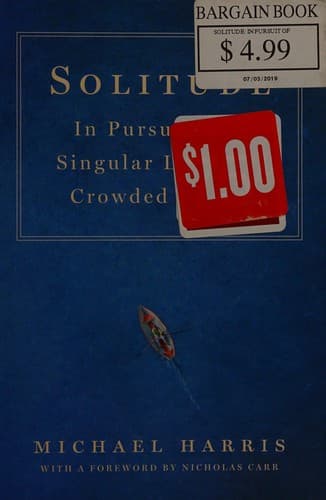
Book details and cover from Google Books.
Ready to read Solitude?
Get your copy on Amazon, or listen to it on Audible. We earn a commission if you buy through these links.