
We earn a commission if you buy through these links. Learn more
Slaughterhouse-Five
A short, darkly funny antiwar novel that tells the story of the Dresden firebombing through a man who keeps slipping unstuck in time, and it stays with you long after you finish.
What It's About
Slaughterhouse-Five is Kurt Vonnegut's 1969 novel about Billy Pilgrim, an American optometrist who was a young soldier captured during the Battle of the Bulge and held in Dresden when the city was firebombed in 1945. The book draws on Vonnegut's own experience as a prisoner there, though it is not a memoir in the usual sense. Billy's life jumps around in time: he revisits his wedding night, his old age, and a stretch in a zoo on a faraway planet, all without warning.
The structure is fragmented and brief, built from short scenes, asides, and a narrator who steps in to comment on the writing itself. Vonnegut's voice is deadpan and plainspoken, so the book moves quickly even when it describes death on a huge scale. Repetition does much of the work: certain lines and images return again and again, and each return changes their weight.
Reading it feels less like following a conventional plot than like being handed a sharply worded argument with jokes in it. It is short enough to finish in a few sittings, and it rewards a second reading, especially once you notice how the scattered pieces fit together. Expect a book that is bleak but never self-pitying, and funny in a way that often catches you off guard.
Read this if you…
- want an antiwar novel that is short, sharp, and surprisingly funny
- are curious about how memory and trauma can shape a story's form
- enjoy books that break conventional structure and reward rereading
Skip it if you…
- need a fast-paced plot with a clear sense of rising stakes
- prefer detailed, fully developed characters and close psychological interiority
Key Ideas
- 1
Time seen all at once
Billy's alien captors experience time as a whole rather than as a line, so every moment exists at once and nothing is truly lost. The idea works as a philosophical device and as a way of asking how anyone can bear loss if the past never disappears. Vonnegut uses it to question whether this view is comforting wisdom or a way of looking away from suffering.
- 2
War from the bottom up
The novel is not about generals or strategy. It follows an ordinary, bewildered soldier who is often more acted upon than acting. Vonnegut shows the chaos, cold, and indignity of the prisoners' experience, and the gap between official war stories and what the men actually lived through.
- 3
Repetition as a way of handling horror
Recurring phrases and images act like a refrain, letting the narrator circle back to events too painful to describe straight through. Each return adds a little weight, so the repetition becomes both a coping mechanism and a formal strategy that mirrors how memory works for traumatized people.
- 4
The author inside the story
Vonnegut appears as a character who was present in Dresden, and he openly admits the difficulty of writing about the subject. This blurs the line between fiction and testimony and keeps the reader aware that the book is an act of remembering, not a tidy invention. It also gives the satire an honest, personal edge.
- 5
Fatalism, acceptance, and their limits
Billy's calm acceptance of whatever happens is the book's most debated feature. Some readers find it moving and humane, others see it as a kind of passivity that excuses violence. The novel leaves that tension open, which is a large part of why it keeps generating discussion.
Limitations
Critics often point out that Billy is a passive protagonist whose calm acceptance can feel more like a narrative device than a fully realized person. The Tralfamadorian framing is a clever way to handle time and loss, but some readers find it gimmicky or too neat. The treatment of women is thin and sometimes uncomfortable by current standards, and the book's sexual content and language have led to repeated challenges in schools. Some of the satire of American life may feel dated to younger readers, though its core anger about war has not faded.
Questions Readers Ask
- Do I need to know about the Dresden firebombing before reading it?
- No. The novel explains what matters as it goes, and the bombing is presented through Billy's confused, fragmented experience rather than through history lessons. A little background helps you appreciate the scale of the event, but it is not required. Many first-time readers come to the history afterward.
- How does it compare to Catch-22?
- Both are satirical novels about war with dark humor and unconventional structure. Catch-22 is larger, looser, and more openly farcical, with a big cast of comic characters. Slaughterhouse-Five is shorter, more restrained, and more focused on one man's dislocation in time. If you liked Heller's absurdity, you will likely enjoy Vonnegut's quieter, sadder version.
- Is it still worth reading today?
- Yes, especially if you want a compact, thoughtful look at war and trauma. Its central questions about violence, memory, and how people survive atrocity remain relevant. Some of its humor and cultural references feel dated, but the emotional core and formal inventiveness still hold up well for new readers.
- Published
- 1956
- ISBN
- 9780613647885
- Difficulty
- beginner
- Category
- Science Fiction
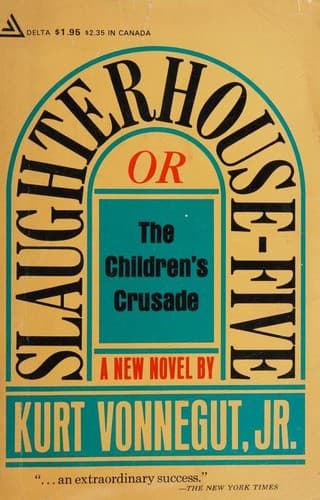
Book details and cover from Google Books.
Ready to read Slaughterhouse-Five?
Get your copy on Amazon, or listen to it on Audible. We earn a commission if you buy through these links.