
We earn a commission if you buy through these links. Learn more
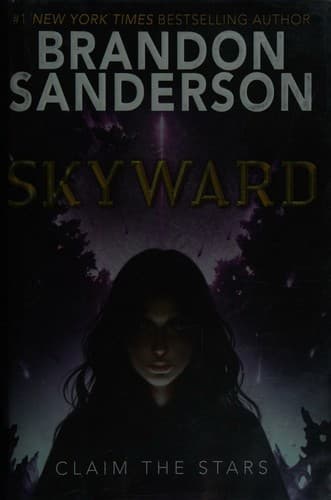
Skyward
Guide by the Books of the Day editors · Updated · How we write our guides
A fast, funny underdog space-flight adventure that swaps Sanderson's epic fantasy machinery for a stubborn teenage pilot and a mystery that keeps the pages turning.
What Creators Say About Skyward
2 creators reviewed Skyward on YouTube between 2018 and 2019, with 66.6K views between them. Their opinions are their own; we picked these reviews, we didn't write them.
What It's About
Skyward is a young adult science fiction novel, published in 2018 and the first book in a trilogy. It follows Spensa, a teenager on Detritus, a dusty, mining-scarred world where the remnants of humanity live under threat from the Krell, an alien enemy that drove them from their original homeworld and rarely shows itself in any clear form. Spensa dreams of becoming a starfighter pilot, a dream complicated by the fact that her father was branded a coward after a disgrace in combat, and the stain has followed her all her life.
Sanderson writes it as a straightforward, fast-moving first-person story with plenty of flight action and a sharp, self-deprecating voice. The worldbuilding arrives gradually through training, rivalries, and the strained culture of a military academy under pressure, rather than through long explanations. The prose is clean and quick, and the chapters move briskly, so it reads more like an adventure than a dense epic.
Reading it feels like watching a determined teenager push against a system that doesn't trust her. The emotional center is pride, self-doubt, and the nerve it takes to be seen differently. It works as a satisfying first act, but the larger mystery stays wide open, so expect to continue into the sequels.
Read this if you…
- want a fast, character-driven space adventure with a lot of flight action
- enjoy underdog stories about a protagonist who must prove herself
- like young adult fiction that is funny and optimistic without being shallow
Skip it if you…
- want hard science, detailed starship mechanics, or deep political worldbuilding
- need a self-contained novel with a complete, satisfying ending
Key Ideas
- 1
Courage versus inherited reputation
Spensa is judged by her father's failure before she has done anything herself. The book explores how much a family name can weigh on a young person, and how far someone will go to prove that a label is wrong. Her determination drives nearly every scene.
- 2
Being underestimated as a motive
Much of the tension comes from Spensa being dismissed by instructors and peers. Her stubbornness is both her strength and her biggest liability, and the story keeps asking when persistence turns into recklessness and when it simply turns out to be right.
- 3
An enemy you barely see
The Krell remain distant and mysterious for most of the book, which keeps the threat unsettling. The reader is invited to question what humanity knows about the war and why its history looks the way it does, a thread that the series pulls on for much longer.
- 4
Squadron loyalty and cadet rivalry
Training scenes build a group of friends and rivals who push one another in and out of the cockpit. These relationships give the story warmth and humor, and they make the dogfight sequences matter because the characters have something to lose.
- 5
Craft-first storytelling without heavy machinery
Sanderson is known for intricate magic systems, but here the focus is on momentum, clarity, and character. The book shows his skill at pacing and set pieces in a setting that needs little technical explanation to be enjoyed.
Limitations
Some readers find Spensa's voice repetitive, especially in the constant returns to her self-doubt and her defiance. The supporting cast is drawn with broad strokes, and the Krell and the wider setting are sketched more than fully explored. Familiar military academy beats, such as the scrappy outsider and the cruel instructor, will feel conventional to readers who know the genre. The ending is unresolved, so the book works best as part of a larger series rather than as a standalone read.
Questions Readers Ask
- Is Skyward a good first Brandon Sanderson book?
- It can be a good entry point, especially for younger readers or anyone wary of long epic fantasy. It has no magic system to learn and is much lighter than Mistborn or Stormlight. Longtime Sanderson fans will notice a different register, since the tone is brisker and more youthful than his adult fantasy novels.
- Do I need to read the sequels to Skyward?
- Yes, if you want resolution. The book ends with the central mystery largely open and the story setup for the next volumes. Readers who enjoy the first book and its characters will likely want to continue into the trilogy.
- How does Skyward compare to Ender's Game?
- Both feature young trainees in a military program and a protagonist who is underestimated. Ender's Game is darker and more concerned with manipulation and moral cost. Skyward is more buoyant, focused on flight, friendship, and a stubborn heroine trying to clear her father's name.
- Published
- 2018
- ISBN
- 9782253106906
- Difficulty
- beginner
- Category
- Science Fiction
Book details and cover from Google Books.
Ready to read Skyward?
Get your copy on Amazon, or listen to it on Audible. We earn a commission if you buy through these links.