
We earn a commission if you buy through these links. Learn more
Skellig
by David Almond
A short, strange novel about a boy who finds a battered winged creature in his derelict garage while his newborn sister fights for her life.
What It's About
Skellig is a short novel for young readers, first published in 1998, that won the Carnegie Medal. Michael, eleven, has just moved with his parents into a shabby house in a rundown northern English neighbourhood. Everything feels unsettled: his baby sister is in hospital with a serious heart problem, his parents are frightened and worn down, and he spends much of his time in the crumbling garage. One evening he finds something living there, a filthy, frail figure that seems to be dying and may have wings.
Almond writes in plain, rhythmic prose that feels closer to a fable than to a realist drama. Chapters are brief, the narration moves between tender domestic detail and sudden flights into the strange, and the book never settles on a single explanation. A homeschooled girl next door, who loves poetry and the work of William Blake, pulls Michael toward questions he has not thought to ask.
Reading it is a quiet, emotional experience rather than a fast one. It asks you to sit with uncertainty about what is real and about what helps people through fear. It can be read in one or two sittings, and it rewards a slower pace.
Read this if you…
- enjoy short, lyrical novels that leave room for uncertainty
- want a gentle, emotionally honest book about fear and family illness
- are looking for a book to read with a child or teenager and talk about afterward
Skip it if you…
- need every question in a story answered by the final page
- want fantasy with detailed worldbuilding and clearly defined magic rules
Key Ideas
- 1
Fear and care inside a fragile family
The baby's illness reshapes the whole household, and Michael feels both helpless and desperate to be useful. The book is less interested in medical drama than in how a child copes when the adults around him are overwhelmed. Its emotional weight comes from small domestic moments, such as waiting, worrying, and trying to act normal, that many readers will recognise.
- 2
A mystery that refuses a clean answer
Is the creature an angel, an animal, a man, or something Michael has invented to cope? Almond leaves the question open and asks the reader to weigh the evidence and decide. Some readers find this deeply satisfying, while others feel the ambiguity is a deliberate withholding. Either way, the book trusts you to hold two possibilities at once.
- 3
Art and poetry as a way of seeing
The neighbour girl's enthusiasm for Blake and for imaginative vision gives Michael a different language for what he is experiencing. Poetry here is not decoration but a method for looking closely at ordinary things and finding meaning in them. The book suggests that imagination can be a practical tool for facing fear.
- 4
Wonder in neglected, ordinary places
The run-down house, the cluttered garage, and the overgrown spaces around them become sites of wonder rather than just backdrops. Almond returns again and again to small, unglamorous settings and finds something sacred in them. This gives the novel a grounded feel even when it moves into the uncanny.
Limitations
The novel is very short, so some characters, especially the parents and the wider neighbourhood, remain thin. Readers who want a firm explanation of the creature may find the ambiguity frustrating rather than thought-provoking. The supernatural element is deliberately understated and can feel underdeveloped to those expecting a fuller fantasy. Its northern English setting and cultural references are light but may need a little context for readers outside the UK. Some find its tone sentimental, though many others find its restraint its main strength.
Questions Readers Ask
- Is Skellig a children's book or an adult novel?
- It is written for young readers, usually around ten and up, and is often taught in schools. Adults read it too, and many find its themes of grief, fear, and hope resonate more deeply with age. The prose is simple, so reading it is quick, but the emotional and philosophical questions it raises are not childish.
- Do I need to know William Blake to enjoy it?
- No. Blake appears through a character who is enthusiastic about his poetry, and you do not need prior knowledge to follow the story. Readers who know his work may catch more of the references, but the novel explains what it needs in context.
- Published
- 1998
- ISBN
- 9781435234031
- Difficulty
- beginner
- Category
- Fiction
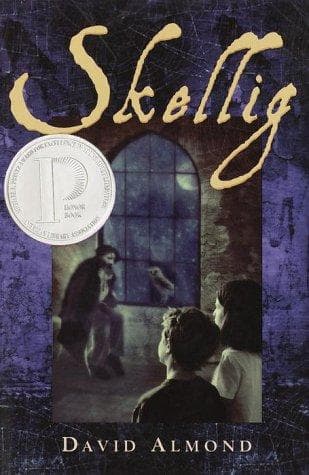
Book details and cover from Google Books.
Ready to read Skellig?
Get your copy on Amazon, or listen to it on Audible. We earn a commission if you buy through these links.