
We earn a commission if you buy through these links. Learn more
Siddhartha
Guide by the Books of the Day editors · Updated · How we write our guides
A short, luminous novella about a man who tries nearly every path to meaning, from asceticism to money to a quiet life by a river, and what he learns.
What Creators Say About Siddhartha
2 creators reviewed Siddhartha on YouTube between 2014 and 2025, with 243.1K views between them. Their opinions are their own; we picked these reviews, we didn't write them.
What It's About
Siddhartha is a short novella set in ancient India, following a young Brahmin's son who grows restless with the rituals and certainties of his privileged upbringing. Hesse does not write it as a historical epic or a debate about doctrine. It reads more like a parable or spiritual memoir told in calm, rhythmic prose, with long stretches of reflection and few scenes of heavy action. The book's energy comes from its questions: what can be taught, what must be experienced, and whether any path can be trusted to deliver what it promises.
Its structure moves through distinct phases, each a different way of living, and the reader watches the protagonist test each one fully before moving on. Hesse writes with a deliberate simplicity that some find hypnotic and others find sparse, and the dialogue often carries more weight than the narration. Expect a slow, meditative read where the pleasure lies in tone and recurring images, particularly water, rather than in plot momentum.
Reading it feels less like following a story and more like sitting with a patient older voice that refuses easy answers. It is short enough to finish in an evening or two, yet many readers return to it at different stages of life and notice new things each time.
Read this if you…
- want a short, contemplative novel about the meaning of a life rather than plot
- are curious about Indian spiritual traditions approached through fiction rather than scholarship
- have ever felt that success and certainty did not answer the questions you cared about
Skip it if you…
- want fast plot, dialogue-driven scenes, or strongly drawn characters
- expect an accurate portrait of Buddhism or Hinduism, since this is Hesse's personal and fictional reading of Indian religion
Key Ideas
- 1
The restless search for a true path
The novella's engine is a conviction that spiritual truth cannot be handed over by teachers or rituals. The protagonist leaves one discipline after another, not out of cynicism, but because each one, once mastered, reveals its limits. Hesse treats seeking itself as a kind of honesty, and he is more interested in why the search keeps moving than in arriving somewhere tidy.
- 2
Knowledge that cannot simply be taught
Much of the book argues that certain understanding comes only through living it, and that words about wisdom can point toward it but not deliver it. This makes the book quietly skeptical of gurus and doctrines, including the idea that a respected teacher can give someone enlightenment secondhand. Readers who value self-directed learning will find this the sharpest thread.
- 3
Worldly pleasure and success as lessons
The middle section takes the protagonist into commerce, sensuality, and comfort, and Hesse portrays these not as sins but as real experiences with real costs. The book asks whether a life built on appetite and status can be fully rejected, or whether it must be lived through before it loses its hold. It is a more worldly argument than many readers expect from a spiritual book.
- 4
Listening, nature, and the river
Water runs through the book as a central image, linked to time, continuity, and the way things flow into one another. Hesse's emphasis falls less on argument than on attentive listening, and the book suggests that the closest thing to wisdom may be patient, unhurried attention to ordinary life. This gives the closing pages their quiet, contemplative weight without any sermonizing.
Limitations
Critics often note that the prose is stylized and repetitive, and that the characters serve as vehicles for ideas more than as fully realized people. Kamala and Govinda are sketched lightly, and the book's portrait of Indian religious life is a Western writer's imagined version, shaped by European ideas about the East of his time, which some readers find dated or romanticized. Its anti-institutional message also sits uneasily with readers who value community or tradition. English translations differ noticeably in tone, so the experience can vary a lot depending on the edition.
Questions Readers Ask
- Is Siddhartha a good first Hesse novel?
- It is one of the most accessible places to start, since it is short and has a clear quest structure. Steppenwolf and Demian are darker and more psychologically dense, so readers who want a different mood might begin there. Siddhartha suits anyone who wants a meditative book without needing much background knowledge of Buddhism or Hinduism.
- How does Siddhartha compare to Hesse's Demian?
- Demian is a coming-of-age novel about self-discovery through psychological struggle, set in Europe and dense with symbolism. Siddhartha is more spare and spiritual, moving through a series of lives rather than a single developing consciousness. Demian suits readers who like inner turmoil; Siddhartha suits those who prefer calm and reflection.
- Published
- 1922
- ISBN
- 9781434604675
- Difficulty
- beginner
- Category
- Fiction
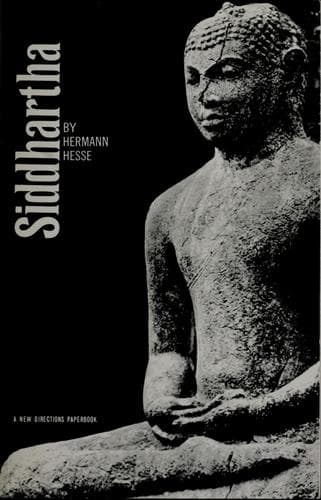
Book details and cover from Google Books.
Ready to read Siddhartha?
Get your copy on Amazon, or listen to it on Audible. We earn a commission if you buy through these links.