
We earn a commission if you buy through these links. Learn more
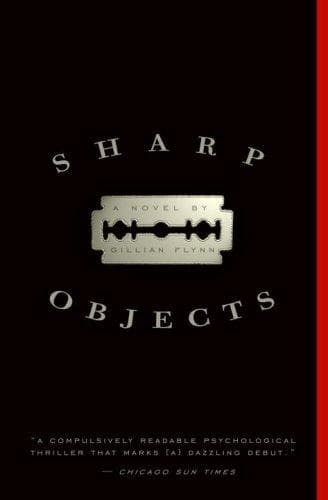
Sharp Objects
Guide by the Books of the Day editors · Updated · How we write our guides
A reporter returns to her small Missouri hometown to cover murders and finds the case tangled up with her own damaged family in this sharp, unsettling debut.
What Creators Say About Sharp Objects
2 creators reviewed Sharp Objects on YouTube between 2013 and 2015, with 41.6K views between them. Their opinions are their own; we picked these reviews, we didn't write them.
What It's About
Sharp Objects is Gillian Flynn's first novel, and it follows Camille Preaker, a newspaper reporter in Chicago who is sent back to Wind Gap, Missouri, to cover the killings of young girls. Wind Gap is the town she left behind: humid, gossipy, and full of people who know everything about one another. Her mother is still there, and so is a history of self-harm that Camille carries on her body and never fully explains.
The narration is first person, close and clipped, and Camille is a narrator you have to read with some suspicion. She notices everything but understands herself less well, and the gap between what she sees and what she admits creates much of the tension. Flynn writes in short, pointed sentences and lets ordinary domestic details carry a lot of menace. The investigation moves at a steady pace, but the real engine is the strained family drama.
Reading it feels like being pulled into a close, claustrophobic town where nearly everyone is keeping something back. It is a quick read that rewards attention to small cruelties and to what characters refuse to say. Expect an uncomfortable experience: the book cares more about damage and inheritance than about comfort.
Read this if you…
- want psychological suspense built around a damaged, unreliable narrator
- are drawn to small-town Gothic stories where family history matters as much as the crime
- enjoyed Flynn's later thrillers and want to see where her style began
Skip it if you…
- need a fair-play puzzle where clues lead cleanly to a tidy solution
- find graphic descriptions of self-harm, violence against children, or cruelty too hard to sit with
Key Ideas
- 1
Damage carried on the body
Camille's self-harm is both a private wound and a fact the town reads as a sign of her troubled past. Flynn asks how families pass injury down, and how a body can record what a person will not say out loud. The physical detail is never decorative; it always points back to something unresolved.
- 2
A narrator who cannot be fully trusted
Camille's reporter's habits make her observant, but her self-knowledge is limited and sometimes self-serving. Readers have to weigh what she tells them against what she lets slip. Much of the book's unease comes from this gap, and it makes every conversation feel like it might be hiding something.
- 3
Mothers, daughters, and control
The mother-daughter relationship is the emotional core of the book. Affection, rivalry, and possessiveness are knotted together, and the younger half-sister adds a sharper edge of competition. These relationships shape Camille more than the murders do, and Flynn treats them with unusual precision.
- 4
Gothic dread from ordinary details
Flynn builds atmosphere from heat, crowded rooms, church-basement gossip, and the way everyone in a small town watches everyone else. The menace is social as much as criminal. The dread comes from what people do at dinner as much as from any act of violence.
- 5
The case as a route into the past
Each step of the investigation pulls Camille toward memories she has spent years avoiding. Solving the crime and understanding herself become the same task, which gives the mystery its emotional weight. The plot is less a puzzle to be cracked than a reckoning she cannot postpone.
Limitations
Some readers find the plot melodramatic, with a late reveal that depends heavily on coincidence and on the reader accepting a lot of dark family history at once. The Gothic imagery can feel overwrought, and the prose's stylized sharpness wears thin for readers who prefer restraint. Because the psychology drives everything, readers hoping for a procedural investigation may feel shortchanged. The book also deals with self-harm directly and at length, which some reviewers feel leans on shock more than it needs to.
Questions Readers Ask
- Is Sharp Objects a good first Gillian Flynn book?
- It can be, though it is quieter and more personal than Gone Girl. Gone Girl has a tighter, twistier plot and bigger public stakes. Sharp Objects is more about family, memory, and the body, and its mystery is secondary to Camille's unraveling. If you like Flynn's voice, this is where it started, and it is a good place to begin.
- Is Sharp Objects too disturbing to read?
- It is a dark book. It includes self-harm, the murders of young girls, and a good deal of cruelty within a family. The content is direct rather than cheerful, and it is not written for easy comfort. Readers who handle grim crime fiction well will likely find it compelling, but anyone sensitive to self-harm should consider that before starting.
- Published
- 2006
- ISBN
- 9781597224581
- Difficulty
- intermediate
- Category
- Fiction
Book details and cover from Google Books.
Ready to read Sharp Objects?
Get your copy on Amazon, or listen to it on Audible. We earn a commission if you buy through these links.