
We earn a commission if you buy through these links. Learn more
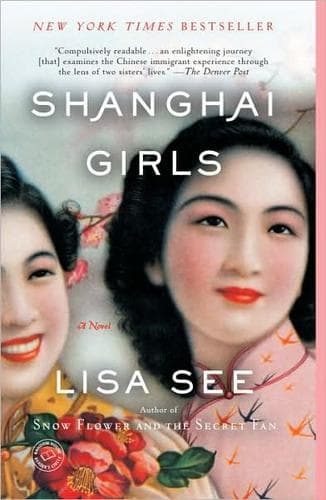
Shanghai girls
by Lisa See
Lisa See's emotional family saga follows two sisters from privileged 1930s Shanghai to Los Angeles's Chinatown, rewarding readers who enjoy character-driven historical fiction with strong female voices.
What It's About
Shanghai Girls follows two sisters, Pearl and May Chin, who grow up in a comfortable Shanghai household in the 1930s and find their privileged world collapsing around them. When Japan's invasion reaches the city and their family's fortunes sink, the sisters are pushed toward a future they did not choose, one that takes them across the Pacific to Los Angeles and into a Chinatown that is both a refuge and a trap.
The book moves between the two sisters' first-person voices, with Pearl and May each narrating their own choices and resentments. That structure is the book's strength: the same events look different through each sister's eyes, and the gap between them drives much of the tension. Lisa See writes in a clear, warm, accessible style, with a strong sense of period detail around food, clothing, family obligation, and daily life in the Chinese American community.
Reading it feels like settling into a long family saga. It is emotional and often moving, and it asks big questions about loyalty, class, and what women are permitted to want. The pace is steady rather than fast, and the story stays close to its characters' inner lives rather than to large historical set pieces, so readers looking for detailed war history or dense social analysis will find it lighter than they might expect.
Read this if you…
- enjoy multigenerational or sisterhood-centered historical fiction
- want to understand how Chinese immigrant families lived in 1930s and 1940s America
- prefer emotionally direct storytelling with clear characters over experimental prose
Skip it if you…
- want a fast-paced plot driven by suspense or action
- are looking for a detailed, neutral account of the Sino-Japanese War or Chinese American history
Key Ideas
- 1
Two sisters, two versions of one life
Pearl and May share a childhood but not a temperament, and their alternating narration shows how the same events can be remembered and judged differently. Much of the book's emotional energy comes from watching them misread each other, protect each other, and sometimes betray each other while believing they are acting out of love.
- 2
Class and the fragility of privilege
The opening establishes a world of wealth, status, and carefully managed appearances, and the book shows how quickly that foundation can disappear. The sisters must learn to survive without the protections their upbringing assumed, and the story questions what privilege actually guarantees and what it only postpones.
- 3
Chinese American life under suspicion and exclusion
Once the sisters reach Los Angeles, the novel portrays a community shaped by discriminatory laws, economic hardship, and wariness toward outsiders. The Chinatown setting offers a sense of belonging but also reveals the pressures that come with being an immigrant family in a country that does not fully welcome them.
- 4
Marriage, duty, and the limits on women's choices
Much of the plot turns on arranged decisions that the sisters have little power to refuse. The book examines how marriage functions as economic survival, social standing, and a source of obligation, and it follows how each woman tries to claim some control over her own life within those constraints.
Limitations
Some critics find the prose sentimental and the emotional beats predictable, especially in a book that leans heavily on melodrama and sisterly conflict. The narrative focuses on domestic and family life, so the wider political and military history appears mainly as background pressure rather than something the book explores in depth. Readers wanting historical nuance about the community's many internal divisions may find the portrait simplified. The book is also a commercial, accessible novel rather than a work of literary experiment, which some readers will find limiting.
Questions Readers Ask
- Is Shanghai Girls a good choice for book clubs?
- Yes, it is a strong pick for book clubs because the alternating sister narratives invite comparison and debate. Members often discuss who they sympathize with, how much each sister's choices were shaped by circumstance, and how the book handles family loyalty. Its length and clear style make it approachable for most groups.
- How does it compare to Lisa See's Snow Flower and the Secret Fan?
- Both books center on female relationships and Chinese history told through women's lives. Shanghai Girls is set in a more modern period and split between China and America, while Snow Flower is set in a much earlier era and focuses on a single intense friendship. Readers who liked the emotional style of one will likely find the other familiar.
- Do I need to read the sequel?
- No. The book works as a complete story on its own. A sequel exists and continues the sisters' lives, so readers who finish this one and want more may enjoy it, but you are not missing essential information by stopping here.
- Published
- 2009
- ISBN
- 9781615237814
- Difficulty
- beginner
- Category
- Fiction
Book details and cover from Google Books.
Ready to read Shanghai girls?
Get your copy on Amazon, or listen to it on Audible. We earn a commission if you buy through these links.