
We earn a commission if you buy through these links. Learn more
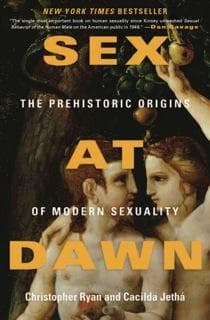
Sex at Dawn
by Christopher Ryan, Cacilda Jethá
Guide by the Books of the Day editors · Updated · How we write our guides
A provocative, well-referenced challenge to the idea that humans are naturally monogamous, worth reading for its questions about how we got our sexual habits even if you reject its conclusions.
What It's About
Sex at Dawn is a popular science book that takes aim at a comfortable story: that men and women are built for lifelong pair bonds, and that promiscuity is a modern departure from a faithful past. The authors, Christopher Ryan and Cacilda Jethá, argue that the standard evolutionary account of human sexuality rests on selective evidence and on assumptions about male jealousy and female chastity that were drawn from the culture of their authors rather than from the record of our species.
Their method is to pile up comparisons. They look at our closest primate relatives, especially chimpanzees and bonobos, at anatomy linked to sperm competition, at the anthropological literature on foraging societies, and at history on how property and agriculture reshaped family life. The tone is brisk, sometimes combative, and the prose leans on rhetorical flourish. Reading it feels like being pulled into an argument at a dinner party where the host is clearly enjoying himself.
The experience is less a neutral survey than a case made with conviction. The book is at its best when it forces you to notice the assumptions in mainstream accounts of desire, fidelity and family. It is less reliable as a final word on any single claim, so read it as a provocation, then check the sources it cites before accepting its sweeping conclusions.
Read this if you…
- are curious about how evolutionary explanations shape our beliefs about sex and fidelity
- enjoy provocative nonfiction that argues a thesis with energy and does not hedge everything
- want a challenge to the default story about human nature and marriage
Skip it if you…
- want a balanced, cautious survey that weighs every study equally
- find sweeping claims about ancestral behavior frustrating or are looking for practical relationship advice
Key Ideas
- 1
Monogamy as a story we tell
The authors argue that the idea of humans as naturally faithful couples is a cultural narrative, often repeated in popular and academic writing, that shapes how researchers read the evidence. They press readers to ask who benefits from the story and which findings get emphasized when it is retold. The point is less that monogamy is impossible than that it is presented as more inevitable than the data support.
- 2
Our primate cousins as evidence
Chimpanzees and bonobos are used to test claims about what humans are built for. The book points to mating systems in these species that look far from strictly monogamous, and it connects features like testicle size to competition among males. Readers get a clear sense of how comparative biology can be marshaled for an argument, along with the reminder that our relatives differ from us in important ways.
- 3
Female desire and sexual autonomy
A recurring theme is that women have historically had more sexual agency than the traditional narrative allows, and that female choice and multiple partnering have played a role in human life. The authors challenge the image of women as passive guardians of chastity. This section is often the most engaging for general readers, though its claims about the past rest on contested interpretations.
- 4
Agriculture, property and pair bonding
The book links the rise of strict marriage to changes in property, inheritance and farming, suggesting that the control of sexuality grew alongside settled life and the need to know who owned what. This argument is the most historically grounded part of the book. It invites readers to see modern norms as shaped by specific economic conditions rather than by fixed human nature.
Limitations
Critics argue that the book selects evidence to fit its thesis, leans heavily on bonobos and chimpanzees as stand-ins for early humans, and romanticizes foraging societies. The strong claim that humans were ancestrally promiscuous is contested, and many anthropologists stress how widely human arrangements vary across cultures. Some of the research it draws on has been revised or extended since its 2010 publication. The book is also more polemical than comprehensive, so it should be read alongside work that takes the opposing view seriously.
Questions Readers Ask
- Is Sex at Dawn based on solid science?
- It draws on real research from primatology, anthropology and archaeology, and its citations are a useful starting point. However, its central conclusions are more confident than the evidence allows, and specialists have criticized its selection of sources. Treat it as a well-referenced argument rather than settled science, and check the original studies on points that matter to you.
- Is the book still relevant?
- Yes, mainly as a case study in how popular science makes claims about human nature. Its specific arguments have been debated and in places superseded by later research, but its questions about monogamy, female desire and the history of marriage remain live. It works well as a discussion piece even where you disagree with it.
- Published
- 2010
- ISBN
- 9780062002938
- Difficulty
- intermediate
- Category
- Science
Book details and cover from Google Books.
Ready to read Sex at Dawn?
Get your copy on Amazon, or listen to it on Audible. We earn a commission if you buy through these links.