
We earn a commission if you buy through these links. Learn more
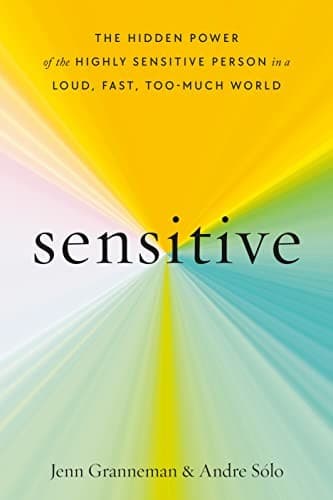
Sensitive
A practical, empathetic guide for people who feel things deeply and get overwhelmed easily, aimed at turning sensitivity from a liability into something manageable.
What Creators Say About Sensitive
2 creators reviewed Sensitive on YouTube in 2023, with 15.6K views between them. Their opinions are their own; we picked these reviews, we didn't write them.
What It's About
Sensitive is a popular-psychology book about high sensitivity, a trait often described as a heightened response to sights, sounds, emotions, and other people's moods. It is written for readers who suspect they are highly sensitive themselves, and also for the partners, parents, friends, and colleagues who live or work alongside them. Rather than framing sensitivity as a disorder, the book treats it as a temperament that carries real costs and real strengths, and it aims to make that case in plain language.
The approach is conversational and moves from recognition to understanding to everyday tactics. Expect a mix of explanation, relatable examples, and self-check material rather than dense academic argument. The tone is warm and encouraging, though it leans more on the authors' own framing and on popular sources than on a detailed survey of the research literature.
Reading it feels less like studying a textbook and more like being told, often for the first time, that a set of experiences has a name and a shared pattern. The most useful parts are the ones that turn that recognition into specific adjustments at work, in close relationships, and in managing stimulation. Readers who want a rigorous scientific case or a personal memoir will need to look elsewhere.
Read this if you…
- want words for a pattern you have long noticed in yourself
- are a sensitive person tired of being told to toughen up
- live or work with someone who seems to feel everything intensely
Skip it if you…
- want a rigorous, research-heavy account of the science behind sensitivity
- are looking for a clinical diagnosis or a medical treatment plan
Key Ideas
- 1
Sensitivity as a trait, not a flaw
The book's central move is to present high sensitivity as a normal, inborn way of processing information rather than a fragile personality problem. That reframing shifts the question from how to stop reacting so strongly to how to build a life where a strong reaction is workable. Readers who have been told to toughen up often find this the most relieving part.
- 2
Overstimulation and the need for recovery time
Much of the practical material focuses on why busy environments can drain a sensitive person faster than others, and why ordinary recovery, such as quiet time alone or reduced input, is not a luxury. The emphasis is on planning around personal capacity by noticing early signs of overload and building pauses into the day before exhaustion sets in.
- 3
Empathy and emotional depth as strengths
Sensitive people often pick up on subtle mood shifts and notice details others miss, and the book treats this as a real asset in careful work and close relationships. It also acknowledges the downside: absorbing other people's distress can become a burden without boundaries. The goal is to keep the perception while learning to separate what is yours from what you are picking up.
- 4
Setting boundaries in relationships and work
Because sensitivity shapes how people respond to criticism, conflict, and demanding colleagues, a recurring thread is communication. That means naming your needs, explaining the trait to partners or managers, and choosing environments that fit. The advice is meant to be adapted to your own circumstances rather than applied as a fixed script.
Limitations
Because this is a popular-psychology book, its claims are stronger in tone than in documented evidence, so treat the framework as a useful lens rather than settled science. Critics of the wider high-sensitivity literature argue that the trait is hard to measure and that self-identification can blur into a catch-all for anxiety, shyness, or burnout. This page relies mostly on the book's description and general knowledge of the topic, so check the table of contents or a sample before buying if specifics matter to you.
Questions Readers Ask
- Is this book only for people who identify as highly sensitive?
- No, though that is its core audience. Partners, parents, managers, and friends of sensitive people may get the most value from the sections explaining why a sensitive person reacts the way they do. You do not need a formal test result to find the ideas useful, but treat self-identification as a starting point rather than a verdict.
- How does it compare to Elaine Aron's work on highly sensitive people?
- Aron's books are the original reference point for the concept and are more research-focused, with a long record of academic attention. Sensitive is generally more conversational and practical, closer to self-help. If you want the foundations and the research, start with Aron; if you want an accessible, applied guide, this is the lighter option.
- Published
- 2023
- ISBN
- 9780593235010
- Difficulty
- beginner
Book details and cover from Google Books.
Ready to read Sensitive?
Get your copy on Amazon, or listen to it on Audible. We earn a commission if you buy through these links.