
We earn a commission if you buy through these links. Learn more
Sense and Sensibility
by Jane Austen
On screen: Sense and Sensibility (film, 1995) · Sense and Sensibility (film, September 25, 2026)
Guide by the Books of the Day editors · Updated · How we write our guides
Austen's sharpest study of how sense and feeling collide in love, with two sisters whose temperaments make each of them wrong in instructive ways.
What Creators Say About Sense and Sensibility
2 creators reviewed Sense and Sensibility on YouTube between 2015 and 2026, with 119K views between them. Their opinions are their own; we picked these reviews, we didn't write them.
What It's About
After their father dies and the family estate passes to a distant male cousin, Elinor and Marianne Dashwood and their mother and younger sister must leave their home and settle in a modest cottage in the countryside. The novel follows the two elder sisters as they navigate courtship, money, and social expectations. Elinor, the older, keeps her feelings under tight control and is admired for her composure. Marianne wears every emotion openly and treats passion as a sign of virtue. Austen sets these two temperaments against each other and lets the reader see the strengths and blind spots of both.
The book is written in a close third person that slips easily between the characters' thoughts and the narrator's dry commentary. That mix of intimacy and irony is the real pleasure here. Austen rarely tells you what to think about a character; she shows you how someone talks, what they leave unsaid, and how a polite drawing room can hide cruelty. Much of the story happens through conversation, visits, letters, and gossip, so attention to small social signals pays off.
Reading it feels less like chasing a plot and more like watching people misjudge one another with great precision. It is funnier than its reputation suggests and more melancholy than most romances. The pace is unhurried, and the satisfaction comes from the sentences and the moral observation rather than suspense.
Read this if you…
- enjoy social comedy with sharp dialogue and cutting observation
- want a romance where judgment and character matter as much as attraction
- want to see Austen's wit at work before reading Pride and Prejudice
Skip it if you…
- want a romance driven by plot twists, suspense, or steamy scenes
- find slow-paced 19th-century visiting, letter-writing, and drawing-room talk tiresome
Key Ideas
- 1
Two temperaments tested against each other
The title is not a simple contrast of good and bad. Elinor's reserve protects her but also makes her hide real pain, while Marianne's openness is admirable yet leaves her exposed and sometimes foolish. Austen asks what a sensible life actually requires, and the answer is less comfortable than either model suggests.
- 2
Money as the quiet engine of courtship
Almost every romantic choice in the book is shaped by income, inheritance, and the fear of poverty. The Dashwoods have lost their security through no fault of their own, so marriage is not only an emotional matter but a practical one. Austen treats this bluntly, which is part of why the book still feels honest.
- 3
Irony that keeps you slightly apart
The narrator often gives you information that the characters lack, and sometimes the narrator's tone shifts to gentle mockery. This keeps the reader alert to the gap between how people present themselves and how they behave. Once you notice the method, many scenes become funnier and sharper.
- 4
Reputation and the performance of respectability
Society in the novel runs on appearances, and a single rumor or a broken promise can damage a young woman's future. Austen shows how much of the social world is about managing what others think. Characters who seem charming in company are sometimes the ones whose private conduct matters most.
Limitations
The book's world is narrow. It concerns landed gentry and the anxieties of women without independent income, and it says little about the rural poor or the wider economy that shaped those lives. Marianne's extravagant feeling can be read as a caricature, and some readers find the emotional logic of the characters' choices hard to accept. Austen's moral lessons are also sometimes stated quite openly, which can feel heavy-handed to readers used to subtler fiction.
Questions Readers Ask
- Is Sense and Sensibility a romance or a novel of manners?
- It is both, and the novel of manners is the stronger half. The love stories matter, but Austen spends as much energy on social behavior, money, and the way people judge one another. If you read it expecting only a romantic plot, you may find the pace slow and the focus unexpected.
- How does it compare to Pride and Prejudice?
- Pride and Prejudice is livelier, more comic, and more famous. Sense and Sensibility is more melancholy and concentrates on the inner lives of its two heroines, especially their disappointments. Many readers find it more emotionally serious, though Pride and Prejudice is usually the better starting point.
- Published
- 1811
- ISBN
- 9798695847963
- Difficulty
- intermediate
- Category
- Romance
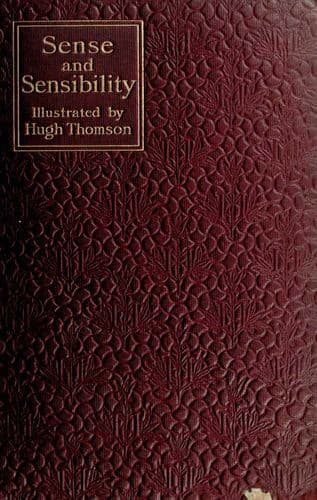
Book details and cover from Google Books.
Ready to read Sense and Sensibility?
Get your copy on Amazon, or listen to it on Audible. We earn a commission if you buy through these links.