
We earn a commission if you buy through these links. Learn more
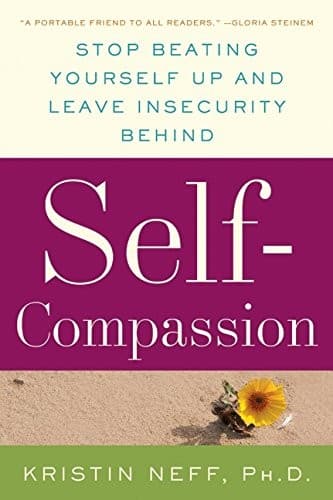
Self-Compassion
by Kristin Neff
A research-backed, practical guide to treating yourself with the same care you'd give a friend, without lowering your standards or relying on self-esteem boosts.
What It's About
Self-Compassion, first published in 2011, is Kristin Neff's attempt to turn a body of psychology research into something ordinary readers can use. Neff builds the book around a simple claim: treating yourself kindly after failure or distress tends to motivate better than harsh self-criticism, and this is a skill you can learn rather than a personality trait you either have or lack.
The approach is practical. Neff defines self-compassion as three intertwined parts and offers reflective questions, short exercises, and guided practices, including a brief self-compassion break that you can use in the middle of a hard moment. Her tone is warm and encouraging, and she repeatedly anticipates the objection that self-compassion means letting yourself off the hook. Reading it feels less like a lecture than a workbook you move through at your own pace, with research supporting the claims rather than dominating the pages.
The experience is gentle and somewhat repetitive by design. Many ideas return in new forms, which helps them stick but can feel slow to readers who want fresh information. The emphasis falls on personal practice over theory, so you will get the most from it if you actually try the exercises. The core advice applies to everyday self-talk, perfectionism, body image, and relationships, though it is not a treatment for clinical depression or trauma.
Read this if you…
- you tend to beat yourself up after mistakes and want a practical way to change that
- want research-backed ideas rather than vague affirmations
- are a perfectionist who worries that kindness toward yourself will make you lazy
Skip it if you…
- want a deep theoretical account of emotion or a clinical treatment for trauma
- already know the self-compassion research well and are looking for new findings
Key Ideas
- 1
Self-compassion has three interlocking parts
Neff breaks self-compassion into self-kindness versus self-judgment, common humanity versus isolation, and mindfulness versus over-identification with painful thoughts. She argues the three work together, and that leaving one out tends to weaken the whole. This gives readers a concrete checklist for noticing where they fall short, instead of a vague instruction to be nicer to themselves.
- 2
Self-compassion is not the same as self-esteem
Neff argues that self-esteem often depends on comparison and on feeling above average, which makes it fragile after a failure. Self-compassion asks you to accept your flaws without ranking yourself against others. She contends that this steadier footing is what lets people admit mistakes honestly and try again without collapsing into shame.
- 3
Common humanity loosens the grip of shame
Much suffering feels private and shameful, as if you alone are failing at something everyone else manages. Neff's idea is to recognize that imperfection and difficulty are shared human experiences. Many readers find this the hardest reframing to accept, because it asks them to give up the belief that their struggles set them apart from others.
- 4
Kindness can motivate rather than excuse
A common worry is that being gentle with yourself will make you lazy. Neff draws on research, including work from her own lab, suggesting that people who respond to their failures with kindness are more likely to take responsibility and try again than those who respond with harsh criticism. The book makes a persuasive case, though readers should weigh how far the findings extend.
- 5
Exercises meant to be repeated
The book offers practices such as the self-compassion break, writing a letter from the perspective of a caring friend, and asking how you would speak to someone you love who was struggling the same way. Neff presents these as skills that grow with repetition, much like any habit, so they work best as a regular practice rather than a one-time read.
Limitations
Critics note that some research on self-compassion relies on self-report questionnaires, which are hard to check against actual behavior, and that psychologists still debate how cleanly self-compassion separates from self-esteem. The book is written for a general audience, so it simplifies findings and can read as more certain than the evidence warrants. It is also built on largely Western, individualist assumptions about the self and does not address structural causes of suffering. Readers dealing with trauma, depression, or eating disorders will need professional support beyond what a self-help book can offer.
Questions Readers Ask
- Is Self-Compassion still relevant today?
- Yes. It remains one of the most widely read introductions to the topic, and its central ideas still hold up well. Research on self-compassion has expanded since 2011, and Neff has written further on the subject, including Fierce Self-Compassion. Readers who want the newest work should look beyond this book, but it remains a solid starting point for understanding the basic framework.
- How does it compare to The Mindful Path to Self-Compassion?
- Christopher Germer, a psychologist who co-developed a mindful self-compassion program with Neff, wrote The Mindful Path to Self-Compassion. His book is more structured around mindfulness-based exercises and a step-by-step program. Neff's book is broader and more research-framed, which makes it easier for general readers to start with and dip into at their own pace.
- Published
- 2011
- ISBN
- 9780061733512
- Difficulty
- beginner
- Category
- Psychology
Book details and cover from Google Books.
Ready to read Self-Compassion?
Get your copy on Amazon, or listen to it on Audible. We earn a commission if you buy through these links.