
We earn a commission if you buy through these links. Learn more
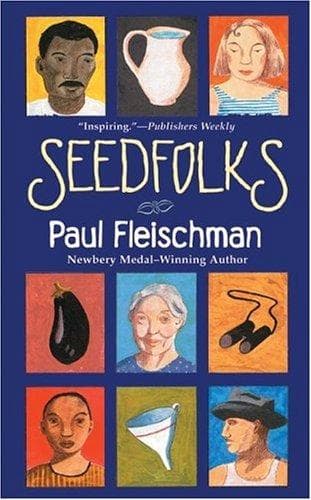
Seedfolks
Guide by the Books of the Day editors · Updated · How we write our guides
A short novel told in thirteen voices, as strangers in a Cleveland neighborhood share one vacant lot and slowly become a community. Moving and quick to finish.
What Creators Say About Seedfolks
2 creators reviewed Seedfolks on YouTube between 2010 and 2026, with 40.3K views between them. Their opinions are their own; we picked these reviews, we didn't write them.
What It's About
Seedfolks is a short novel for young readers built from thirteen first-person monologues. Each speaker lives near a rundown vacant lot in an urban neighborhood, and one by one each has a reason to start digging in: a child, an older man, a newcomer still learning the language. Fleischman lets each voice stand on its own, so the book reads more like a sequence of portraits than a single plot.
The approach is the point. Because each narrator sees the garden from a different angle, the lot gradually becomes more than vegetables. It becomes a place to meet, argue, and be known. Fleischman writes in plain, precise language, and the differences in each speaker's concerns and manner do much of the characterization. Reading it feels like eavesdropping on a neighborhood over a single season of growth.
The experience is brief and warm, with a clear emotional arc and little menace. It rewards close attention to the small details in each voice, and it works well read aloud or in one sitting. Adult readers may finish it quickly, but its picture of people who would not ordinarily speak to one another still lands.
Read this if you…
- want a short, humane book that you can finish in one sitting
- enjoy novels told through multiple narrators and like piecing a story together
- are looking for a gentle book about community to read with a child or in a classroom
Skip it if you…
- want a plot with suspense, rising stakes, or a sharp central conflict
- prefer dense, layered prose or long, complex character arcs
Key Ideas
- 1
A shared task that brings strangers together
The garden gives people a reason to show up, and that reason matters more than any grand intention. Fleischman shows how ordinary, repeated work creates contact between people who otherwise have no business talking. The connections form around watering, weeding, and noticing what has changed, not around speeches about community.
- 2
Thirteen voices, one place
Each chapter is a monologue from a different neighbor, so the reader assembles the neighborhood piece by piece. The structure rewards attention, because you learn who someone is by how they speak about the lot and about the others. Patterns and contradictions between the voices carry much of the book's meaning.
- 3
Small care changing a shared space
The book takes seriously the idea that modest, unglamorous effort can alter a place people have written off. The lot is neglected, and the change comes slowly and visibly. Readers who like stories about quiet civic action will find the premise appealing, though the book never preaches about it.
- 4
Difference as a basis for connection
The speakers come from different backgrounds and hold different expectations of their neighbors. Fleischman does not erase those differences to make the story easier. Instead, the garden gives the characters common ground while they remain distinct people, which is the book's most durable lesson for younger readers.
Limitations
The book is short and deliberately warm, so readers who want grit or sustained tension may find it slight. Its harmony can feel idealized, since the neighborhood's problems are real but the story tends to resolve them gently. Each voice is sketched rather than fully developed, which suits the form but limits psychological depth. Some readers may also wish the book engaged more with the structural forces behind an neglected urban lot. Those who want a more searching treatment of city life will need to look elsewhere.
Questions Readers Ask
- Is Seedfolks suitable for children?
- Yes. It is commonly read by upper elementary and middle-grade readers, and its vocabulary and sentence structure are accessible. Its themes of neighborliness, persistence, and difference are age-appropriate. Adults often read it too, and it works well in classrooms or read-aloud settings where a teacher or parent can pause to talk through each voice.
- Is the book still relevant today?
- Its core subject, neighbors creating something together in a neglected space, remains current, especially in discussions of urban gardening and local community. The language is plain and the scenes are not tied to a particular trend. Readers should expect a gentle, hopeful picture rather than a detailed account of modern urban policy or economics.
- Published
- 1997
- ISBN
- 9780613182768
- Difficulty
- beginner
- Category
- Children's Books
Book details and cover from Google Books.
Ready to read Seedfolks?
Get your copy on Amazon, or listen to it on Audible. We earn a commission if you buy through these links.