
We earn a commission if you buy through these links. Learn more
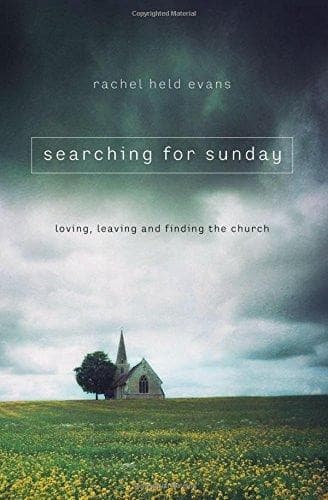
Searching for Sunday
A warm, candid memoir of a writer who left evangelicalism to see how other Christians worship, and what church life means beyond a personal feeling.
What It's About
The book follows Rachel Held Evans, a popular evangelical writer, as she grows restless with the church she grew up in and begins attending congregations from other traditions. Some of these have set prayers, a liturgical calendar, and weekly communion. Others are far more informal. Her approach is to show up, participate, and report back, rather than to argue a position from a safe distance.
The writing is conversational and often funny, with self-deprecating asides. It also gets serious about harder subjects such as doubt, gender roles, and how congregations treat people who don't fit their expectations. The narrative moves between scenes from services and her reflections on them, so it reads more like travel writing than a theology textbook.
Reading it feels less like being lectured and more like tagging along with a friend who is working out where she belongs. Readers who did not grow up in evangelicalism may find the insider references helpful, while those who did may find it strikingly familiar. The emotional core is whether belonging to a community can survive disagreement with it.
Read this if you…
- are curious about liturgical churches and want an outsider-insider guide to them
- have stayed in a faith community despite doubts and want to see that experience described honestly
- enjoy funny, personal memoirs that also engage with theology
Skip it if you…
- want a systematic defense of a particular denomination or doctrine
- are looking for a detailed history of the church or of the traditions it visits
Key Ideas
- 1
Worship as a shared rhythm, not a mood
Evans is drawn to liturgy because it asks people to repeat words, observe a calendar, and gather on a schedule whether or not they feel moved. She treats this repetition as a way of carrying faith when emotions run thin, and she contrasts it with a faith that depends on how a service makes you feel that morning.
- 2
Doubt kept inside the community
Rather than treating questions as the opposite of faith, the book asks what it looks like to stay in a congregation while still uncertain. It examines how churches handle doubters, and whether a community can make room for people who are not sure what they believe.
- 3
Learning from traditions beyond your own
Each visit is a small lesson in what other Christian groups have preserved and what they have lost. Evans does not present any single tradition as the answer. Instead she shows how older practices can enrich a faith that grew up in a more individualistic setting.
- 4
Belonging when you disagree
A recurring thread is the cost of leaving a community you love and the difficulty of finding a new one. The book takes seriously the grief of church departure and the hope that a congregation can hold people across real differences.
Limitations
Some readers find the book's tone breezy, and its personal anecdotes carry more weight than its theological arguments. The congregations it visits are a limited sample, mostly American and Western, so it does not represent the global church. Evans's positions on gender and other contested issues have divided readers, and the book is written from a progressive Christian perspective. Its portrait of the church landscape is also a snapshot from the mid-2010s, and many of the trends it describes have since shifted.
Questions Readers Ask
- Do I need to be a Christian to enjoy Searching for Sunday?
- No. The book is written for a general reader and explains the practices it describes as it goes. Readers with no church background can follow along easily. Those who are curious about faith, or who have left a religious community themselves, often find it the most relatable part. Some of the theology is more pointed than a casual reader might expect, but the personal story carries the book.
- How does it compare to Anne Lamott's Traveling Mercies?
- Both are personal spiritual memoirs with a humorous voice, but they feel different. Lamott's book is more loosely structured and centers on individual moments of grace. Evans's book is organized around the question of church itself, with each visit serving as a case study. If you want reflections on faith through life events, Lamott may suit you better. If you want a guided look at worship and community, Evans is the closer fit.
- Published
- 2015
- ISBN
- 9780718022136
- Difficulty
- beginner
- Category
- Biographies
Book details and cover from Google Books.
Ready to read Searching for Sunday?
Get your copy on Amazon, or listen to it on Audible. We earn a commission if you buy through these links.