
We earn a commission if you buy through these links. Learn more
Schindler's List
Keneally's account of Oskar Schindler, a profiteering German industrialist who saved more than a thousand Jewish workers, is a sober, morally complicated look at how rescue happened.
What It's About
Keneally's book tells the story of Oskar Schindler, a German industrialist and Nazi party member in occupied Poland who, over the course of the war, employed and shielded more than a thousand Jewish workers from the Kraków region. Keneally builds the account from survivor testimony, interviews, and documents gathered after the war, and he is candid that some of Schindler's inner life can only be inferred.
The approach sits closer to a reconstructed nonfiction novel than to a formal history. Keneally moves between scenes at the factory, the brutal labor camp run by the SS, and the bureaucratic maneuvering Schindler used to keep his workers off the transports. Dialogue and private moments are reconstructed, and the prose is plain and unshowy, which lets the horror land without ornament. The book reads quickly once it gets going, but it keeps returning to the specific people involved.
The reading experience is heavy and morally unsettling rather than uplifting. Schindler is not a simple saint: he was a profiteer who drank, gambled, and spent money freely, and the book keeps that tension alive. Expect a long, episodic book with many names, where the weight comes from accumulation rather than any single scene.
Read this if you…
- want a grounded account of how individual rescue happened under Nazi occupation
- are interested in the moral gray zones of wartime profit, collaboration, and complicity
- prefer a true story told with novelistic detail over a dry historical summary
Skip it if you…
- need a rigorously footnoted academic history of the Holocaust in Poland
- want a clean, uplifting story with a simple, flawless hero
Key Ideas
- 1
Rescue through useful labor
Schindler's factory made war goods, and he argued that his workers were essential to production. Keeping people alive became a matter of persuasion, paperwork, and arithmetic about output. The book shows how a practical argument, made again and again to people with power, could protect lives in a system built to destroy them.
- 2
A compromised man who changed
Schindler is not presented as a hero from the start. He benefited from cheap forced labor and moved within the Nazi economy for years. His transformation is gradual and uneven, shaped by what he witnessed and by the people around him, and Keneally resists turning it into a neat conversion story.
- 3
Bribery and bureaucracy as survival tools
Lists, quotas, payments, and favors to officials were the everyday machinery of saving lives in this story. Rescue here was administrative as much as heroic. The book pays close attention to how small favors, forged necessities, and careful negotiation with authorities made a difference.
- 4
Testimony and record as foundation
Keneally built the story from survivors' memories and surviving documents, and he pays attention to how memory and record-keeping shape what gets remembered. The famous list of names is itself a document, and the book keeps asking who counts as a witness and how reliable recollection is decades later.
Limitations
Keneally reconstructs dialogue and interior moments that he could not verify, so readers who want strict historical sourcing should look to other works alongside it. The book centers Schindler and his workers, with less attention to the wider machinery of the camps and to Polish perspectives. Some readers find the long roster of names hard to track, and its framing reflects research and attitudes from the early 1980s rather than later scholarship.
Questions Readers Ask
- Is the book better than the Spielberg film?
- The book came first, published in 1982, and the 1993 film adapted it. The book is longer, more episodic, and more focused on the workers and the surrounding camp system. The film is more compressed and visual. Many readers find the book adds context and texture the film leaves out, while the film is the faster route into the story.
- Is Schindler's List still relevant today?
- Yes. Its questions about complicity, persuasion under pressure, and how rescue actually works remain useful. Historical scholarship has expanded since it was written, so pair it with newer histories for broader context, but the human stakes and moral questions it raises have not dated.
- How does it compare to Primo Levi's If This Is a Man?
- Levi's memoir is a first-person account from inside Auschwitz, precise and reflective. Keneally's book is third-person and wider in scope, centered on a German rescuer and the people he saved. Reading both gives you the victim's view from inside the camp and a broader view of how survival was made possible.
- Published
- 1993
- ISBN
- 9780340606513
- Difficulty
- intermediate
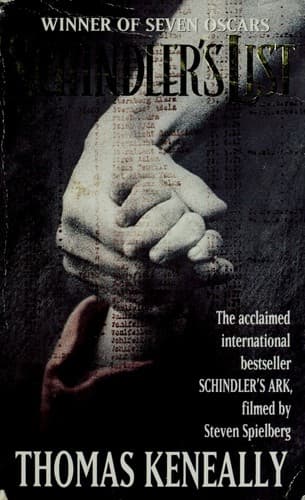
Book details and cover from Google Books.
Ready to read Schindler's List?
Get your copy on Amazon, or listen to it on Audible. We earn a commission if you buy through these links.