
We earn a commission if you buy through these links. Learn more
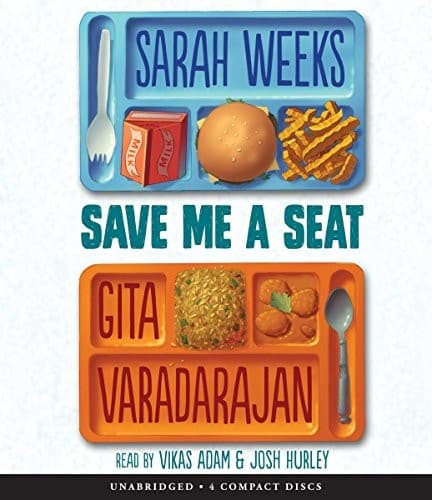
Save Me a Seat
by Sarah Weeks, Gita Varadarajan
Guide by the Books of the Day editors · Updated · How we write our guides
A warm, plainspoken middle-grade novel where two boys tell the same school year in alternating voices, making it easy to see how a kid can be misjudged from both sides.
What Creators Say About Save Me a Seat
2 creators reviewed Save Me a Seat on YouTube in 2020, with 18.6K views between them. Their opinions are their own; we picked these reviews, we didn't write them.
What It's About
Save Me a Seat is a middle-grade novel by Sarah Weeks and Gita Varadarajan about two boys in the same class who become seatmates. Ravi has recently moved to the United States from India and is working out a new language, a new school, and the unwritten social rules that come with both. Joe is carrying a family situation he didn't choose and a reputation that has already been settled by his classmates. The book follows how these two slowly find out whether they can be more than reluctant neighbors.
The book alternates between their first-person voices, so the same events come at you from two sides. That structure does most of the work. Joe's sections show what it feels like to be the kid everyone has already decided about, while Ravi's show how much effort it takes to belong somewhere when every small misunderstanding feels like a verdict on you.
The prose is short, direct, and quick to read, and the book is aimed at readers roughly nine to twelve. Reading it feels closer to sitting in on two candid diaries than to following a tightly engineered plot. Expect humor, a few painful moments, and a steady focus on small, concrete kindnesses.
Read this if you…
- want a middle-grade novel about friendship that handles bullying and family strain honestly
- are interested in an immigrant perspective on school life told by a child narrator
- enjoy stories that switch between two characters and let you judge who is right
Skip it if you…
- want a fast plot full of twists, mystery, or high stakes
- are looking for a deeply literary novel with dense prose and ambiguous endings
Key Ideas
- 1
Seeing the same events from two sides
Because the chapters alternate between Ravi and Joe, the reader keeps catching what each boy misses about the other. A moment that looks like rudeness from one seat often turns out to be fear or confusion from the other. The shifting viewpoint teaches empathy without the book having to lecture about it.
- 2
Being labeled before anyone knows you
Joe's classmates have already decided who he is, and Ravi is sorted by his accent, his clothes, and his unfamiliar customs. The book is useful for showing how quickly reputations harden among children and how hard it is to climb out of one. It treats this as a real social problem rather than a passing phase.
- 3
Immigrant life in a new school
Ravi's sections convey the constant small translation work of being new: understanding idioms, guessing at jokes, and deciding when to speak up. The book does not present his adjustment as a tidy story of assimilation. It shows the effort and the loneliness, and it lets Ravi's family life and cultural identity remain his own.
- 4
Kindness that is specific and modest
The book's warmth comes from ordinary gestures rather than grand rescues. Friendship here is built through small choices made repeatedly, like sharing a seat, showing up, or telling the truth. Readers who want a quiet model of how kids can look out for one another will find that the book sticks to believable scale.
- 5
A simple style that rewards patience
The writing is deliberately plain, which suits young narrators and keeps the page turning. Some readers may find the pace gentle or the drama restrained. The payoff is that the emotional beats land because they are never overplayed, and the characters feel like kids rather than lessons with names.
Limitations
Some readers find the book's resolutions tidy and its emotional moments a bit predictable, especially for adults who have read many school-story novels. Its treatment of Ravi's culture is seen mainly through a child's eyes and is accessible rather than deeply detailed, so it does not offer a full portrait of life in India or of immigrant families more broadly. Because it is written for a young audience, it avoids the harder edges that older readers might want. It works best as an introduction to these themes rather than as the final word on them.
Questions Readers Ask
- Who is Save Me a Seat best for?
- It suits confident readers around nine to twelve, and it works well as a read-aloud or shared book for families and classrooms. Adults who enjoy gentle, well-observed school stories will also find it pleasant. Readers who want heavy plotting or complex prose will likely find it too light.
- How does it compare to other school-set middle-grade novels?
- It is closer in tone to quiet, character-driven books about friendship than to adventure stories. Its dual-narrator structure is the main feature that sets it apart. If you liked books that focus on a child's social world and inner life, this one fits that mold.
- Published
- 2016
- ISBN
- 9780545846615
- Difficulty
- beginner
- Category
- Children's Books
Book details and cover from Google Books.
Ready to read Save Me a Seat?
Get your copy on Amazon, or listen to it on Audible. We earn a commission if you buy through these links.