
We earn a commission if you buy through these links. Learn more
Salvage the Bones
by Jesmyn Ward
Guide by the Books of the Day editors · Updated · How we write our guides
Jesmyn Ward's National Book Award winner captures a Gulf Coast family's last days before Hurricane Katrina through a fifteen-year-old's lyrical, unflinching eye.
What Creators Say About Salvage the Bones
2 creators reviewed Salvage the Bones on YouTube between 2011 and 2013, with 12.4K views between them. Their opinions are their own; we picked these reviews, we didn't write them.
What It's About
Salvage the Bones follows Esch, a fifteen-year-old girl in Bois Sauvage, a poor fictional town on the Mississippi Gulf Coast. The story covers roughly the twelve days before Hurricane Katrina arrives. Esch's mother died giving birth to her youngest brother, and she is left to help her father and brothers keep a failing household running. She is also pregnant, and the book keeps returning to what that means for her body, her future, and her relationship with the baby's father.
Ward writes in the first person, present tense, in a voice that is close, sensory, and often lyrical. Sentences build and repeat, dialogue runs without tidy punctuation, and the rhythm can feel like being inside someone's head as she works through a hard day. The book moves less through plot than through accumulating domestic scenes: meals, chores, the care of a dog and her litter, and the preparations for a storm nobody can fully protect against. Esch's reading of Greek myth gives her a frame for thinking about desire, betrayal, and motherhood.
Reading it is immersive and physically intense. Ward does not soften poverty, violence, or the body, and the book asks you to stay with characters who have very little. It rewards patience and, often, a second reading.
Read this if you…
- want a literary novel with a strong, distinctive narrator and a close, sensory voice
- are interested in how poverty and family obligation shape ordinary days
- want to read a Southern story that treats Black rural life with depth and without sentimentality
Skip it if you…
- need a fast plot with clear stakes at every turn, since this book moves slowly through daily detail
- find graphic animal violence or frank depictions of pregnancy and childbirth hard to sit with
Key Ideas
- 1
Poverty as the texture of everyday life
Ward shows scarcity through routine rather than speeches: what the family eats, how much work a single task requires, and how little margin there is for error. The house, the money, and the land are never abstract. Readers who expect poverty to be a backdrop will find it is the main subject, shaping every choice the characters make.
- 2
Motherhood without a mother
Esch's mother is dead, and Esch takes on a maternal role for her brothers while still being a child herself. The book examines what it costs a young girl to be responsible for others, and how the absence of a mother defines the family's emotional life even when she is never present on the page.
- 3
Myth as a lens on the present
Esch reads Greek myth, and the story of Medea and Jason runs beneath her thinking about love and abandonment. Ward uses these stories not as decoration but as a second vocabulary, letting Esch name feelings she cannot yet say plainly. The parallels are suggestive rather than neat.
- 4
Loyalty and love in a dog's life
Skeetah's devotion to his pit bull, China, is one of the book's most intense threads. It mirrors the larger questions about sacrifice and what people owe each other. The dog's world is rendered with unusual seriousness, and the scenes involving dogs are among the hardest in the book.
- 5
The storm as slow pressure
Katrina is a looming force that the characters watch approach, and it exposes how little protection the community has. Ward keeps the storm close to the ground, focused on the household's preparations rather than on wide-angle disaster coverage, so the threat builds steadily through the story.
Limitations
The style is the main obstacle. The prose is repetitive by design, the punctuation is loose, and the rhythm can feel exhausting over a full reading. Some readers find the mythological references heavy-handed, and others feel the storm is handled more as a looming backdrop than as a fully explored event. The dog-fighting material is graphic and will be difficult for many readers. The book is also tightly focused on one family and one town, so it does not offer a broad account of the wider disaster.
Questions Readers Ask
- Is Salvage the Bones really young adult fiction?
- This listing files it under Young Adult, but the book was published for adult readers and it won the National Book Award for Fiction in 2011. Esch is fifteen, and her age shapes the narration, but the themes of sexuality, poverty, violence, and childbirth are handled in ways that suit mature readers. Many adults read it as literary fiction, and it is a better fit for them than for most young teens.
- Do I need to know anything about Hurricane Katrina before reading?
- No. The book is written so that you learn what matters as the characters do, and the storm is introduced through the family's preparations. Some background on the 2005 hurricane and the Gulf Coast can add context, but it is not required. The emotional story stands on its own without a history lesson.
- Is it similar to Ward's other novels?
- Yes, in its close attention to Black Southern family life, its lyrical first-person style, and its focus on poverty and loss. Ward's later novel Sing, Unburied, Sing returns to similar territory with a broader, more layered structure. Readers who want more of her voice will find this a good place to start.
- Published
- 2011
- ISBN
- 9781408841310
- Difficulty
- intermediate
- Category
- Young Adult
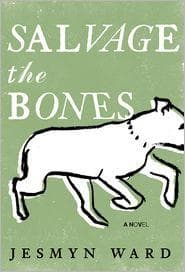
Book details and cover from Google Books.
Ready to read Salvage the Bones?
Get your copy on Amazon, or listen to it on Audible. We earn a commission if you buy through these links.