
We earn a commission if you buy through these links. Learn more
Salt
A wide-ranging, anecdote-driven tour of how one cheap mineral shaped trade, taxation, revolt and cooking across much of recorded history, ideal for curious readers who want a fast, entertaining survey.
What It's About
Salt: A World History traces a single substance through human history, from its early role in preserving food to its place in the industrial economy. Kurlansky uses salt as a lens: it shaped where people settled, which trade routes mattered, how states raised money, and why some uprisings happened. The book moves across regions and centuries instead of following one country, so patterns that repeat in ancient Asia, medieval Europe and colonial America become visible side by side.
The approach is episodic and conversational. Kurlansky writes in short sections, often built around a striking fact, a story or a recipe, and he is comfortable digressing. Reading it feels more like browsing a well-stocked notebook than working through a textbook. Names and places arrive quickly, but the narrative keeps returning to one question: why has an ordinary, inexpensive mineral mattered so much to governments and everyday cooks alike?
The experience is light without being thin. You finish with a sharper sense of how much everyday life once depended on access to a single resource, and how easily that access could be controlled. Some sections are richer and better developed than others, and a few stretches move faster than the subject deserves, so the book works best as a broad, engaging survey rather than a definitive scholarly account.
Read this if you…
- want an accessible introduction to economic and social history through one everyday object
- enjoy short, anecdotal nonfiction that jumps between continents and centuries
- are curious how small commodities quietly shaped governments, trade and daily life
Skip it if you…
- need rigorous, source-by-source scholarship or a detailed academic argument
- are looking for current nutrition advice about salt and health
Key Ideas
- 1
Salt as a basic human necessity
Kurlansky argues that salt has been essential to human life for as long as people have eaten meat and grain. Bodies need sodium to function, and before refrigeration salt was often the only dependable way to keep food through lean seasons. That practical need explains why a plain mineral could become so central to settlement, diet and survival.
- 2
Control of salt as a source of state power
Because nearly everyone needed salt and few could produce it cheaply, governments found it an easy thing to tax or monopolize. The book shows how such schemes raised revenue for rulers and burdened ordinary households, making salt a recurring instrument of statecraft across very different societies.
- 3
Trade routes and the fish that salt preserved
Salt made long-distance trade in perishable goods possible. Kurlansky devotes attention to salted fish, especially cod, and how preservation supported maritime economies and dietary habits. The thread connects coastal fishing, inland markets and the commercial networks that linked them.
- 4
Salt as a political symbol of resistance
The book's most memorable material shows how a mundane commodity could become a rallying point. Gandhi's 1930 salt campaign in colonial India is the best-known example, illustrating how a tax on an everyday necessity could turn into a broad moral and political challenge.
Limitations
The book is a popular history, so its breadth comes at the cost of depth. Some readers find the anecdotes uneven and the connections between eras asserted more than demonstrated. Written in 2002, it predates later archaeological and scholarly work on ancient salt production. It also says little about the modern medical debate over sodium intake, and its global scope means individual regions receive only selective treatment.
Questions Readers Ask
- Is Salt by Mark Kurlansky a good book for beginners?
- Yes. It assumes no background in economics or history and is written in short, readable sections. You do not need to know anything about the subject beforehand. It is a good entry point, and if you enjoy it, you can move on to the author's other food-history books, such as Cod, which uses a similar approach to a different ingredient.
- Is Salt still relevant today?
- As a broad story it still holds up well, because the basic themes of taxation, trade and control of necessities remain current. Some specific details and the modern health context have moved on since it was published, so treat it as a historical survey rather than a current reference on salt production or nutrition.
- How does Salt compare with Cod by the same author?
- Both books use one food product as a way into large historical themes. Salt covers a wider range of uses and political episodes, while Cod focuses more tightly on the fishing trade and its economic and cultural consequences. Readers who like one often enjoy the other, though Salt is the broader and more varied of the two.
- Published
- 2002
- ISBN
- 9780802713735
- Difficulty
- beginner
- Category
- History
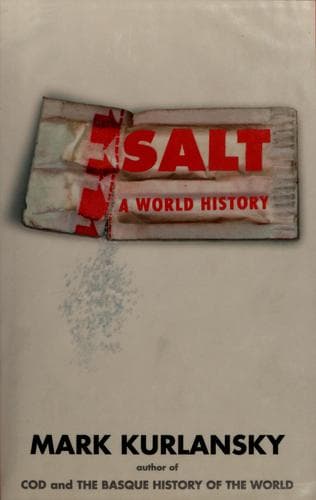
Book details and cover from Google Books.
Ready to read Salt?
Get your copy on Amazon, or listen to it on Audible. We earn a commission if you buy through these links.