
We earn a commission if you buy through these links. Learn more
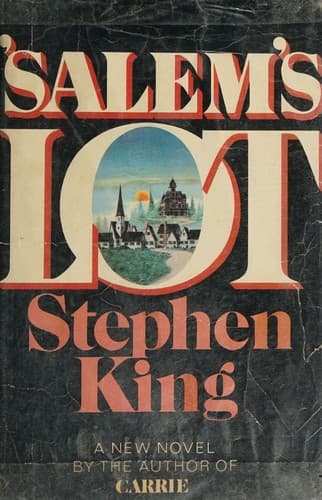
'Salem’s Lot
Stephen King's slow-burning small-town vampire novel treats dread as patient, communal, and personal, making it one of the best modern takes on Dracula.
What It's About
'Salem's Lot follows Ben Mears, a writer who returns to Jerusalem's Lot, the Maine town where he spent part of his childhood. He finds the place carrying a dark history centered on a hilltop house that has stood empty for years. As newcomers move in and residents begin to vanish, the first people to notice are a mix of townsfolk, a schoolteacher, a priest, and a young boy who loves monster movies. King spreads the story across many characters, so you watch the town change from several angles rather than following one hero.
The approach is methodical rather than flashy. King takes his time establishing the texture of daily life: the gossip at the general store, the marriages and grudges, the sense that everyone knows something and nobody says it. The horror arrives gradually, so the book works best when you are willing to sit with ordinary scenes and let unease build. Its structure owes something to the sweeping town portraits of earlier American fiction, and King clearly enjoys the rules and folklore of vampirism.
Reading it feels like settling into a long, slightly claustrophobic night. It is intimate in its details and expansive in its scope, and it runs long for a horror novel, so expect a real commitment before the story reaches full intensity. The payoff is a book that rewards patience with genuinely frightening set pieces and a melancholy sense of loss.
Read this if you…
- want slow-building dread and a large cast of small-town characters
- enjoy classic vampire stories and want a modern take on Dracula's rules and atmosphere
- like stories about a community confronting something it would rather ignore
Skip it if you…
- need fast pacing or a single, tightly focused protagonist
- find sprawling, digressive chapters tiring or dislike graphic violence
Key Ideas
- 1
Vampirism as a slow communal infection
The threat here does not arrive as a single villain stalking a heroine. It spreads through a community the way rumor or disease does, with each new victim changing the people around them. King uses that spread to show how a town can absorb a catastrophe while its residents keep insisting nothing is wrong, and how denial can be as dangerous as the monsters themselves.
- 2
Small-town life as a subject
Jerusalem's Lot is drawn with an insider's eye for the rhythms of rural New England: church, town meetings, local rivalries, and the store where everyone gathers. The horror is partly a portrait of a community that has learned to look away from its own problems. The portrait is affectionate and unsparing at once, and it is often the most memorable part of the book.
- 3
A cast that spreads the dread
Rather than one protagonist, the novel moves among a teacher, a writer, a priest, a doctor, a boy, and many others. Each viewpoint shows a different slice of the threat, and the shifting focus creates a sense of a whole town under pressure. Some characters are drawn more richly than others, which is part of the book's sprawl and part of its charm.
- 4
Dracula rebuilt for mid-1970s America
The novel is openly in conversation with Bram Stoker's Dracula. You can see its bones in the outsider who arrives, the old house on the hill, and the careful accumulation of folklore. Yet the setting is recognizably American and contemporary to its own time, which gives an old myth a modern, almost suburban unease.
Limitations
King's pacing is often criticized as loose, with long passages that circle back to minor characters and side stories. Some readers find the middle slow, and by modern standards some characters, especially women, are thinly drawn. The book is also firmly a product of its decade: the rural culture, the technology, and the social assumptions feel dated. Its vampire rules have since been reworked many times by later writers, and it cares more about atmosphere and communal panic than psychological nuance.
Questions Readers Ask
- Is 'Salem's Lot still worth reading today?
- Yes, mainly for its atmosphere and character work. The technology and rural setting feel of their time, and the vampire mythology has been remade many times since, but the slow build of dread and the picture of a town in denial still land. If you want a fast modern thriller, you may find it leisurely.
- How does it compare to Dracula?
- Stoker's novel centers on a foreign count invading England and is told through documents, while King moves the threat into a small American town and spreads the viewpoint across many residents. Both books are patient, but 'Salem's Lot is more communal and more concerned with how ordinary people respond to the danger.
- Published
- 1959
- ISBN
- 9780671039752
- Difficulty
- intermediate
- Category
- Horror
Book details and cover from Google Books.
Ready to read 'Salem’s Lot?
Get your copy on Amazon, or listen to it on Audible. We earn a commission if you buy through these links.