
We earn a commission if you buy through these links. Learn more
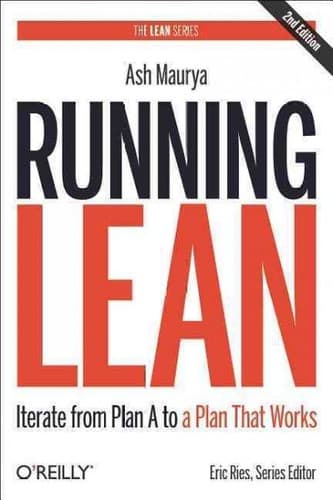
Running lean
by Ash Maurya
Guide by the Books of the Day editors · Updated · How we write our guides
A practical playbook for testing a startup idea before building it, built around the one-page Lean Canvas that replaces the long business plan with a sequence of cheap experiments.
What Creators Say About Running lean
2 creators reviewed Running lean on YouTube between 2012 and 2023, with 20.2K views between them. Their opinions are their own; we picked these reviews, we didn't write them.
What It's About
Running Lean is a working manual for founders who have an idea and want to find out whether it holds up before spending their savings or a year of engineering. Ash Maurya builds on the Lean Startup method and turns it into steps you can actually follow. The centerpiece is the Lean Canvas, a single page that asks you to fill in the problem, customer segments, unique value proposition, solution, channels, revenue streams, cost structure, key metrics, and unfair advantage. It is an adaptation of the Business Model Canvas, reshaped around the risks early startups actually face.
The book's approach is iterative and hands-on. Rather than writing a plan and then executing it, you list your riskiest assumptions, design quick tests to check them, talk to prospective customers, and decide whether to persevere, pivot, or stop. The tone is direct and practical, with concrete advice on structuring interviews, building minimal offerings such as landing pages or manual services, and choosing which numbers matter. It reads like a field guide you might keep open beside a notebook.
Reading it is less like absorbing theory and more like working through a series of exercises. Expect to revise your canvas several times and to feel the discomfort of being told your idea may be wrong. The book assumes you are building a product business, so readers in other settings will need to translate some of the examples.
Read this if you…
- are a founder or early-stage builder with an idea but no validated customers yet
- want a concrete, one-page framework for structuring a business plan
- prefer practical exercises and experiments over theory about entrepreneurship
Skip it if you…
- want deep guidance on startup finance, fundraising, or hiring
- already run an established business with a proven model and paying customers
Key Ideas
- 1
The Lean Canvas replaces the traditional business plan
Maurya argues that a long plan for a new venture is mostly guesswork. The canvas forces you to state the problem, the customer, and the value before the solution, and keeps the whole model on one page so you can edit it as you learn what is true.
- 2
Start with the problem, not the product
The book stresses confirming problem-solution fit before building anything. You check that a specific group has a painful problem they already work around, and only then invest in a solution. This early step is where many founders skip ahead and pay for it later.
- 3
Test your riskiest assumptions first
List the assumptions your model depends on, rank them by how badly the venture would suffer if each were wrong, and design the cheapest experiment that tests the top one. The method turns vague optimism into specific questions with answers you can gather in days or weeks.
- 4
Customer conversations as the main research method
Interviews are structured to uncover current behavior and workarounds rather than to ask whether people would like your idea. The core lesson is to learn from what people have actually done and paid for, not from what they say they might do.
- 5
Persevere, pivot, or stop based on evidence
Decide in advance what results would count as success, then judge your experiments against that threshold. A pivot means changing a core hypothesis while keeping what you learned, which is different from abandoning the whole effort on a bad day.
Limitations
The book is written for software and internet product startups, and its examples lean that way. Founders in physical goods, regulated sectors, or service businesses will need to adapt the steps considerably. Some readers find the repeated emphasis on the canvas and on iteration thin in places, and the advice on metrics and pricing is more general than detailed. The core method is about testing rather than specific tools, so it has aged gently, but particular landing page or analytics services mentioned may have changed. It is not a substitute for financial or legal advice.
Questions Readers Ask
- Do I need to read The Lean Startup first?
- No, but it helps. Running Lean builds on Eric Ries's Lean Startup ideas, especially the build-measure-learn loop, and explains how to apply them more hands-on. Newcomers can follow Maurya's book alone, though Ries's book gives the broader reasoning behind the method.
- How does the Lean Canvas compare to the Business Model Canvas?
- The Lean Canvas is adapted from Alex Osterwalder's Business Model Canvas. It swaps some blocks for problem, solution, key metrics, and unfair advantage, which reflect the uncertainties of an early startup. The Business Model Canvas suits established firms describing how they operate, while the Lean Canvas suits testing whether a new idea is worth pursuing.
- Is Running Lean still relevant for non-tech businesses?
- Mostly yes. The core habits of testing assumptions, talking to customers, and deciding on evidence-based thresholds apply broadly. The examples and tools skew toward software, so expect to translate them for restaurants, consumer goods, or service businesses.
- Published
- 2012
- ISBN
- 9781306812139
- Difficulty
- beginner
- Category
- Business
Book details and cover from Google Books.
Ready to read Running lean?
Get your copy on Amazon, or listen to it on Audible. We earn a commission if you buy through these links.