
We earn a commission if you buy through these links. Learn more
Rump
Guide by the Books of the Day editors · Updated · How we write our guides
A witty, big-hearted retelling of Rumpelstiltskin that gives the scorned outsider his own story, showing how names and fairy tales decide who gets to be the villain.
What Creators Say About Rump
2 creators reviewed Rump on YouTube between 2013 and 2015, with 1.1K views between them. Their opinions are their own; we picked these reviews, we didn't write them.
What It's About
Rump is Liesl Shurtliff's retelling of Rumpelstiltskin, the strange little figure from the Grimm tale who bargains for a miller's daughter's firstborn. Here the story is told from the side of the boy the kingdom has already written off. Rump is an outsider because of his name and a secret about where he came from, and the book follows how a child who is teased and misunderstood ends up becoming the monster of a famous tale.
The writing is brisk, funny, and warm, aimed at middle-grade readers and easy to read aloud. Shurtliff keeps the familiar beats of the original recognizable, so the pleasure comes from watching them reappear with new causes and new meanings. The tone stays light even when the stakes turn serious, and the emotional core is a kid trying to belong somewhere that has decided he doesn't.
Reading it feels like hearing a fairy tale corrected by someone who was there. It is less a mystery or a sprawling epic than a clever, sympathetic reframing, and it works best for readers who enjoy seeing an old story turned inside out.
Read this if you…
- Want a fresh take on a fairy tale you already know from childhood
- Enjoy funny, character-driven fantasy with a moral streak
- Are looking for a read-aloud or a middle-grade book that does not talk down to its readers
Skip it if you…
- Want dense worldbuilding, a long epic, or complex adult political plotting
- Prefer fairy tales that stay close to the original Grimm darkness and cruelty
Key Ideas
- 1
Names as identity and power
Rump's name is both a source of ridicule and a clue to who he is. The book treats names as something people use to define and control others, and it asks what happens when a person is labeled by a word they did not choose. Readers will notice how often the story returns to the question of what a name really means.
- 2
Who gets to tell the story
The original tale is told by people who only see Rump's bargain, not his reasons. Shurtliff builds the whole book around the gap between how a story is recorded and how it was lived. It nudges younger readers to ask whose version they are being given and what has been left out of it.
- 3
Outsiders and the cost of exclusion
Rump is pushed to the edge of his community long before he does anything wrong, and the book shows how that rejection shapes his choices. It is a gentle but direct look at how suspicion can harden into a self-fulfilling reputation, which gives the fantasy an emotional weight beyond its humor.
- 4
Magic that is feared rather than understood
In this kingdom magic is distrusted, so anyone connected to it is easy to blame. The book uses this to examine fear of difference more broadly. The fairy-tale elements carry a real-world point about how communities decide which people and powers are dangerous.
Limitations
Rump is written for younger readers, so adults may find the characters and the moral lessons more straightforward than they would like. The reframing of a familiar tale can feel predictable to readers who already know the outline, and some secondary characters are sketched more than developed. The humor and tone are consistent, which some will find comforting and others may find lightweight. The book is best judged as a clever middle-grade retelling rather than a major work of literary fantasy.
Questions Readers Ask
- Is Rump suitable for adults or only children?
- Rump is written for middle-grade readers, roughly ages 8 to 12, but many adults enjoy it, especially those who love fairy-tale retellings or read with children. The language is accessible and the themes of belonging and fairness are handled directly. Adults looking for complex prose or adult stakes may find it lighter than they want.
- How does Rump compare to other fairy-tale retellings?
- Rump is closer in spirit to lighthearted, character-focused retellings than to darker adult versions like those by Angela Carter. It keeps the tone warm and funny while still asking serious questions about how stories shape reputations. If you like the playful reframing but want more emotional bite, you may find it gentle.
- Published
- 2013
- ISBN
- 9780307977946
- Difficulty
- beginner
- Category
- Fiction
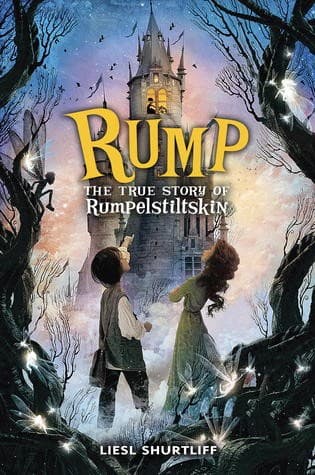
Book details and cover from Google Books.
Ready to read Rump?
Get your copy on Amazon, or listen to it on Audible. We earn a commission if you buy through these links.