
We earn a commission if you buy through these links. Learn more
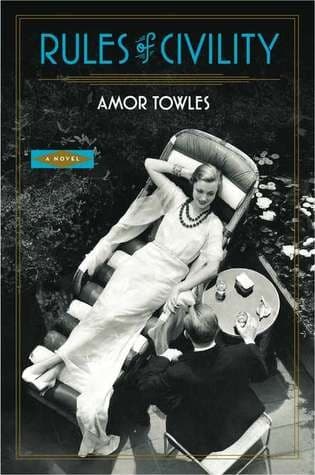
Rules of Civility
by Amor Towles
A witty, carefully built 1930s New York novel about a clever, working-without-money young woman and the social circles she tries to enter, ideal for readers who love manners, banter, and period atmosphere.
What It's About
Rules of Civility follows Katey Kontent, a bright young woman with little money in Manhattan, across roughly a year that begins on New Year's Eve 1937. A chance meeting at a jazz club pulls her into the orbit of wealthy uptown circles, and the novel tracks how she tries to make her own way in a city where class, reputation, and money decide much of what is possible. Towles tells the story in retrospect, with the wry voice of someone who remembers how much she did not yet understand.
The style is the main draw. Towles writes with a glossy, deliberately old-fashioned polish, closer to a classic comedy of manners than to a gritty city novel. Scenes are built around conversation, small social maneuvers, and the gap between what people say and what they mean. The title refers to a set of old rules of conduct that the narrator holds onto, a device that gives the book its tone of quiet self-correction and moral observation rather than heavy plot.
Reading it feels like sitting in a well-appointed room with a sharp narrator who enjoys her own cleverness. The pace is leisurely, and the pleasures lie in the details: clothes, music, cocktails, and the sound of money being spent carelessly. It rewards patience more than suspense, and readers who want fast plot turns may find the middle stretches slow.
Read this if you…
- enjoy character-driven novels set in a specific time and place
- like witty, old-fashioned prose and sharply observed dialogue
- are curious how class and ambition shaped life in 1930s New York
Skip it if you…
- need a fast-moving plot with frequent escalation and cliffhangers
- find nostalgia for prewar glamour sentimental or tiresome
Key Ideas
- 1
Class and reputation as a form of currency
Katey has talent and nerve but few connections, and the book keeps returning to how much a person's standing depends on family, appearance, and who vouches for them. Money matters, but so does the ability to look like you belong. Towles shows this without lecturing, letting the reader see how small social judgments add up to large consequences for someone starting from the bottom.
- 2
Manners as both armor and moral test
The novel treats etiquette seriously, not as decoration. Good manners can protect a person, hide a lack of scruple, or expose someone's real character under pressure. The title's old rules become a running lens for asking whether politeness is a virtue or simply a performance that the powerful can afford.
- 3
Ambition wrapped in apparent ease
Much of the story's energy comes from characters who appear carefree while working hard to secure their position. Towles finds humor in this gap between surface and effort. The result is a portrait of striving that feels stylish rather than desperate, which gives the book much of its charm and some of its distance.
- 4
Retrospective narration and hindsight
Because Katey narrates from a later vantage point, the story carries a second layer of awareness. She is sometimes amused or chastened by her younger self, and the reader gets both the experience of the moment and the perspective of someone who has learned from it. This double vision is central to the book's tone and its sense of self-knowledge.
Limitations
Some readers find the plot loose and the middle stretches slow, since the book prefers atmosphere and conversation to momentum. The wealthy characters can feel more like types than fully realized people, and the world it depicts is polished and selective. Its view of the Depression-era city is mostly that of a fairly comfortable observer, so readers looking for a grittier account of hardship will need to look elsewhere. The nostalgic gloss is a deliberate choice, but it is not for everyone.
Questions Readers Ask
- Is Rules of Civility a good first Amor Towles book?
- It depends on your taste. Many readers start with A Gentleman in Moscow, which has a warmer, more driven narrative. Rules of Civility is smaller in scope and more of a social comedy, so it suits readers who enjoy watching character and conversation more than following a big sweeping event.
- Does the book still feel relevant today?
- Its concerns with class, self-invention, and how reputation is traded still resonate. The period glamour is a deliberate, nostalgic fantasy rather than a historical record, so read it for character and wit rather than as an accurate picture of the era.
- Published
- 2011
- ISBN
- 9783548288222
- Difficulty
- beginner
- Category
- Fiction
Book details and cover from Google Books.
Ready to read Rules of Civility?
Get your copy on Amazon, or listen to it on Audible. We earn a commission if you buy through these links.