
We earn a commission if you buy through these links. Learn more
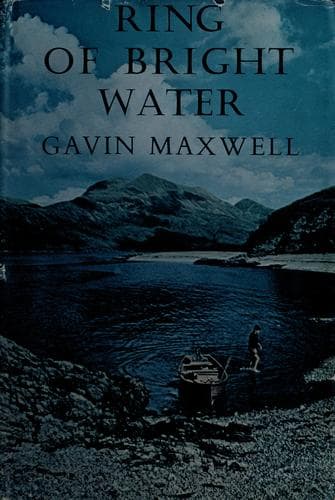
Ring of bright water
Maxwell's classic memoir of living with a household of otters on the Scottish coast is a lyrical, funny, and sad account of animals and solitude that still stands apart.
What It's About
Ring of Bright Water, published in 1960, is Gavin Maxwell's account of the years he spent living at a remote cottage near Sandaig on the west coast of Scotland, facing the Sound of Sleat, with a small household of otters. It is a memoir first and natural history second. Its emotional center is the animals, though the author is never far from view.
Maxwell writes in a rich, rhythmic, somewhat formal prose, full of landscape: the sea, the bracken, weather moving over the hills. He tells his story in loose episodes rather than a tight narrative, circling back to earlier events and digressing into memories of his travels, his friends, and the local people who helped him keep the house running. The otters come across as individuals with distinct habits and moods, and the reader gets to know them the way a visitor gets to know a household.
Reading it is less like studying animal behaviour than sitting with a witty, melancholy, sometimes exasperating companion. The book moves between delight and grief at an unhurried pace. Expect long passages of atmosphere and a narrator who shapes his animals to fit his feelings. It rewards patience and close attention to sentences more than to plot.
Read this if you…
- love nature writing with a strong personal voice
- want a classic animal memoir that is more reflective than comic
- enjoy lyrical prose and atmosphere more than a fast-moving story
Skip it if you…
- want an accurate, scientific account of otter behaviour
- find sentimental or self-dramatising narrators hard to trust or enjoy
Key Ideas
- 1
A life organised around animals
Much of the book is about the daily work of keeping otters: feeding them, watching them, and adjusting a whole way of living to their needs. Maxwell presents this as a choice that shaped his home, his routines, and his sense of himself. The reader sees how absorbing and how demanding such a life could be.
- 2
Friendship across species, and its limits
The otters are not simply pets in the book. Maxwell describes them as companions with their own temperaments, and he is honest that the relationship is uneven. The bond is real, but it is always shaped by what the animals are and what he wants from them, which gives the book its tension.
- 3
The Highland coast as a character
The place is as vivid as any person in the book. Maxwell's descriptions of the shoreline, the light, the storms, and the sense of isolation give the narrative its mood. If you come for the landscape, the book delivers more than most nature writing of its era.
- 4
Solitude, memory, and loss
Beneath the otter stories runs a current of solitude and recollection. Maxwell looks back on earlier years and on the people he lost, and the sadness of the book comes from how these memories surface alongside the animals. It is a memoir about what remains after things end.
Limitations
The book is often criticised for its sentimentality and for the way Maxwell projects human feelings onto his animals. Its view of otters is shaped by a single household, so it says little about wild otter populations. Some attitudes to animal capture and keeping read as dated today. Maxwell's self-presentation is also worth reading with some scepticism, since memoir naturally selects and shapes events. The book's category is loosely labelled history; it is best understood as a personal memoir and nature book.
Questions Readers Ask
- Is Ring of Bright Water still worth reading today?
- Yes, for readers who enjoy literary nature writing. Some of its views on keeping wild animals and its sentimental tone feel dated, but the descriptions of the Scottish coast and the candid, melancholy voice still hold up well. Read it as a personal memoir rather than a guide to otters.
- How does it compare with Gerald Durrell's animal memoirs?
- Both are animal memoirs with a strong narrator, but Durrell's tone is comic and brisk, while Maxwell's is quieter, more lyrical, and sadder. If you want laughs and a fast pace, Durrell suits you better. If you want atmosphere and a reflective mood, Maxwell is the better choice.
- Published
- 1960
- ISBN
- 9781567924848
- Difficulty
- intermediate
- Category
- History
Book details and cover from Google Books.
Ready to read Ring of bright water?
Get your copy on Amazon, or listen to it on Audible. We earn a commission if you buy through these links.