
We earn a commission if you buy through these links. Learn more
Revolutionary road
On screen: Revolutionary Road (film, 2008)
Richard Yates's sharp, unsparing portrait of a suburban marriage built on pretense is a bleak, precise study of self-deception that still stings.
What It's About
Revolutionary Road follows Frank and April Wheeler, a young couple raising two children in a commuter suburb in Connecticut in the 1950s. Frank works a sales job at an office machines company that he privately despises, and April is a former actress who has settled into domestic life with a growing sense that it has gone wrong. Their marriage is the engine of the book: two people who once believed they were special, now measuring themselves against the neighbors and against the story they tell about themselves.
Yates writes in close third person, moving between Frank and April so that the same events look different depending on who is watching. The prose is exact and unsparing, full of small social humiliations, clipped and believable dialogue, and the gap between what people say and what they mean. Nothing is melodramatic on the surface. The tension comes from accumulated small failures and the slow recognition that the couple's account of themselves may be false.
Reading it feels closer to watching a slow, well-made film about a bad decision than to following a plot-driven novel. Some stretches circle the same arguments again and again, which is deliberate. Yates is less interested in villains than in ordinary self-deception, and the book rewards patience with a clear view of how comfort, pride, and fear shape a life.
Read this if you…
- want a sharp, honest portrait of a marriage going wrong rather than a comforting story
- are interested in mid-century American life and the costs of conformity
- enjoy character-driven fiction where the tension comes from small moments rather than big events
Skip it if you…
- need likeable characters or a hopeful arc to stay engaged
- want fast pacing or a plot that moves toward a clear payoff
Key Ideas
- 1
Self-deception as the central engine
The Wheelers' tragedy is not that they are cruelly treated but that they keep constructing flattering versions of their own lives. Yates shows how each character edits memory and intention to protect a sense of being special, and how those edits make real change harder. The reader is positioned to see what the characters cannot, which is where much of the book's discomfort comes from.
- 2
Suburban conformity as a quiet trap
The suburb is not presented as a cartoon of mindless conformity. Its houses, parties, and routines offer real comfort, and that comfort is exactly what makes them hard to leave. Yates treats the pressure to fit in as something people choose and defend, not just something done to them.
- 3
The limits placed on women's ambition
April's frustration is rooted in a world that offers women few legitimate outlets beyond marriage and motherhood. The book does not lecture about this. It lets the constraints appear in ordinary conversations, expectations, and small humiliations, so the reader feels how narrow the options were.
- 4
Precise, unsentimental close-third prose
Yates's style is cool and observant, with an ear for how people talk around the things that matter. The narration rarely tells the reader what to feel. Instead it builds meaning through detail and timing, which makes the novel feel both restrained and painfully intimate.
Limitations
The book's gender politics reflect its era, and some readers will find its portrayal of women frustrating or narrowly focused on their unhappiness within marriage. The bleakness is intentional but can feel relentless, and the middle sections repeat their arguments in ways that some readers find tiresome. Yates is also writing about a fairly narrow social class, white and comfortably middle class, so the world he depicts is limited in range. Those limits are part of what he is examining, but they are worth knowing before you start.
Questions Readers Ask
- Is Revolutionary Road still relevant today?
- Yes, mainly because its subject, the gap between the life people perform and the life they live, has not gone away. The specific social rules of the 1950s are dated, but the self-justification and quiet resentment in the Wheelers' marriage will feel familiar to many readers. Expect a book about human pretense more than a period piece.
- How does it compare to Updike's Rabbit novels?
- Both examine American middle-class restlessness, but Yates is harsher and less interested in the appeal of his restless protagonist. Updike tends to make his characters' appetites seductive while still judging them. Yates offers less charm and more direct exposure, which some readers find more honest and others find harder to enjoy.
- Published
- 1961
- ISBN
- 9780307454621
- Difficulty
- intermediate
- Category
- Fiction
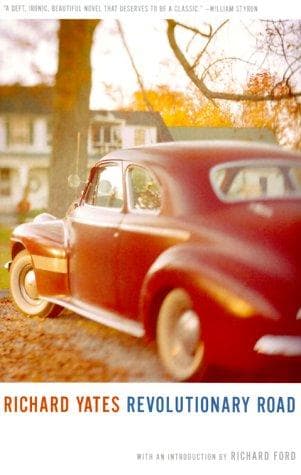
Book details and cover from Google Books.
Ready to read Revolutionary road?
Get your copy on Amazon, or listen to it on Audible. We earn a commission if you buy through these links.