
We earn a commission if you buy through these links. Learn more
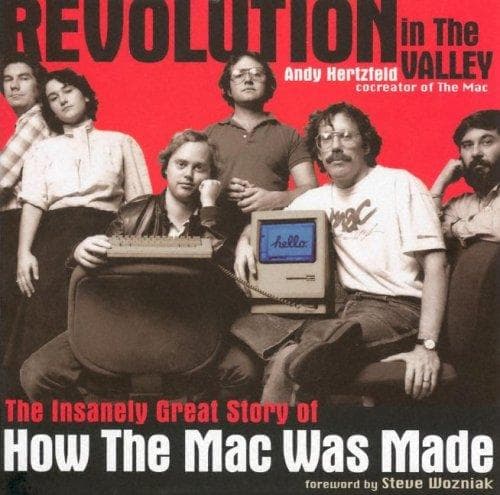
Revolution in the valley
A firsthand, anecdote-driven look at how the original Macintosh was built, written by one of its engineers, with a candid and affectionate view of Steve Jobs.
What It's About
Revolution in the Valley is a memoir-style collection of behind-the-scenes stories from Andy Hertzfeld, one of the software engineers on the original Macintosh team at Apple in the early 1980s. Rather than a conventional history, it is built from short, self-contained episodes, many of which began as posts on the Folklore.org site he helped create. Each story drops you into a particular problem, a late-night breakthrough, or a clash of personalities, and together they form a portrait of how a small group worked under intense pressure.
The writing is conversational and specific. Hertzfeld is most interested in the engineering: how the team fit graphics and a graphical interface into very little memory and processing power, and how design decisions were argued out and sometimes reversed. Steve Jobs appears throughout, sometimes as a demanding force and sometimes as a figure the team tried to manage, and the book gives a fuller sense of him than many polished accounts do. Other team members get room too, so it reads as an ensemble story rather than a single-hero biography.
Reading it feels like sitting in on anecdotes told by someone who was there. You can dip in and out, and the episodes need not be read in order. The tone mixes affection, humor, and frustration. It is a quick, sociable read rather than a dense one, and it rewards readers who enjoy the texture of how software actually gets made.
Read this if you…
- are curious about how a personal computer was actually designed and built
- enjoy short, anecdotal writing you can read in any order
- want an insider's view of Steve Jobs and the people around him
Skip it if you…
- want a comprehensive business history covering sales, competitors, and market strategy
- need detailed technical explanations of how the hardware and code work
Key Ideas
- 1
Constraints as creative fuel
The Macintosh team worked with tiny amounts of memory and a modest processor, and the book shows again and again how those limits shaped the product. Hertzfeld describes clever shortcuts and trade-offs that were made not out of theory but because the hardware demanded them. The lesson is less that scarcity is good and more that good engineering is often a series of honest compromises made under pressure.
- 2
The obsession with small details
Many stories center on tiny things, such as how a window moves, how a font looks on screen, or how fast a menu responds. Hertzfeld treats these details as the substance of the product rather than polish added at the end. Readers who have never thought about interface craft will come away noticing how much invisible labor sits behind everyday software.
- 3
Working for a demanding visionary
Jobs drives much of the drama, pushing for results that engineers often thought impossible. The book captures the tension between his conviction and the team's sense of what was achievable, along with the bargaining over deadlines and features. It is less a verdict on Jobs than a view of what it was like to be on the receiving end of his certainty.
- 4
A team bound by shared ambition
Beneath the arguments is a strong sense of camaraderie among people who believed they were building something important. Hertzfeld shows how rivalries, friendships, and late nights combined into a shared identity. The book suggests that much of the team's output came from this mix of pride, friction, and loyalty rather than from any formal process.
- 5
How legends get made
Because the story of the Mac has become famous, the book is also a quiet lesson in how history gets retold. Hertzfeld writes from the inside and is candid about how memory and myth blur. Readers interested in how technology narratives harden into legend will find this aspect as valuable as the stories themselves.
Limitations
The book is one engineer's perspective, so it covers the Mac team's world closely but not the wider company, its finances, or rival products in depth. Hertzfeld's account is warm toward Jobs, and some readers will find it less critical than other accounts of Apple's history. Its technical details reflect hardware and software of the early 1980s and can feel dated. Because the stories are episodic, the book does not build a single, continuous narrative arc.
Questions Readers Ask
- Who is this book for?
- It suits readers interested in the human side of technology, especially anyone curious about the original Macintosh or about Steve Jobs as a workplace presence. You do not need a computing background, since the stories are told in plain language and the technical asides can be skimmed. It is less suited to readers who want a structured historical argument or a detailed analysis of Apple's business.
- Is it still worth reading today?
- Yes, especially if you care about how products get built under constraints. The specific hardware is obsolete, but the problems described, such as balancing ambition against limits and deciding which details matter, remain familiar to anyone who makes software. The personal anecdotes also hold up well as a window into a particular moment in computing.
- How does it compare to Walter Isaacson's biography of Jobs?
- Isaacson's book covers Jobs's whole life and wider career in a broad biographical frame. Hertzfeld's book is narrower, focusing on the Macintosh period and told from the perspective of an engineer working alongside Jobs day to day. Readers who want the full arc should start with Isaacson, while those wanting intimate, on-the-ground detail will often prefer Hertzfeld.
- Published
- 2004
- ISBN
- 9781449399382
- Difficulty
- beginner
- Category
- Tech
Book details and cover from Google Books.
Ready to read Revolution in the valley?
Get your copy on Amazon, or listen to it on Audible. We earn a commission if you buy through these links.