
We earn a commission if you buy through these links. Learn more
Red Harvest
On screen: A Fistful of Dollars (film, 1964) · Yojimbo (film, 1961)
A lean, violent 1929 detective novel where an unnamed operative plays corrupt factions against each other, and the book that helped define hardboiled fiction.
What It's About
Red Harvest is a short, hard novel from 1929 by Dashiell Hammett, first published as a magazine serial. Its narrator is an unnamed operative of a private detective agency, sent to a mining town that everyone calls Poisonville. He arrives to deal with a murder, but finds a place where gangsters, crooked officials, and a powerful family are all grabbing for control.
Hammett's method is spare and fast. Scenes are short, dialogue is clipped, and the narrator reports what he sees and does without explaining how he feels about it. Instead of solving one crime in a tidy way, the Op decides to set rival factions against one another and watches the bodies pile up. The plot doubles back constantly, so you have to keep track of who is working for whom.
Reading it is less like a conventional whodunit and more like watching a town burn beside a detached observer who is both enjoying his own cleverness and disturbed by it. The tone is cynical, tense, and often darkly funny, and the prose still feels modern nearly a century later.
Read this if you…
- want a classic hardboiled novel that started the style rather than imitated it
- enjoy fast, clipped prose and plots that reward close attention
- are curious how crime fiction turned cynicism and moral ambiguity into a form
Skip it if you…
- want a clear mystery with a satisfying puzzle to solve and a tidy resolution
- need well-developed characters, emotional depth, or a warm, reassuring world
Key Ideas
- 1
A town corrupted from the top down
Poisonville is not just a backdrop. Money, politics, and organized crime are so tangled that nearly everyone in power has a reason to lie. Hammett uses the setting to argue that violence is the normal operating system of the place, not an exception. The Op learns quickly that cleaning up the town means understanding who profits from its disorder.
- 2
Violence as a tool of strategy
The narrator's plan is to let the factions destroy each other, nudging them into conflict and collecting the advantage. The book treats this as a cold, practical method. Readers will notice how the detective's cleverness becomes morally uncomfortable as the bodies accumulate, and the novel never fully lets him off the hook.
- 3
The detached, unnamed narrator
The Op tells us what he does but rarely what he feels. This flat reporting style makes the violence feel matter-of-fact and invites the reader to judge the narrator's choices. Much of the book's unsettling power comes from that restraint, which later crime writers borrowed heavily.
- 4
Plot as a maze of double-crosses
The story is built on shifting alliances, betrayals, and reversals. Hammett trusts the reader to follow closely rather than spelling everything out. The pleasure lies less in a single revelation than in watching the pieces rearrange and seeing how each move changes the balance of power in town.
Limitations
Many readers find the characters thin, with the Op offering little interior life and most figures sketched quickly. Women are sparsely drawn and often serve as plot devices. The period's language includes slurs and stereotypes that may jar today. The sheer volume of double-crosses and names can be confusing on a first read, and the relentless brutality may feel repetitive to some. Its influence is also easy to overstate, since later writers refined many of its techniques.
Questions Readers Ask
- Is Red Harvest a good first Dashiell Hammett book?
- It is a strong choice if you want the style at its most raw and influential. It is short and gripping, but its plot is knotted and its violence is intense. If you prefer a more controlled story, The Maltese Falcon is often recommended first because its structure is tighter and its characters are more memorable.
- How does Red Harvest compare with The Maltese Falcon?
- Red Harvest is looser, bloodier, and more concerned with corruption across a whole town. The Maltese Falcon is more focused, with a single quest and a more defined cast. Readers who like Red Harvest's cynicism often find the Falcon more polished, while those who want a sprawling, nasty canvas tend to prefer Red Harvest.
- Does Red Harvest still hold up today?
- For many readers it does. The prose is lean and the narrator's detachment still feels contemporary. The main issues are dated attitudes toward race and gender and a plot that some find hard to follow. Readers who accept the period context usually find its energy and bleak wit remain very effective.
- Published
- 1929
- ISBN
- 9780785926542
- Difficulty
- intermediate
- Category
- Fiction
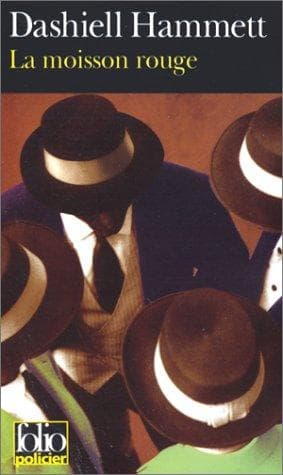
Book details and cover from Google Books.
Ready to read Red Harvest?
Get your copy on Amazon, or listen to it on Audible. We earn a commission if you buy through these links.