
We earn a commission if you buy through these links. Learn more
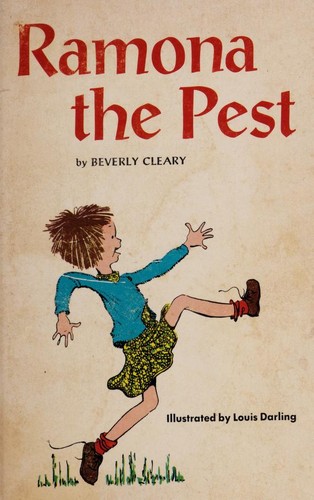
Ramona the Pest
Guide by the Books of the Day editors · Updated · How we write our guides
Ramona the Pest captures kindergarten from the inside, with a headstrong heroine whose logic makes perfect sense to her and not to the grown-ups around her.
What Creators Say About Ramona the Pest
2 creators reviewed Ramona the Pest on YouTube between 2017 and 2024, with 5.9K views between them. Their opinions are their own; we picked these reviews, we didn't write them.
What It's About
Ramona the Pest is a children's novel by Beverly Cleary, published in 1968 and set in Portland, Oregon. It follows Ramona Quimby through her first year of school, after the events of Beezus and Ramona. Her older sister Beezus, her parents, and her classmates all appear, but the book stays close to Ramona's point of view, so the world feels as big and urgent as it does to a five-year-old.
Cleary writes in plain, unhurried sentences with little moralizing. The humor comes from the gap between what Ramona intends and how the adults around her respond. She is energetic, certain, and literal-minded, and her good ideas often go sideways in ways that are funny without being cruel. The story moves through a series of linked episodes rather than one driving plot, which makes it easy to read in short sittings or aloud.
Reading it feels like stepping into a sharply observed slice of childhood. It rewards attention to small social details: who sits where, what a teacher means by a remark, why a sibling's approval matters so much. It suits children roughly six to nine and adults who want to revisit that stage of life with some affection and recognition.
Read this if you…
- want a warm, funny portrait of early childhood that doesn't talk down to kids
- are reading aloud to a young child and want episodes that work in short sessions
- enjoyed Beezus and Ramona or other classic family stories and want to see where Ramona's world goes next
Skip it if you…
- want a fast plot with a clear central conflict and a strong sense of rising stakes
- are looking for a book that reflects contemporary school life or modern family structures
Key Ideas
- 1
Kindergarten as a social maze
Much of the book is about learning how school works: rules that are never fully explained, classmates with their own agendas, and the constant need to figure out what is expected. Cleary treats these everyday frictions seriously, so small events carry real emotional weight for a child who is still working out where she fits.
- 2
Being misread by adults
Ramona often means well, but teachers and parents read her actions as defiance or carelessness. The book is alert to how easily a child's intentions get lost in translation. Readers will notice that the adults are not villains, just busy and sometimes impatient, which makes the misunderstandings feel painfully ordinary.
- 3
Ramona's inner logic
Cleary gives Ramona a consistent way of seeing the world, and her reasoning is often more coherent than the situations she gets into. Following her thinking is the main pleasure of the book. She is not a model child, but she is never presented as bad, and her self-regard is treated with warmth rather than mockery.
- 4
Family as steady backdrop
Home life provides a quieter counterweight to school. Sibling rivalry with Beezus, ordinary household routines, and the Quimbys' modest circumstances appear without melodrama. This steadiness lets the comedy land and gives the reader a sense of a family that is imperfect but dependable.
Limitations
The book reflects its 1960s setting in its gender expectations, household roles, and school practices, which can feel dated to today's readers. Its episodic structure means there is no single arc to drive the story, and some readers find the pacing slow. Adult characters are sketched lightly, so older readers may want more depth around the grown-ups. The stakes are small by design, which is part of its charm but may not satisfy readers who want high drama.
Questions Readers Ask
- Is Ramona the Pest still worth reading for kids today?
- Yes, mostly for its honest picture of how a young child experiences school and family. The setting and some attitudes are clearly of their time, so it works well when a parent or teacher can talk through those differences. Its humor and its respect for a child's point of view have held up well.
- Should I read Beezus and Ramona first?
- It helps. Ramona the Pest assumes you already know the Quimby family and Ramona's place among them, and it builds on that history. Starting with Beezus and Ramona gives more context for the sibling dynamic, though the book can still be enjoyed on its own by a reader who is comfortable jumping in.
- Published
- 1968
- ISBN
- 9780140307740
- Difficulty
- beginner
- Category
- Education
Book details and cover from Google Books.
Ready to read Ramona the Pest?
Get your copy on Amazon, or listen to it on Audible. We earn a commission if you buy through these links.