
We earn a commission if you buy through these links. Learn more
Ragtime
A panoramic novel of America around 1906, where a wealthy family, a Black ragtime pianist, immigrants, and real historical figures collide, told in a sharp, cinematic style.
What It's About
Ragtime follows three households in the early twentieth century: an affluent white family in New Rochelle, a Black pianist named Coalhouse Walker Jr. and the woman he loves, and a Jewish immigrant who sells silhouette portraits on the street and eventually moves toward the emerging film business. Real figures such as Henry Ford, Harry Houdini, Emma Goldman, and J. P. Morgan drift through the margins and sometimes the center of the action, so the book feels like a window onto a whole era rather than a single narrow plot.
The prose is the unusual part. Doctorow writes in short, clipped sentences with a flat, almost documentary tone, cutting quickly between scenes the way early silent films did. The narrator stays slightly removed, reporting events in a voice that sounds both innocent and knowing, and the rhythm borrows from the syncopation the title names. Reading it feels less like following one story than like turning through a richly staged album of photographs that slowly connect.
The tone can be bleak and ironic. Violence and injustice arrive abruptly, and the book is more interested in how ordinary people and powerful men respond to pressure than in tidy moral lessons. Expect a novel that rewards attention to small gestures and historical texture, and that asks you to hold many characters in mind at once.
Read this if you…
- are curious how fiction can reshape a documented era without losing its texture
- enjoy a sprawling cast and braided storylines that slowly converge
- want a historical novel that treats race, class, and immigration as central rather than backdrop
Skip it if you…
- want a conventional plot with clear heroes and a fast, steady pace
- find clipped, elliptical prose tiring over several hundred pages
Key Ideas
- 1
Real history woven with invented lives
Doctorow places fictional characters beside documented public figures and events, so the reader keeps asking where the record ends and invention begins. The effect is less a lesson about the period than a sense of how private lives sat inside larger forces that the characters often barely understand. Historical names are used as landmarks, not as the point of each scene.
- 2
A private grievance becomes public crisis
The central drama starts with a personal humiliation that the protagonist refuses to let pass. The book traces how a single act of injustice escalates into something much larger, touching the police, the press, and the wealthy. It asks what a person owes to his own dignity and what that demand costs everyone around him.
- 3
Comfortable lives tested by events
The white middle-class household anchors the novel, and its members are decent but sheltered. Watching them absorb news they cannot fully grasp shows how easily privilege can mistake calm for safety. Their small moral choices become a quiet counterpoint to the louder conflicts elsewhere in the book.
- 4
Prose built like a silent film
Short declarative sentences, rapid cuts, and abrupt shifts in focus give the writing a montage quality. The style mirrors the syncopated beat of ragtime, with stress falling in unexpected places. Some readers find it exhilarating, while others find it mannered, but it is the book's most distinctive feature.
- 5
Immigrant reinvention and the American dream
The immigrant strand follows a man who remakes himself through hard work, art, and ambition, moving from street-corner trade toward the new commercial world of moving pictures. His story shows both the openness and the exploitation of the period. It gives the novel a second, more hopeful engine alongside its darker plots.
Limitations
The short, abrupt style can feel mannered, and it keeps emotional access at arm's length, which some readers find cold. Critics have questioned whether the blend of invented and real figures sometimes feels glib, and whether the Black characters are seen mainly through a white narrator's eyes. The book covers roughly the first decade and a half of the century and does not engage later periods. Its cameo-heavy approach can also feel self-conscious to readers who want deeper interiority.
Questions Readers Ask
- Is Ragtime still worth reading today?
- Yes, especially if you want a novel that treats race, class, and immigration as the shaping forces of American life. Its style still feels fresh, though it is more fragmented than most contemporary bestsellers. Readers interested in how historical fiction can blend fact and invention will find it rewarding, even when some of its choices feel dated.
- Is Ragtime a good first book by E. L. Doctorow?
- It is one of his best-known novels and a strong introduction, but it is also demanding in structure and tone. Readers who prefer a more direct narrative may find his other historical novels easier to enter. If you enjoy a challenge and wide canvases, Ragtime is an excellent place to begin.
- Published
- 1984
- ISBN
- 9780333520017
- Difficulty
- intermediate
- Category
- Fiction
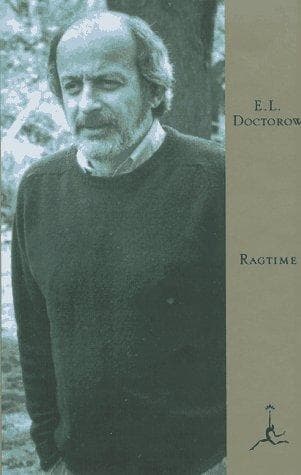
Book details and cover from Google Books.
Ready to read Ragtime?
Get your copy on Amazon, or listen to it on Audible. We earn a commission if you buy through these links.