
Refugee
Alan Gratz
Gratz's same short-chapter, high-tension style follows three children fleeing danger in different eras, including a Jewish boy escaping Nazi Germany, echoing Yanek's fight to survive.
Reader-supported: when you buy through links on our site, we may earn an affiliate commission. Learn more
We earn a commission if you buy through these links. Learn more
Find Similar Booksby Alan Gratz, Ruth Gruener, Jack Gruener
A survival story told through one boy's eyes, based on a real Holocaust survivor's life, that makes a brutal subject accessible for young readers without softening it.
Prisoner B-3087 follows Yanek Gruener, a Jewish boy whose life in Poland is upended once the Nazis take control, and then carries him through a long chain of concentration camps. Gratz keeps the reader close to Yanek's point of view, so the story unfolds through what a boy his age would notice, fear, and try to make sense of. The prose is direct rather than lyrical, which suits a book aimed at younger readers and keeps the cruelty concrete without dwelling on it for shock.
This is a book more interested in survival as a daily discipline than in sweeping historical explanation. Yanek is constantly making small decisions about food, work, whom to trust, and how to hold on to his name and sense of self. Those choices drive the momentum more than any single twist. Because the source is a real person's life, the events feel anchored rather than invented, even when the narrative compresses time to keep the pace moving.
Reading it is intense and emotionally heavy, but it is also a quick read for its subject. The book leaves room for moments of kindness and solidarity among prisoners, which give the grim material a human counterweight. Expect a book about dignity under pressure, not a detailed map of how the camp system worked.
The tattoo replaces Yanek's name with a number, and much of the book's emotional weight comes from his struggle to remember who he is. The question of whether he can keep his sense of self intact runs through nearly every scene, making the theme feel personal rather than abstract.
Rather than one heroic escape, the book shows survival as a series of small, calculated choices about food, labor, illness, and trust. Readers see how a few seconds or a single decision can separate life from death, which conveys the randomness of the camps without lengthy explanation.
Among the brutality, the book notices moments where other prisoners share, help, or take risks for one another. These glimpses do not undo the horror, but they show that solidarity existed alongside cruelty and give younger readers a way to think about moral courage.
Yanek sees the machinery of persecution piece by piece and often without context, the way a boy in his situation would. This limited vantage point makes the narrative immediate and disorienting, and it asks readers to fill in the larger picture themselves.
The novel draws on the life of Jack Gruener, and that foundation shapes its emotional credibility. Knowing the events happened to an actual person adds weight to the suffering and to the survival, though readers should remember that a novel shapes and compresses real experience.
Because the book is written for younger readers, it covers the political context and the workings of the camps only briefly, so readers seeking depth will need other sources. Some critics find the characterization broad, with other prisoners and guards drawn more as signposts than as full people. The narrative also moves quickly across long stretches of time, so some periods of suffering are compressed. The book is a strong introduction, but it cannot represent the full range of survivor experience.
Reviews from readers on YouTube. Their opinions are their own.
Book details and cover from Google Books.
Ready to read Prisoner B-3087?
Get your copy on Amazon, or listen to it on Audible. We earn a commission if you buy through these links.
Alan Gratz
Gratz's same short-chapter, high-tension style follows three children fleeing danger in different eras, including a Jewish boy escaping Nazi Germany, echoing Yanek's fight to survive.
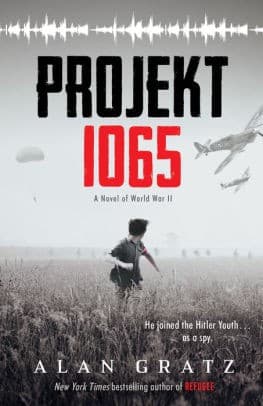
Alan Gratz
Gratz's same short-chapter suspense, now with a boy spying from inside the Hitler Youth. It is a different angle on Nazi Germany, but it has the same constant sense of danger.
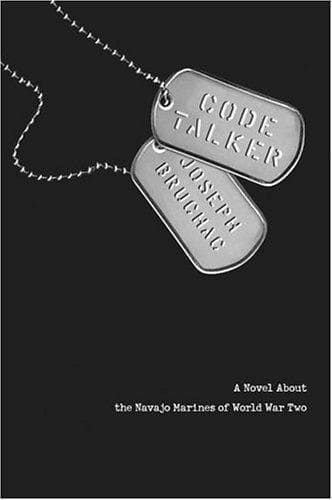
Joseph Bruchac, Derrick Henry
Another World War II story about a young man's courage and identity under pressure. It is based on the real Navajo code talkers and written clearly for younger readers.
Leon Leyson
A real memoir by one of the youngest people on Schindler's list. It describes a boy's survival in Kraków and the camps, very close to Jack Gruener's experience.