
We earn a commission if you buy through these links. Learn more
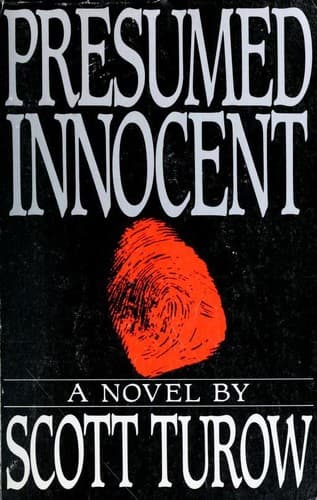
Presumed Innocent
by Scott Turow
A prosecutor becomes the accused in the murder case he was meant to solve, turning the courtroom into a slow, morally knotted puzzle about what anyone can truly know.
What It's About
Rusty Sabich is a senior deputy prosecutor in Kindle County, a fictional Midwestern jurisdiction, and he has built his life on order, discipline, and a reputation for fairness. When a colleague and former lover, Carolyn Polhemus, is found dead, he is assigned to the investigation. The evidence soon points in an unwelcome direction, and Rusty finds himself charged with the killing he was supposed to solve. The opening pages set up a man who is more certain of his public image than of himself.
Rusty narrates the book in the first person, and that choice drives everything. He tells his own story with a lawyer's instincts, so we get his memories, his rationalizations, and his carefully chosen omissions. Turow, who practiced law before writing fiction, fills the pages with the texture of the legal system: grand juries, pretrial motions, jury selection, and the strategic games played between prosecution and defense. Much of the suspense comes from watching how facts get shaped into arguments.
Expect a slow, dense read where conversation, interior reflection, and procedure matter as much as plot. This is less a fast whodunit than a study of ambition, marriage, and how a legal system tries to reach truth through competing stories. Readers who enjoy close attention to character and argument will find it rewarding, while those who want brisk action may feel the middle sections stall.
Read this if you…
- like legal thrillers with the procedure left in
- want a psychologically tense story told through a single, self-justifying voice
- enjoy slow-building suspense more than fast twists
Skip it if you…
- want fast pacing and brisk action from the first chapter
- dislike long stretches of courtroom and legal detail
Key Ideas
- 1
Procedure as a way of seeing
The courtroom process is not just backdrop. Turow shows how rules about evidence, motions, and what a jury may hear decide what a room is allowed to know, and how a case can be won without anyone learning the truth. Readers who like legal procedure will find these details absorbing, while others may feel they slow the story.
- 2
An unreliable narrator in plain sight
Rusty's voice is controlled and reasonable, which is exactly what makes it hard to trust. He explains his choices with logic that sounds convincing, and the gaps in his account become part of the experience. Turow asks you to keep weighing what Rusty admits against what he avoids saying.
- 3
Ambition and the cost of a double life
Rusty's career, his marriage, and his affair are tangled together, and the book treats them as one system of pressures. Office politics, the wish to be seen as a rising figure, and the habit of keeping things private shape his decisions long before the murder case begins.
- 4
Stories competing for a verdict
Both sides in a trial build narratives from the same scattered facts. The novel keeps returning to how persuasion works and asks whether a jury can ever reach a fair picture when each side is paid to tell only part of the story.
Limitations
The novel is a product of the late 1980s, and some readers find its treatment of women dated. The female characters are seen largely through Rusty's eyes and can feel thin or defined by their relationship to him. The middle section runs long, and the legal detail, though authentic, can slow momentum. Some critics also argue the narration asks for more sympathy for its protagonist than the evidence earns. The wider community appears mostly as a backdrop beyond the courthouse.
Questions Readers Ask
- Is Presumed Innocent still worth reading today?
- Yes, for its moral puzzle and its precise picture of how a trial works. Some attitudes and office dynamics reflect the late 1980s, so expect a few dated assumptions about gender. Its questions about ambition, secrecy, and institutional doubt remain current, and the courtroom sections still hold up well.
- How does the novel compare to the 1990 film?
- The 1990 film starring Harrison Ford follows the broad outline of the story but plays it more as a conventional thriller. The novel gives far more space to Rusty's inner life, his memories, and the legal reasoning, so readers who liked the movie should expect a slower and more layered book.
- Do I need a legal background to follow it?
- No. Turow explains procedures as the story moves, and legal terms are used in context. Some readers may need patience with courtroom strategy, but the book is written for general adults who enjoy careful reading rather than specialist knowledge.
- Published
- 1987
- ISBN
- 9784167527075
- Difficulty
- intermediate
- Category
- Mystery & Thriller
Book details and cover from Google Books.
Ready to read Presumed Innocent?
Get your copy on Amazon, or listen to it on Audible. We earn a commission if you buy through these links.