
We earn a commission if you buy through these links. Learn more
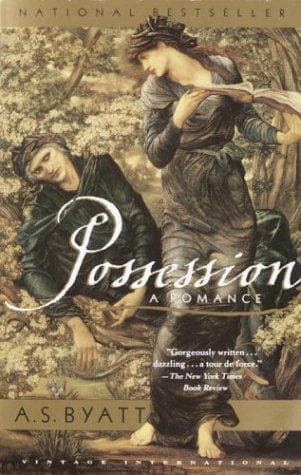
Possession
by A. S. Byatt
A literary mystery in which two modern scholars chase a hidden affair between fictional Victorian poets, with invented letters and pastiche poems nearly as absorbing as the chase.
What It's About
Possession is a novel about the pleasures and risks of research. Roland Michell, a junior scholar working on the Victorian poet Randolph Henry Ash, comes across a draft letter that hints Ash had a secret relationship with another poet, Christabel LaMotte. He teams up with Maud Bailey, a specialist in LaMotte, and the two follow the trail through libraries, country houses and archives, while their own feelings develop alongside the chase.
Byatt alternates between the present-day story and the Victorian material it uncovers: letters, diary entries, and long stretches of verse she wrote in the voices of Ash and LaMotte. The poems are pastiche, and they are good enough that readers who love Victorian poetry will find them rewarding in their own right. The modern scenes are wry and sharply observed about academic rivalry, ambition and self-deception, and the book takes real delight in the texture of scholarly work.
Reading it is less like following a plot than sitting in a well-stocked library with a clever guide who keeps pointing at things. The pace slows often, and the prose is dense with allusion, quotation and long descriptive passages. Patient readers get a layered experience in which the past and present keep illuminating each other. Readers wanting a brisk thriller may find it heavy going.
Read this if you…
- enjoy literary puzzles, archive hunts and the slow reveal of hidden history
- love Victorian poetry or want to see it convincingly imitated
- don't mind a dense, slow book that rewards close and patient attention
Skip it if you…
- want a fast plot with a clear, quick payoff
- find long passages of verse and scholarly detail tedious
Key Ideas
- 1
Scholarship as detective work
The novel treats footnotes, catalogues and marginal notes as clues. Its pleasure comes from watching two researchers reason from scraps of evidence, argue over interpretations, and realize how much a reputation can rest on a few ambiguous sentences. It captures the excitement of archival discovery better than most books written about academia.
- 2
Pastiche as a second novel
Byatt writes the Victorian strand as invented poetry, letters and diaries that imitate the period's styles. The verse is a deliberate feat of ventriloquism, and reading it alongside the modern story creates a kind of double book. Whether this feels enriching or tiresome depends largely on your taste for period voices.
- 3
Two love stories set side by side
The modern romance and the Victorian affair are constantly held up against each other. Byatt asks how passion, secrecy and social constraint change between eras, and whether the present is really any freer in its desires. The mirroring is deliberate and gives the book much of its structure.
- 4
Women's voices and the historical record
Christabel LaMotte's life and work have been overshadowed by her male counterpart, and the book is alert to how women were overlooked, edited out or defined by men's accounts. It asks who gets to tell a literary story and whose version survives in the archive, questions that remain pointed for readers today.
Limitations
The book is long, and its layers of verse, letters and literary allusion can slow the story to a crawl for many readers. The invented Victorian poetry is impressive but can feel like homework when the modern plot needs momentum. Some of the academic satire is pointed at a version of university life that feels more dated now, and some readers find the present-day characters less vivid than the Victorian ones. The book also assumes a fair amount of literary background, so readers unfamiliar with Victorian writing may miss some of its humor and purpose.
Questions Readers Ask
- Do I need to know Victorian poetry to enjoy Possession?
- No, but it helps. The modern story works as a mystery on its own, and Byatt explains enough for the plot to stay clear. Readers with some familiarity with Victorian poets will catch more of the echoes and parodies, and will likely enjoy the invented verse more. Those who find the poems tedious can read more quickly through them without losing the thread.
- Is Possession still worth reading today?
- Yes, especially if you care about books, research and the way historical reputations get built. Its themes of who controls the archive and whose voice survives still feel current. Some of the academic world it satirises has changed, but the core experience of chasing a half-buried story through documents remains very recognisable and engaging.
- Published
- 1890
- ISBN
- 9782253933366
- Difficulty
- advanced
- Category
- Fiction
Book details and cover from Google Books.
Ready to read Possession?
Get your copy on Amazon, or listen to it on Audible. We earn a commission if you buy through these links.