
We earn a commission if you buy through these links. Learn more
Portnoy's Complaint
by Philip Roth
Guide by the Books of the Day editors · Updated · How we write our guides
A furious, very funny monologue in which a Jewish New Jersey man unloads his family, his appetites, and his shame onto a psychoanalyst, making it one of the most daring comic novels of its era.
What Creators Say About Portnoy's Complaint
2 creators reviewed Portnoy's Complaint on YouTube between 2009 and 2020, with 54.6K views between them. Their opinions are their own; we picked these reviews, we didn't write them.
What It's About
Portnoy's Complaint is a single, unbroken monologue. Alexander Portnoy, a successful young man in New York, lies on an analyst's couch and tells Dr. Spielvogel everything, from his childhood in a New Jersey Jewish household to his adult sex life and his often miserable career as a city official. We hear only Portnoy's side, so the book reads like a confession that keeps interrupting itself, doubling back, exaggerating, and then doubting its own exaggerations.
Roth's style is fast, profane, and rhythmic. Long runs of indignant comic riffing give way to sudden flashes of tenderness and self-disgust. The book is explicit about sex and bodily life, and it is equally concerned with the anxieties of family, religion, and belonging that shaped Portnoy in the first place. Its jokes land hardest on readers who recognize the textures of mid-century American Jewish family life, though they do not depend on it entirely.
Reading it feels like being trapped with a brilliant, exhausting talker who will not stop until he has said the thing he came to say. It is funny, uncomfortable, and often more serious underneath than its surface suggests. Expect a voice that pushes against every restraint, and a book that rewards patience with a sharp portrait of guilt and appetite.
Read this if you…
- enjoy sharp, profane comedy with a serious undercurrent
- want a classic of mid-century American fiction that broke literary taboos
- like novels told in a single, relentless narrative voice
Skip it if you…
- find explicit sexual content off-putting or distracting
- want a plot-driven story or a clear sense of forward movement
Key Ideas
- 1
A confession staged as comedy
The monologue form lets Roth mix self-pity, outrage, and wit in a single breath. Portnoy performs his misery for an audience he resents and needs at once. Much of the pleasure comes from watching the performance slip, when a joke turns into a plea or a complaint reveals more than the speaker intended.
- 2
The overbearing family and its legacy
Portnoy's parents, especially his mother, dominate his inner life through worry, food, and moral pressure. Roth presents the family as both a source of comic material and a real trap. The book asks how much of an adult's adult identity is simply the residue of childhood duties and fears.
- 3
Appetite, shame, and the body
Sex, eating, and bodily functions run through the novel as signs of desire and of the conflict between wanting and being told what is permitted. The explicitness is part of the argument: the body is where the rules a family and a culture teach are tested and broken.
- 4
Identity between tradition and rebellion
Portnoy wants to escape the expectations of his Jewish upbringing, yet he cannot stop measuring himself against them. The novel treats this tension without tidy resolution, showing rebellion as another form of attachment. Readers interested in ethnic and generational identity will find it richly textured.
Limitations
The book's most explicit passages were controversial when it appeared and still shock some readers, and its humor leans heavily on stereotypes about Jewish mothers that many now find dated or one-dimensional. Portnoy's voice is relentless, so readers may tire of its repetitions and self-absorption. The women in the story are seen almost entirely through his eyes and rarely have independent inner lives, a limitation critics have pointed out. The novel is also less interested in the outside world than in its narrator's psyche.
Questions Readers Ask
- Is Portnoy's Complaint still worth reading today?
- Yes, especially if you want to understand how Roth broke with the decorous family novel and how comic confession became a major literary mode. Some jokes and attitudes now feel dated, and the sexual content may seem tamer or more uncomfortable depending on the reader. Its portrait of guilt, family pressure, and self-invention still reads as sharp.
- Who is Portnoy's Complaint best for?
- It suits readers who enjoy fiction built on a single strong voice and who can tolerate frank talk about sex and family conflict. Readers familiar with Roth's other work, or with Jewish-American comic writing, will catch more of its references. First-time readers of Roth may find it abrasive, so a gentler starting point could help.
- Published
- 1969
- ISBN
- 9788535922264
- Difficulty
- intermediate
- Category
- Fiction
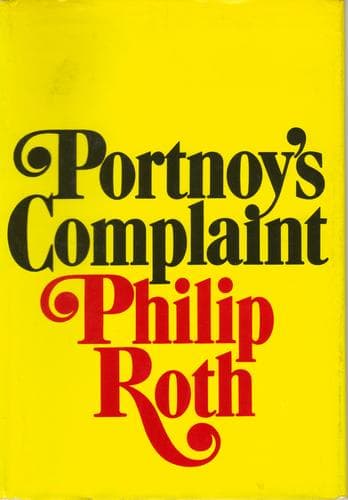
Book details and cover from Google Books.
Ready to read Portnoy's Complaint?
Get your copy on Amazon, or listen to it on Audible. We earn a commission if you buy through these links.