
We earn a commission if you buy through these links. Learn more
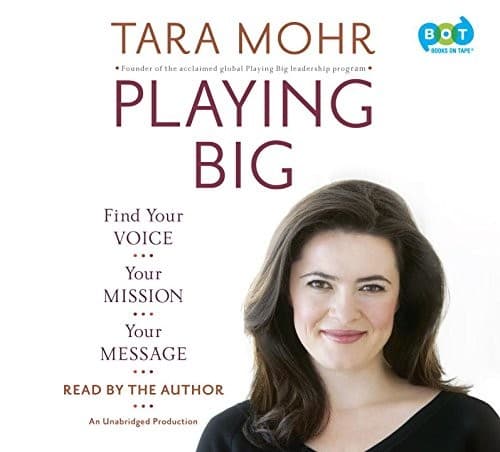
Playing Big
by Tara Mohr
Guide by the Books of the Day editors · Updated · How we write our guides
Tara Mohr's book names the quiet habits that keep capable people from speaking up and offers small, repeatable practices to change them, without asking you to become someone else.
What Creators Say About Playing Big
2 creators reviewed Playing Big on YouTube between 2014 and 2016, with 64.5K views between them. Their opinions are their own; we picked these reviews, we didn't write them.
What It's About
Playing Big is a self-help book aimed mainly at women who hold back at work and in public life. They stay quiet in meetings, wait to be chosen, undersell their ideas, or keep polishing a draft long after it is ready to share. Mohr calls this pattern playing small and argues that it is learned rather than fixed, which means it can be unlearned with practice.
Her approach mixes reflection and coaching. The tone is warm and direct, the chapters are fairly short, and the book asks you to answer questions on paper and try out concrete scripts for speaking up and asking for what you need. A large part of the material is about the inner critic, the voice that predicts failure or judges your ideas before anyone else hears them, along with ways to notice that voice and act anyway. Reading it feels like working with a supportive mentor who wants you to take a few specific steps this week rather than simply feel inspired.
The experience is more encouraging than analytical. If you want a research-heavy argument or a detailed account of how workplaces and power really function, you will find the book lighter than you expect. Its strength is in making internal habits visible and giving you small moves you can test in real situations.
Read this if you…
- feel your ideas get overlooked in meetings and want concrete language for speaking up
- recognize yourself in waiting for permission or polishing work endlessly before sharing it
- want an encouraging, practical guide that you can work through over several weeks
Skip it if you…
- want a rigorous analysis of gender, workplace structures, or discrimination
- already have a steady coaching practice and find self-help framing tiresome
Key Ideas
- 1
Playing small as a learned pattern
Mohr treats holding back as a set of habits picked up over time, often from school, family, and workplace cues about who is allowed to take up space. Because the pattern is learned, she frames change as a matter of practice rather than personality. The useful question becomes which specific behaviors you repeat, and what you would do differently if you stopped repeating them.
- 2
The inner critic and the wise adviser
A central thread is the difference between the inner critic, which speaks in fear and tends to shrink your choices, and a calmer internal voice that offers grounded counsel. The book gives you ways to recognize when the critic has taken over the conversation. The aim is not to silence doubt entirely but to stop letting doubt set the agenda for what you attempt.
- 3
Permission, perfectionism, and waiting to be chosen
Many of the habits Mohr describes share a root: waiting for someone to grant approval before acting. Perfectionism often serves as a delay, keeping work hidden until it feels flawless. The book encourages you to notice these delays and to share work earlier, with a clear sense of what you are offering and why it matters.
- 4
Practices for speaking up and owning ideas
The most practical sections focus on how to make a point in a meeting, state your view without excessive hedging, and ask directly for a role, a raise, or a hearing. These are framed as skills you can rehearse. The suggestions are modest in scale, which is part of their appeal, since they can be tried immediately and adjusted based on what happens.
Limitations
The book is aimed largely at women and frames its advice around personal habits, which some readers find too individual. Critics sometimes note that it puts the main burden of change on the reader and gives less attention to organizational barriers, unequal expectations, or the ways some people are penalized more harshly for speaking up. Its examples and exercises lean toward professional and leadership settings, so readers in very different circumstances may need to adapt the advice. Some readers also find the style repetitive, and the self-help format means the claims are more anecdotal than systematically tested.
Questions Readers Ask
- Who is Playing Big best suited for?
- It suits people, especially women early or mid-career, who feel their contributions go unnoticed or who hesitate to take visible roles. It works best for readers willing to do the exercises and try small changes. If you are looking for a systematic framework or research-driven argument, you may find it too personal and practical in tone.
- How does it compare to Lean In?
- Lean In, by Sheryl Sandberg, focuses more on workplace structures and the broader case for women's advancement. Playing Big concentrates on internal habits such as the inner critic, perfectionism, and waiting for permission. Many readers find the two complementary: one addresses systems, the other addresses the personal patterns that shape how you act within them.
- Published
- 2014
- ISBN
- 9780099591528
- Difficulty
- beginner
- Category
- Self-Improvement
Book details and cover from Google Books.
Ready to read Playing Big?
Get your copy on Amazon, or listen to it on Audible. We earn a commission if you buy through these links.