
We earn a commission if you buy through these links. Learn more
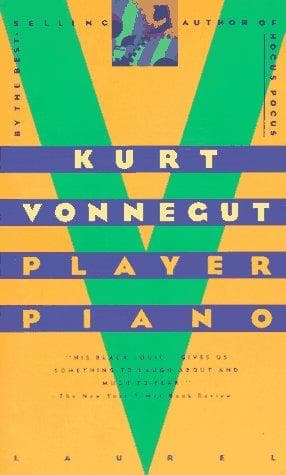
Player Piano
by Kurt Vonnegut, Christian Rummel
A sharp, short debut that imagines a future where machines have made most work pointless, and asks what people are for once it has.
What It's About
Player Piano is Kurt Vonnegut's first novel, published in 1952. It is set in a near future where the United States is run by engineers and managers, and machines do most of the work people once did. The story follows Paul Proteus, a senior engineer in the town of Ilium, New York, who has grown uneasy with the arrangement and starts to question whether the system that rewards him is serving anyone.
The approach is satirical and brisk. Vonnegut keeps the chapters short, blends sharp comedy with real unease, and lets characters talk past one another in ways that expose how hollow the official rhetoric has become. Much of the book is talk: meetings, dinners, arguments, and the slow gathering of a dissident movement that the managerial class barely takes seriously. The prose is plain on purpose, and the book reads like a fable about labor, class, and what people do with their time when they no longer have to work.
Reading it is a fast, slightly uncomfortable experience. Its ideas arrive through satire rather than argument, so you feel the book's judgments before you can fully state them. Some sections feel more like sketches than fully realized scenes, and the emotional core is thinner than in Vonnegut's later work. Still, the novel is a clear early statement of concerns that run through his career.
Read this if you…
- enjoy satire of technocracy, management, and corporate life
- like short, dialogue-heavy novels with a sharp comic edge
- want to see where Vonnegut's later preoccupations first took shape
Skip it if you…
- want a fully realized character study with deep emotional stakes
- need current, technical speculation about AI, since the machines here are mid-century ones
Key Ideas
- 1
Automation that removes purpose, not just labor
The novel's central unease is not that machines take jobs but that they leave people with nothing that feels necessary. Vonnegut asks whether a society can be comfortable and still feel empty, and he pushes that question until the comfort starts to look like a kind of managed boredom.
- 2
Managers who need their own importance
The people running the system are not villains so much as men who depend on the idea that their work matters. Vonnegut shows how easily a hierarchy protects itself by treating its own rules as natural, and how little its beneficiaries examine the arrangement that keeps them comfortable.
- 3
Dignity of work versus being useful
The book separates work that is useful from work that gives a person a sense of worth. That distinction drives much of the argument, and it is the idea that most clearly links this early novel to the moral sensibility of Vonnegut's later fiction.
- 4
Protest that becomes its own performance
The dissident group in the book is funny and sincere, but its rituals and symbols can drift away from its aims. Vonnegut is interested in how resistance gets absorbed, costumed, or stalled, and he does not let his own side off the hook.
Limitations
Critics often point to uneven pacing, with some scenes that feel like sketches and some exposition that slows the satire. The female characters are generally underdeveloped, which reflects the book's era. Its view of automation is shaped by early Cold War anxieties and does not engage with modern software or algorithms. As a first novel, it is more promising than polished, and readers expecting the finished voice of Slaughterhouse-Five may find it rougher than they hoped.
Questions Readers Ask
- Is Player Piano still relevant today?
- Yes, in its central question. Its specific machines are outdated, but its concern with work, purpose, and who benefits from automation has only grown more pressing. Readers interested in modern debates about jobs and technology will find much to think about, even though the book's technology and social assumptions are firmly of their time.
- How does it compare to Brave New World?
- Both are dystopian satires about engineered societies, but they differ in focus. Huxley is preoccupied with pleasure, conditioning, and control of the senses. Vonnegut is more concerned with labor, class, and the economics of an automated order, and his tone is wryer and more plainspoken.
- Published
- 1952
- ISBN
- 9780385287975
- Difficulty
- beginner
- Category
- Fiction
Book details and cover from Google Books.
Ready to read Player Piano?
Get your copy on Amazon, or listen to it on Audible. We earn a commission if you buy through these links.