
We earn a commission if you buy through these links. Learn more
Piranesi
Guide by the Books of the Day editors · Updated · How we write our guides
Susanna Clarke's Piranesi is a short, strange fantasy in which a lone narrator's journal slowly reveals that his world may not be what he believes.
What Creators Say About Piranesi
2 creators reviewed Piranesi on YouTube between 2021 and 2022, with 66.8K views between them. Their opinions are their own; we picked these reviews, we didn't write them.
What It's About
Piranesi is a short novel by Susanna Clarke, her follow-up to Jonathan Strange & Mr Norrell, and it is told as the journal of a man who calls himself Piranesi. He lives in the House, a world of endless marble halls, statues, and vast tidal seas that flood its lower levels. He keeps careful records of the tides, the birds he observes, and the statues he catalogues. His only other human contact is a man he calls the Other, who visits twice a week to talk about the research they are supposedly doing together.
Clarke writes in a formal, precise voice that suits a narrator who loves order and courtesy. Piranesi's entries are gentle, dryly funny, and quietly wondering. Much of the pleasure comes from sharing his delight in small things and from noticing details that the reader catches before he does. The strangeness works more like dream logic than conventional fantasy, with no quests, armies, or spell systems to explain.
Reading it feels like walking through one of the House's rooms: calm, unhurried, and gradually more unsettling as you realise that the narrator's account has gaps. It is a book about attention, memory, and how far you can trust your own record of the world. Its unusual construction makes it an easy read over a weekend, even though it rewards close attention.
Read this if you…
- enjoy slow, atmospheric books where the setting does much of the work
- like puzzles where you can spot clues before the narrator does
- want a short, gentle fantasy without battles, quests, or elaborate magic systems
Skip it if you…
- need fast plot and a steady supply of action
- expect the sweeping, multi-character scale of Jonathan Strange & Mr Norrell
Key Ideas
- 1
A narrator who may not know himself
Piranesi's journal is his main source of memory and identity, and the book keeps asking how reliable it is. Clarke builds the story so that the reader slowly notices what the narrator overlooks or refuses to question. Much of the book's tension comes from that gap between what he writes and what seems to be true.
- 2
The House as a world of wonder and order
The setting is the real centre of the book. Clarke describes an architecture of halls, staircases, and statues that feels both majestic and oddly domestic. Piranesi's pleasure in cataloguing and mapping it makes the place feel lived in, and his affection for it gives the story its warmth even when things turn dark.
- 3
Friendship that shades into manipulation
The relationship with the Other is the emotional and intellectual engine of the story. Their meetings seem collegial and respectful, but the reader begins to sense an agenda behind the friendliness. Clarke handles this with restraint, so the tension grows out of small remarks and omissions rather than open conflict.
- 4
Discovery through the narrator's own writing
Because the story unfolds through entries, the mystery is revealed sideways, through contradictions, repeated phrases, and things Piranesi notices and then sets aside. Reading becomes a kind of detective work. The structure rewards rereading and makes the solution feel earned rather than announced.
- 5
Precise, mannered prose with a light touch
Clarke's style is formal and courteous without being stiff. Her sentences have a patient rhythm that matches Piranesi's temperament. The effect is quietly comic and melancholy at once, and it makes the book's odd premises feel natural instead of forced.
Limitations
Some readers find the mystery thinner than the atmosphere suggests, and once the central puzzle is understood the book can feel slight. The Other's larger plans are hinted at more than developed, which leaves a few threads feeling underexplored. Clarke's formal voice is deliberate but can feel repetitive over the length of the book, especially for readers who want the narrator to change more quickly. The novel also stays small in scope, so anyone wanting an expansive world with political stakes or a large cast will likely be disappointed.
Questions Readers Ask
- Do I need to read Jonathan Strange & Mr Norrell first?
- No. Piranesi is a standalone novel set in a different world, and it is much shorter and quieter than the earlier book. Readers who loved Strange & Norrell's wit and invented history will recognise Clarke's voice, but nothing in the plot depends on the earlier novel.
- Is Piranesi a good fit for readers who usually avoid fantasy?
- It can be. The book has little of the apparatus that puts many people off the genre, such as elaborate magic rules or battles. It reads more like a literary novel with a strange setting, so readers who enjoy quiet, character-led fiction often find it approachable.
- Published
- 2020
- ISBN
- 9781526622440
- Difficulty
- beginner
- Category
- Fantasy
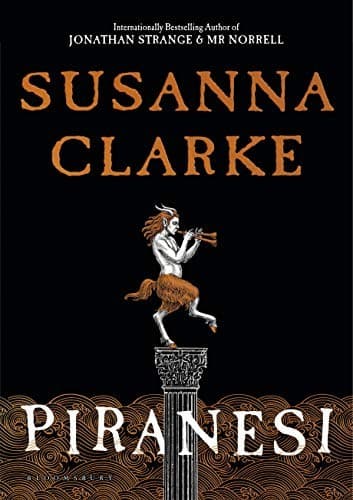
Book details and cover from Google Books.
Ready to read Piranesi?
Get your copy on Amazon, or listen to it on Audible. We earn a commission if you buy through these links.