
We earn a commission if you buy through these links. Learn more
Pinocchio
The original Pinocchio is a blunt, funny, often bleak fable about disobedience and consequences, far stranger than the cartoon most readers remember.
What It's About
Carlo Collodi's 1883 novel began life as a serial in an Italian children's magazine, and it still reads like a story told aloud to a restless audience. Geppetto, a poor woodcarver, makes a puppet from a block of wood that starts talking and misbehaving almost immediately. Pinocchio is not a sweet little boy. He is impulsive, vain, lazy and easily talked into trouble, and the book follows his string of bad decisions with a bluntness that surprises readers who only know the film.
The structure is episodic. Each chapter is short, ends on a hook, and hands the puppet to a new character, some helpful and many crooked. Collodi's narrator is openly moralizing, scolding the reader and the hero in equal measure, and the tone swings between slapstick, cruelty and tenderness. Expect abrupt jumps, repeated punishments, and a dark streak of violence that later adaptations smoothed away.
Reading it is less like settling into a novel than like listening to a storyteller who keeps losing patience with his protagonist. It is quick, funny in places, and often unexpectedly bleak, and it rewards readers who enjoy fables more than those who want a tidy psychological arc. Translations vary in tone, so the experience depends partly on which edition you pick up. Adults often find it more interesting than they expected, partly because its anxieties about obedience, honesty and growing up are never fully resolved.
Read this if you…
- want a classic fable with a darker edge than most children's books
- are curious how the Disney film diverges from its source
- enjoy episodic, fast-moving adventures with a strong narrator voice
Skip it if you…
- want a gentle, reassuring story with a clear emotional arc
- are choosing a book for young children who may be frightened by violence and harsh punishment
Key Ideas
- 1
Lying made physical and immediate
Dishonesty in this book has instant, visible consequences, so moral failure becomes something the body reveals. The effect is partly comic and partly alarming, and it gives the book its most memorable image. It also shows how Collodi thinks about trust: a lie is never a private matter, because everyone around the puppet can read it.
- 2
Obedience against the pull of pleasure
Pinocchio repeatedly chooses short-term fun over the advice of his father figure and his well-meaning helpers. The book treats growing up as learning to accept limits and bear the cost of ignoring them. Readers who expect a simple lesson will find the argument more ambivalent, since the puppet's appetite for freedom is clearly shown as both dangerous and understandable.
- 3
Poverty and a harsh, cheating world
The cast of swindlers, cats, foxes and opportunists reflects a hard, 19th-century Italian setting where money is scarce and kindness is rare. The poverty is not decorative. It shapes why characters lie, why Geppetto is vulnerable, and why the puppet's mistakes are so expensive. This social realism sits beside the fairy-tale surface in a way that is easy to miss.
- 4
A narrator who scolds and jokes
Collodi's voice speaks directly to the reader, sometimes lecturing, sometimes winking, and often correcting the hero mid-scene. This makes the book feel like a sermon folded into adventure. The intrusive narration is a large part of the charm for some readers and a source of irritation for others, and it defines the reading experience more than the plot does.
- 5
Failure followed by another chance
The book is built on relapse. Each mistake leads to a fresh start, a new guardian, and a new temptation, so improvement comes in uneven steps rather than a single turn. The central promise is that failure is not final, though the path to that idea is rough and repetitive. It is a useful lens for thinking about how children and adults actually change.
Limitations
The episodic structure can feel repetitive, since many chapters follow the same pattern of temptation, trouble and rescue. Characters are sketched rather than developed, and most figures exist to test or instruct the puppet. The moralizing narrator can grate on modern readers who prefer subtlety. The violence, cruelty and bleak episodes are much stronger than in the famous adaptation, and translations differ widely in how faithfully they preserve the original's humor and bite.
Questions Readers Ask
- Is the book really that different from the Disney film?
- Yes. The novel is darker, more episodic and far more willing to show cruelty and humiliation. Pinocchio is less charming and more impulsive, and many famous characters and scenes from the film are absent or changed. Readers who love the cartoon are often surprised by how sharp and unsentimental the original feels, which is part of why it is worth reading.
- Is Pinocchio suitable for young children?
- It depends on the child and the edition. Older children who enjoy fables and dark humor often do well with it. Younger or sensitive readers may find the violence, threats and harsh punishments upsetting. Reading it aloud or choosing a well-annotated translation can help adults decide and talk through the difficult moments with a child.
- Published
- 2002
- ISBN
- 9780739600009
- Difficulty
- beginner
- Category
- Children's Books
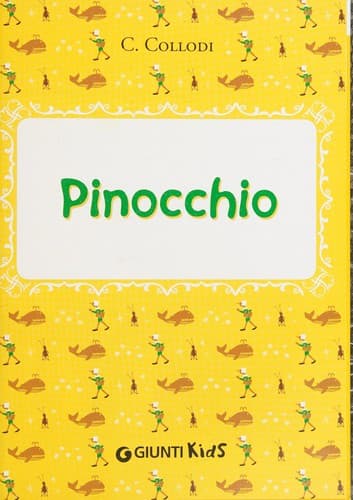
Book details and cover from Google Books.
Ready to read Pinocchio?
Get your copy on Amazon, or listen to it on Audible. We earn a commission if you buy through these links.