
We earn a commission if you buy through these links. Learn more
Peter Pan
by J. M. Barrie
Guide by the Books of the Day editors · Updated · How we write our guides
A short, strange, and sharper-than-expected classic about refusing to grow up, and what that refusal costs the people who love you.
What Creators Say About Peter Pan
2 creators reviewed Peter Pan on YouTube in 2012, with 63.1K views between them. Their opinions are their own; we picked these reviews, we didn't write them.
What It's About
Peter Pan began as a play staged in London in 1904 and was later published as a novel, Peter and Wendy, in 1911. The version most readers know is the novel, which follows three children from a London nursery who fly off with a boy who never grew up to an island called Neverland, where pirates, mermaids, and a band of lost boys live. Barrie's narrator talks directly to the reader, teasing, digressing, and sometimes admitting he is unsure of a detail, so the book feels like a bedtime story told by someone who is only half serious.
The prose is witty and deliberately uneven. Barrie moves between whimsy and cold, adult observation about parents, class, and the passing of time. Sentences are often short and playful, and the chapters are brief enough to read in a single sitting. Much of the pleasure lies in the narrator's asides and in the ironies that adults catch even when children do not.
Reading it is less like escaping into fantasy and more like sitting with a clever, slightly melancholy storyteller who knows more than the children do. It is a quick read, but it lingers, and many adults find it hits differently than it did at seven.
Read this if you…
- enjoy classic fantasy with a sly, adult edge
- want to reread a childhood favorite and see what you missed
- like witty narrators who speak to the reader directly
Skip it if you…
- want a fast-paced adventure with clear heroes and a tidy plot
- expect the cheerful, musical version you remember from the cartoon
Key Ideas
- 1
Growing up as a loss, not a goal
Peter's refusal to grow up is presented as both enchanting and a little monstrous. The book never simply celebrates childhood. It shows what is gained by staying young and what is quietly lost by the people left behind, which gives the fantasy an emotional weight most readers don't expect.
- 2
The narrator as a playful, unreliable guide
Barrie's narrator interrupts, speculates, and comments on his own story. This gives the book a conversational tone that feels intimate and often funny. It also creates distance, so you are always aware of someone choosing what to tell you and how to frame it.
- 3
Childhood seen through adult eyes
The Darling household, with its ordered routines and anxious respectability, is drawn with gentle satire. Barrie writes about parents and children with an observant, slightly wry affection, and adult readers will notice social details that go past younger listeners entirely.
- 4
Play as serious and sometimes frightening business
Neverland is fun, but it is also dangerous, and the villains are genuinely unsettling. Barrie treats make-believe as something with real stakes. Pretending can be thrilling and risky at once, and the book keeps that tension alive rather than softening it for comfort.
- 5
What children keep and what they lose
Memory, the passing of time, and the difference between the children who return home and the one who never does run beneath the adventure. The book asks what it means to remember a past you have outgrown, and it leaves that question open rather than resolving it neatly.
Limitations
The book reflects Edwardian attitudes about class, gender, and empire, and some depictions of Native American characters are offensive by modern standards and reflect the period's stereotypes. Wendy's role is largely that of a maternal figure to the boys, which many modern readers find limiting. The narrator's digressions can slow the story, and readers who want steady momentum may find the middle sections drift. The play and the novel also differ in places, so expectations shaped by one may not match the other.
Questions Readers Ask
- Should I read the play or the novel?
- Most adults should start with the novel, Peter and Wendy, published in 1911. It is the standard text and is easy to find. The play, first staged in 1904, has different structure and stage directions, and it is more of a theatre experience than a book to read cover to cover.
- Is Peter Pan only for children?
- It is written as a children's book, but its satire of Edwardian respectability, its melancholy, and its narrator's asides make it rewarding for adults. Many readers find it works best as a book you return to at different ages, since the same passages land in new ways over time.
- How does it compare to the Disney film?
- The 1953 Disney film is lighter, brighter, and more musical, and it smooths over much of the book's bite. The novel is wittier, stranger, and more ambivalent about growing up. If you loved the film, the book will feel like a darker, more literary cousin of the same story.
- Published
- 1911
- ISBN
- 9788437628851
- Difficulty
- beginner
- Category
- Children's Books
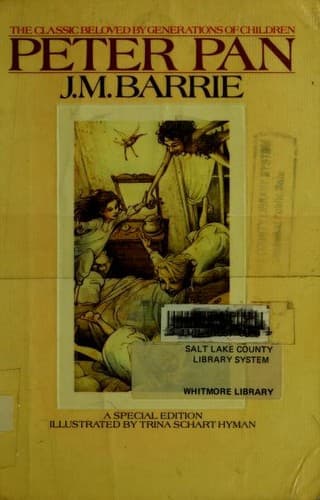
Book details and cover from Google Books.
Ready to read Peter Pan?
Get your copy on Amazon, or listen to it on Audible. We earn a commission if you buy through these links.