
We earn a commission if you buy through these links. Learn more
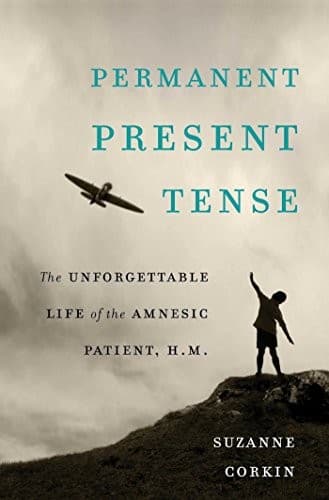
Permanent Present Tense: The Unforgettable Life of the Amnesic Patient, H. M.
Guide by the Books of the Day editors · Updated · How we write our guides
Corkin spent nearly five decades studying Henry Molaison, the patient whose surgery-related amnesia reshaped what scientists know about memory, and she tells his story with rare intimacy.
What Creators Say About Permanent Present Tense: The Unforgettable Life of the Amnesic Patient, H. M.
1 creator reviewed Permanent Present Tense: The Unforgettable Life of the Amnesic Patient, H. M. on YouTube in 2025, with 25 views between them. Their opinions are their own; we picked these reviews, we didn't write them.
What It's About
Suzanne Corkin, a neuroscientist at MIT, first began working with Henry Molaison in the early 1960s and continued until his death in 2008. In 1953, surgeons removed much of his medial temporal lobes, including the hippocampus, to control severe epilepsy. The operation reduced his seizures but left him unable to form lasting new memories, so he lived most of his later life in something close to a permanent present.
The book is part biography and part scientific memoir. Corkin moves between his life before the surgery, his family and daily routines, and the experiments that revealed how memory is divided into separate systems. She is candid about the ethical weight of studying a man who could not remember the sessions, and about how close a relationship can become with a research subject over decades.
Reading it feels like sitting with someone who has spent a lifetime with one person. The tone is measured and warm, and the science serves the human story. Expect a slower pace than typical popular nonfiction and some technical passages, but the core is an intimate portrait of a man whose condition changed what scientists understood about the brain.
Read this if you…
- want to understand how the study of memory began with a single patient
- are curious about the brain but prefer human stories to textbook explanations
- want an honest look at the ethics of long-term research on people who cannot consent to remembering it
Skip it if you…
- want a broad survey of current memory science, since the book stays close to one case
- need a fast-paced narrative, as the pacing is deliberate and some passages are technical
Key Ideas
- 1
Memory is not a single system
Molaison's case showed that his ability to learn new facts and events was severely damaged while his motor skills and learning of new procedures remained intact. Corkin explains how careful testing revealed this split, and why it pushed researchers to think of memory as several systems working in different parts of the brain rather than one storage bin.
- 2
The hippocampus and forming new memories
The book shows why the hippocampus matters for turning experiences into lasting memories. Molaison lost the ability to hold on to recent events, while many earlier memories from his childhood and young adulthood remained largely intact. Corkin describes these patterns in plain terms, which helps readers see why damage in one region could have such a precise effect.
- 3
The ethics of studying a willing but forgetful subject
Corkin examines what consent, privacy, and dignity mean when a research participant cannot retain the experience of taking part. She discusses how decisions about testing, publication, and protecting his identity were made over decades, and why these questions still matter in medical research today.
- 4
A life beyond the diagnosis
Beyond the experiments, the book portrays Molaison as a person with routines, relationships, and small pleasures that persisted despite his condition. This human focus is what sets the book apart from a standard clinical case study and gives the science its emotional weight.
Limitations
Because Corkin was both the scientist running the tests and the author telling the story, some readers find the perspective close and occasionally protective, shaped by her own long relationship with her subject. The book centers almost entirely on one patient, so it does not cover the wider field in depth, and later research on memory systems and other amnesic cases goes beyond it. Some scientific passages are dense for lay readers. The surgery and the experimental neurosurgery era it came from are treated mainly as background rather than critiqued at length.
Questions Readers Ask
- Do I need a background in neuroscience to read it?
- No. Corkin explains the testing and the key brain structures in plain language, though some sections on experimental procedures are more detailed than general readers may want. Basic curiosity about the brain is enough. Expect to slow down for the technical passages, but the human story carries the book even when the science gets dense.
- How does it compare to Moonwalking with Einstein?
- Joshua Foer's book is a participatory journey into memory training and competitive memorizing, lighter and more practical in tone. Corkin's book is narrower and more clinical, focused on one brain and the science built around it. If you want memory techniques, Foer fits better. If you want to understand how memory works through a single case, Corkin does.
- Published
- 2013
- ISBN
- 9780465033492
- Difficulty
- intermediate
- Category
- Biographies
Book details and cover from Google Books.
Ready to read Permanent Present Tense: The Unforgettable Life of the Amnesic Patient, H. M.?
Get your copy on Amazon, or listen to it on Audible. We earn a commission if you buy through these links.