
We earn a commission if you buy through these links. Learn more
Perdido Street Station
Guide by the Books of the Day editors · Updated · How we write our guides
A dense, grimy, genre-bending fantasy novel whose invented city feels more real than most, rewarding readers willing to wade through its sprawl.
What Creators Say About Perdido Street Station
2 creators reviewed Perdido Street Station on YouTube between 2024 and 2025, with 21.1K views between them. Their opinions are their own; we picked these reviews, we didn't write them.
What It's About
Perdido Street Station is a fantasy novel, published in 2000, set in New Crobuzon, a huge, polluted city-state in the invented world of Bas-Lag. Although this page lists it under History, it is fiction, not a work of history. The story follows Isaac, a scientist working in the city's crowded streets, who becomes entangled with Lin, an artist from one of the city's non-human peoples, after a stranger brings them a commission whose consequences prove far more dangerous than anyone expects.
Miéville's approach mixes genres: steampunk-flavoured invention, horror, noir crime, and political allegory all share the same pages. The city itself is the main character, rendered through its industry, markets, sewers, bureaucracy, and street life. The prose is dense, full of invented vocabulary and long sentences, and it asks for patience. Reading it feels like wandering a city at night, where you are often disoriented, sometimes repelled, and regularly surprised.
This is less a neat puzzle than an immersive, lurid experience. Expect body horror and violence alongside long stretches of worldbuilding and argument about labour, power, and who gets to live well. Readers who enjoy being absorbed into a strange, carefully built world will likely find it rewarding.
Read this if you…
- enjoy immersive invented worlds and don't mind working to enter them
- want fantasy with grit, politics, and horror in roughly equal measure
- like stories where the city and its textures drive the plot as much as the characters do
Skip it if you…
- want a tidy plot, a quick read, or a clear sense of direction
- find graphic violence and body horror hard to stomach
Key Ideas
- 1
The city as a central character
New Crobuzon is drawn with such texture that its factories, slums, corrupt institutions, and crowded markets shape nearly every choice the characters make. Miéville makes the setting feel lived in rather than serving as a backdrop, so the reader comes to understand the city's rhythms and hazards as well as its people do.
- 2
Power, labour, and state punishment
The state's use of punishment, including sentences that physically alter the convicted, raises questions about who holds power and what it does to bodies. The novel presents these abuses as structural and institutional rather than as the work of a single villain, which gives its politics real weight.
- 3
Genre mixing as a deliberate strategy
Horror, science fiction, detective story, and fantasy blend together, so the reader never settles into one set of expectations. This keeps the book unpredictable and inventive, though for some readers the shifts can feel uneven.
- 4
Otherness and the outsider's view
Characters from non-human peoples and marginalised groups are treated as full people with their own histories and grievances. The book pays close attention to how society sees, uses, and mistreats them, and it avoids reducing them to props.
- 5
Invention with a dark edge
Isaac's scientific work and the city's technology carry real costs. Discovery and ambition are shown as tangled up with exploitation and harm, so every new marvel also raises a question about who pays for it.
Limitations
Criticism often targets the length and the dense, invented vocabulary, which can make the early chapters slow and some passages tiring. The middle section is frequently described as sprawling, and some readers find the strange and horrific elements pile up faster than they resolve. Characterisation is strongest with the core group, while secondary figures can feel more like functions of the plot. The book is also very graphic in places, which will not suit every reader. Its political messaging is sometimes called heavy-handed, though it has held up well since 2000.
Questions Readers Ask
- Is Perdido Street Station history or fiction?
- It is fiction. Although this page is filed under History, Perdido Street Station is a fantasy novel set in an invented city. Readers looking for historical nonfiction should look elsewhere, but those who enjoy invented histories and imagined societies will find it a rich fit.
- Do I need to read other books in the Bas-Lag series first?
- No. Perdido Street Station is the first novel set in Bas-Lag and works on its own. The later books, The Scar and Iron Council, expand the world and follow other characters, so you can continue with them if you enjoy this one.
- How does it compare to other fantasy cities?
- It is grittier and more political than many fantasy settings. If you liked the atmosphere of Neil Gaiman's Neverwhere, you will find a darker, more violent and more politically charged counterpart here, with a city that feels both fantastical and uncomfortably real.
- Published
- 2000
- ISBN
- 9788834733905
- Difficulty
- advanced
- Category
- History
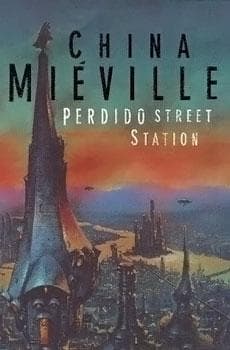
Book details and cover from Google Books.
Ready to read Perdido Street Station?
Get your copy on Amazon, or listen to it on Audible. We earn a commission if you buy through these links.