
We earn a commission if you buy through these links. Learn more
Pattern Recognition
Gibson's post-9/11 novel follows a marketing consultant who can't tolerate corporate logos, drawn into a hunt for the makers of anonymous online film fragments, and it is sharp, strange, and surprisingly human.
What It's About
Pattern Recognition, published in 2003, is set in the months after the September 11 attacks, mostly in London with side trips to other cities. Its heroine, Cayce Pollard, is a marketing consultant whose body reacts badly to corporate logos, which makes her unusually good at judging what will feel cool. She is hired by a wealthy and enigmatic client to track down the people behind a series of unexplained film fragments that circulate online and have built a devoted following.
Gibson writes this as a detective story told in close third person, so Cayce's perceptions carry most of the weight. Much of the pleasure lies in texture: brand names, street-level observation, the feel of cities at night, and the way online subcultures form around something nobody can fully explain. The prose is precise and often funny, and the plot moves in deliberate steps, with long conversations and quiet reflection doing as much work as action scenes.
Reading it is more atmospheric than puzzle-solving. The book is less interested in a tidy solution than in attention, belief, and what it means to live among constant images and commerce. Expect threads that stay loose and details that reward a second look. Whether it works for you will depend largely on whether Gibson's observational, slightly melancholy mode draws you in or leaves you waiting for the story to move.
Read this if you…
- like observant, atmospheric novels where mood matters as much as plot
- are curious about how online communities form around unexplained mysteries
- want a contemporary novel that captures the early 2000s with unusual precision
Skip it if you…
- need a fast-paced thriller with a clear solution and a tidy ending
- find long passages about brands, cities, and online life more tedious than absorbing
Key Ideas
- 1
Brands as a kind of sensory noise
Cayce's aversion to logos is more than a quirk. It turns advertising into a physical presence she has to manage. Gibson uses her reactions to show how much of modern life is shaped by corporate imagery that most people have learned to ignore. The idea is less a polemic against marketing than an observation that brands are now part of the air people breathe, and that noticing them is itself a skill.
- 2
Online communities hunting for meaning
The footage at the center of the book attracts an online group that treats each new fragment like a clue. Gibson shows how such communities form, argue, and invest in mystery, and how easily their collective attention can take on the feel of faith. It is a portrait of early internet culture that still reads as recognizable, even though the platforms have changed and the appetite for shared puzzles has not.
- 3
Unease after 9/11 and the search for solidity
The novel is set in the aftermath of the attacks, and that shadow shapes its mood without becoming a lecture. Characters are restless, rootless, and often traveling, and they look for anchors in work, relationships, and small rituals. Gibson treats the period's anxiety as a background condition, asking what people hold onto when the larger world feels unstable and hard to read.
- 4
Cayce as a detective of perception
Cayce's investigative method is less about forensic clues than about noticing what others overlook: tone, surface, and the emotional signature of a place or object. That makes her an unusual protagonist for a plot with thriller elements, and it gives the book its distinctive way of paying attention. Readers who enjoy close observation will find that the narration itself is part of the mystery.
Limitations
Critics often point to a slow middle stretch, a plot that leans on conversation and reflection more than suspense, and a few threads that feel left open. The book's sense of the early 2000s, with its technology and brand references, now reads partly as a period snapshot, and some readers find its fascination with style and branding dated or overly stylized. It also rewards readers who already accept its tone. Those who want emotional intensity or a bigger payoff may come away underwhelmed.
Questions Readers Ask
- Do I need to read Gibson's earlier novels first?
- No. Pattern Recognition is set in 2002 and works well as a first Gibson book, unlike his earlier cyberpunk novels, which rely on more invented worlds. Knowing his style helps, but you don't need background. If you like its tone, his later novels in the same present-day vein are a natural next step.
- Is it still relevant twenty years on?
- Yes, in its concerns, though it now reads partly as a period piece. Its themes of corporate branding, online crowds, and the search for meaning amid constant information feel even more familiar today. Some technology and cultural references show their age, which can be part of the pleasure for readers curious about how the early 2000s felt from the inside.
- How does it compare to Neuromancer?
- It is much quieter. Neuromancer is a fast, high-concept adventure set in invented futures, while Pattern Recognition unfolds in recognizable cities and is driven by perception and mood rather than heists and implants. Fans of Neuromancer may find it slower, but they will recognize Gibson's eye for surfaces and his skill with technology.
- Published
- 2002
- ISBN
- 9780425198681
- Difficulty
- intermediate
- Category
- Fiction
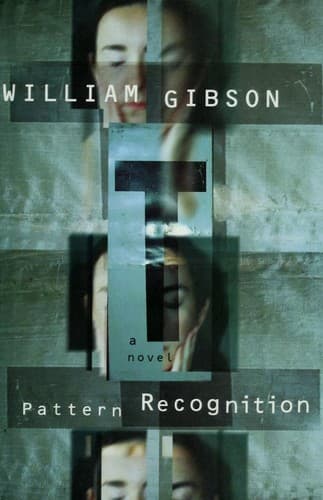
Book details and cover from Google Books.
Ready to read Pattern Recognition?
Get your copy on Amazon, or listen to it on Audible. We earn a commission if you buy through these links.