
We earn a commission if you buy through these links. Learn more
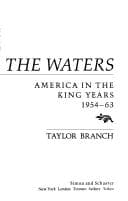
Parting the Waters
Guide by the Books of the Day editors · Updated · How we write our guides
Taylor Branch's Pulitzer-winning narrative makes the early civil rights movement feel uncertain and human, following King and his allies through the years before the victories everyone remembers.
What It's About
Parting the Waters is the first volume of Taylor Branch's America in the King Years trilogy, a narrative history that follows Martin Luther King Jr. and the civil rights movement from the mid-1950s into the early 1960s. Branch keeps King at the center without treating him as a lone hero. Ministers, students, lawyers, organizers, and government officials all shape the story, and many of them resist, misread, or try to manage the movement.
The approach is immersive and reported. Branch draws on interviews and archival material to rebuild scenes such as the Montgomery bus boycott, the sit-ins, and the Freedom Rides, moving between street-level action, strategy meetings, and the offices where policy was made. The prose is patient and detailed, with long chapters that linger on tactical debates, money, and the personal strain on movement leaders. It reads more like a panoramic novel than a quick survey.
The experience is absorbing but demanding. You see how fragile the movement was and how often it nearly failed, which can make familiar outcomes feel newly uncertain. Expect a long read that rewards steady attention. The book stops before the movement's largest legislative triumphs, and that is part of its design rather than an omission.
Read this if you…
- want a deeply reported account of the early civil rights movement rather than a summary
- are interested in how political strategy, religion, and money interacted in a social movement
- don't mind a long book that rewards patient, detailed reading
Skip it if you…
- want a short introduction to civil rights history or a book that covers the whole era in one volume
- prefer biography focused mainly on King's personal life and inner world
Key Ideas
- 1
King as strategist within a larger movement
Branch shows King as a skilled and sometimes uncertain tactician who depended on a network of allies. Much of the drama comes from his negotiations with rival organizations, local leaders, and donors, and from the constant pressure to keep a fragile coalition together. The book makes leadership look like ongoing persuasion rather than a single heroic decision.
- 2
Nonviolence as disciplined and costly practice
The book treats nonviolence as a demanding method that required training, discipline, and a willingness to absorb violence without retaliating. Branch explains why organizers chose it, how they argued about its limits, and what it cost participants. Readers come away seeing nonviolence as a series of practical choices made under real danger.
- 3
Government as both obstacle and uneasy partner
Federal officials appear here as neither simple allies nor simple enemies. Branch covers the Eisenhower and Kennedy administrations' hesitations, their political calculations, and the FBI's surveillance of King. The result is a picture of how national power responded to protest, often reluctantly and with its own agenda.
- 4
Ordinary people as the engine of change
Although the book centers on King, it repeatedly returns to local participants: students at lunch counters, riders on buses, and community members who took risks long before national attention arrived. Branch's reporting suggests that the movement's momentum came from many small decisions rather than a few famous speeches.
Limitations
The book is very long, and its pace will feel slow to some readers, especially in its detailed accounts of internal debates and negotiations. Critics have also pointed out that its focus on King and national leadership can crowd out the grassroots women and local organizers who did much of the work. Because this is the first volume of a trilogy, it ends before the movement's major achievements, so readers must continue to the next books for the full arc.
Questions Readers Ask
- Is Parting the Waters a good starting point for learning about the civil rights movement?
- It can be, if you are willing to commit to a long book. Branch gives a vivid, detailed sense of the period's people and tactics. However, it assumes some familiarity with key events and figures, and it is not a short overview. Pairing it with a brief introductory history can help you keep track of the many names and organizations.
- How does it compare to other histories of King and the movement?
- Branch's book is more narrative and immersive than most academic histories, and more focused on King's world than many broad surveys. Readers who want a wider social analysis, or more attention to women and local leaders, may find other books better matched to those goals. Branch's strength is the texture of his storytelling and his close attention to decision-making.
- Do I need to read the next two volumes?
- Not necessarily, but the book does not resolve its story. It stops in the early 1960s, before major events that many readers expect a book about King to cover. If you want the full arc, the trilogy continues with Pillar of Fire and At Canaan's Edge, which carry the story forward.
- Published
- 1988
- ISBN
- 9780736645539
- Difficulty
- intermediate
- Category
- History
Book details and cover from Google Books.
Ready to read Parting the Waters?
Get your copy on Amazon, or listen to it on Audible. We earn a commission if you buy through these links.