
We earn a commission if you buy through these links. Learn more
Paradise Lost
by John Milton
Milton's blank-verse epic of the Fall is the great English poem about rebellion, free will, and temptation, and its Satan still unsettles readers nearly four centuries on.
What It's About
Paradise Lost is an epic poem, not a biography, so the category on this listing is misleading. Published in 1667 and expanded to twelve books in 1674, it takes the story from Genesis and stretches it across roughly ten thousand lines of blank verse. The poem opens in Heaven with Satan's rebellion and expulsion, moves to the garden where Adam and Eve live, and follows the temptation that ends their innocence. Milton was blind when he composed it and dictated the lines, which may help explain the poem's oral, sweeping rhythm.
The style is demanding. Milton writes long, inverted sentences built on Latin models, and he borrows heavily from Homer and Virgil, using extended similes that wander far from their subject before returning. Reading it aloud helps more than skimming, and a good annotated edition is close to essential. Expect to slow down, reread passages, and look things up.
The experience is less like following a story and more like sitting through a grand, argumentative sermon delivered by an unusually gifted poet. The best moments are the debates in Hell and the quiet domestic scenes in Eden, where the stakes feel intimate. Much of its power comes from the sense that Milton is wrestling with the very questions he sets out to answer.
Read this if you…
- love the grand scale and ambition of epic poetry
- want to think through hard questions about evil, obedience, and free will
- are willing to read slowly with notes and enjoy difficult, formal verse
Skip it if you…
- want a plot-driven story with clear momentum
- have little patience for long speeches, lists, and dense syntax
Key Ideas
- 1
Justifying God's ways to humankind
Milton states an aim to explain why an all-good, all-powerful God allowed evil and suffering. The poem does not settle this neatly. Instead it dramatizes choices and argues that humans bear responsibility for their fall, with obedience and free choice at the center. Readers will judge for themselves how convincing that argument is.
- 2
Satan as a fallen hero
Satan's speeches are rhetorically powerful. He claims defiance and independence, and the poem's energy often seems to side with him. Milton seems to intend him as a warning, yet many readers find him the most vivid character on the page. Holding that tension in mind is a large part of the reading experience.
- 3
Free will and the choice to fall
Adam and Eve are not simply pushed into sin. The poem gives long discussions of reason, desire, and obedience, and it lingers on how a good mind can be persuaded toward a bad choice. Milton's treatment of temptation often feels psychological rather than merely doctrinal.
- 4
Blank verse and the music of argument
Milton uses unrhymed iambic pentameter with enjambment and varied pauses, so the verse moves like speech. Syntax carries thought, with long periods that hold clauses in suspense before resolving them. Sound and rhythm matter as much as plot, and the poem rewards attention to how it is said.
- 5
Epic conventions reshaped by Christian doctrine
The poem uses the tools of classical epic, including a invocation to a muse, catalogues, a war in Heaven, and epic similes. Milton bends these forms toward Christian themes of creation, sin, and redemption, so the reader feels a tension between inherited literary models and the new theological story being told.
Limitations
Milton's theology is central, and the poem assumes familiarity with Genesis and Christian doctrine, which many modern readers lack. Critics have long argued over Eve, who is often portrayed as subordinate to Adam and whose temptation is treated in ways many readers find troubling. The catalogues, battle scenes, and extended speeches can drag, and the Latinate syntax can be exhausting without notes. Some readers also feel the poem's God is cold, which makes the moral argument feel rigged.
Questions Readers Ask
- Is Paradise Lost a biography?
- No. Despite the category on this listing, Paradise Lost is an epic poem retelling the Fall of humankind from Genesis, with Satan's rebellion in Heaven as prologue. If you want a life of Milton, you will need a separate book. Milton's own experiences still matter to the poem, since he wrote it after the failure of the republican cause he had served, and his convictions shape its arguments.
- Can I read it without a religious background?
- Yes, many readers do, but you will get more from it with an annotated edition that explains the Genesis references, classical allusions, and theological terms. The poem's concerns with ambition, obedience, and regret are widely human even when the framework is specific. Reading the opening books and the Eden scenes first can help you get your bearings.
- How does it compare to Dante's Divine Comedy?
- Dante covers a whole journey through the afterlife in tercets, guided by Virgil and Beatrice, and his imagery is often vivid and concrete. Milton's poem is narrower, focusing on the Fall in blank verse, and its drama lies mostly in argument and character. Dante is more visually striking; Milton is more sustained in theological debate.
- Published
- 1667
- ISBN
- 9780582215191
- Difficulty
- advanced
- Category
- Biographies
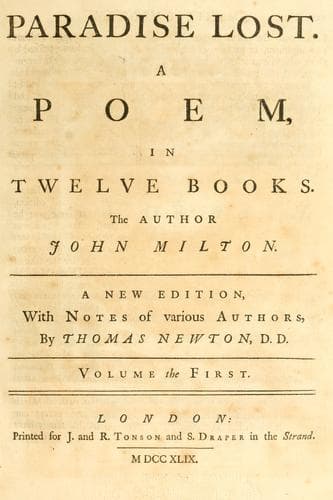
Book details and cover from Google Books.
Ready to read Paradise Lost?
Get your copy on Amazon, or listen to it on Audible. We earn a commission if you buy through these links.