
We earn a commission if you buy through these links. Learn more
Owl Moon
by Jane Yolen
A short, hushed picture book about a child and her father on a winter owl walk, worth a reader's time for its patient rhythm, its quiet emotional weight, and its partnership with the illustrations.
What It's About
Owl Moon is a picture book, but it earns a place on an adult's shelf too. A young girl goes owling with her father on a winter night, the two of them walking across a snowy landscape under a bright moon, hoping to hear and see a great horned owl. The story is short and built almost entirely from the quiet moments in between: the crunch of boots, the cold on a face, the long wait for something to happen.
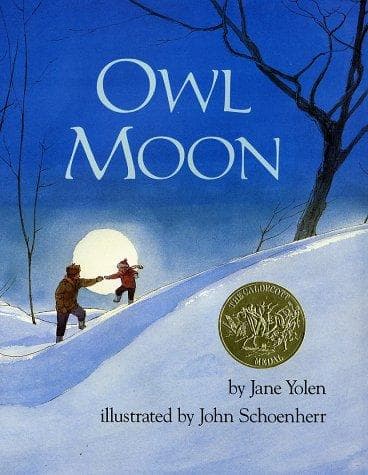
Yolen's prose is spare and rhythmic, leaning on repetition and simple, sensory phrasing rather than dialogue or event. Very little actually happens in a plot sense, and that is the point. The book is about patience, trust, and the particular intimacy of doing something together without needing to say much. John Schoenherr's realistic, hushed illustrations carry much of the emotional weight, showing the wide dark woods and the small figures moving through them, so the pictures and words work as a pair.
Reading it takes about ten minutes, but it often lands harder on a second reading, especially if you have shared a long, wordless outing with someone you love. It is best read aloud, slowly, and it rewards the same slowness from the reader.
Read this if you…
- want a short, calm book that rewards slow, attentive reading
- appreciate picture books that work for adults as well as children
- are looking for a gentle story to share aloud with a young child
Skip it if you…
- need a story with conflict, plot momentum, or a clear dramatic arc
- expect a detailed account of owls or nature facts
Key Ideas
- 1
Patience as the book's real subject
Much of the book is waiting: walking, listening, and hoping for a sign that may or may not come. Yolen makes that waiting feel meaningful rather than empty, suggesting that attention itself is the reward. Adults who have sat through long stretches of nothing with a child will recognize the feeling the book is trying to capture, and it reads as an argument for slowing down.
- 2
Quiet companionship between father and child
The relationship is conveyed through what the two do together rather than what they say. Their shared silence, their small rituals, and the way the child tries to match her father's pace create a sense of closeness without sentiment. The book trusts the reader to notice the bond forming in the gaps between lines.
- 3
Language that mirrors the night
The sentences slow and soften as the walk goes on, and repeated phrases create a lullaby-like rhythm. The sound of the text is part of the experience, which is why it works so well read aloud. Yolen chooses plain words and keeps them close to the senses, so the reader feels the cold and the stillness rather than being told about them.
- 4
Pictures and words as equal partners
Schoenherr's illustrations are restrained and realistic, with a lot of dark space and a low, moonlit palette. They often show what the text leaves out, such as the scale of the woods or the distance between the two figures. Looking at the pages closely reveals how much the art adds to the mood and to the book's sense of place.
Limitations
The book is brief and light on plot, so readers expecting a substantial narrative may find it slight. Its payoff is modest by design, and some readers will find the pacing too slow, especially if they are not drawn to atmosphere. The setting is a specific rural winter experience that may feel distant to children or adults who have never walked through snow at night. It also offers little information about owls themselves, so it works better as an emotional experience than as a nature guide.
Questions Readers Ask
- Is Owl Moon only for young children?
- No. The text is simple enough for early readers and listeners, but the emotional tone and the careful use of language appeal to adults too. Many readers come back to it as grown-ups and notice things they missed as children, especially the feeling of a shared quiet outing with a parent.
- Is Owl Moon worth reading if I already know the Caldecott winners?
- It is a Caldecott Medal winner from 1988, and it is often cited as an example of the award's focus on atmosphere and illustration. If you enjoy books where mood matters more than plot, it is a good fit. If you want a more substantial picture book with a strong narrative, you may prefer other award winners.
- Published
- 1987
- ISBN
- 9781560080008
- Difficulty
- beginner
- Category
- Children's Books
Book details and cover from Google Books.
Ready to read Owl Moon?
Get your copy on Amazon, or listen to it on Audible. We earn a commission if you buy through these links.